
Did you know that in the UK, millions of pounds in statutory dental benefits go unclaimed every single year? As NHS dental costs continue to rise in 2026, many residents are unknowingly paying for services that their taxes have already covered.
Following the recent April price hikes, understanding NHS Free Dental Check-up Eligibility 2026 has become an important way to reduce healthcare expenses. This guide will help students, expectant mothers, and low-income families navigate the NHS process to protect both their oral health and their bank balance.
Last Updated: May 2026
 NHS Free Dental Check-up Eligibility: Who Qualifies for 100% Free Care?
 NHS Free Dental Check-up Eligibility: Who Qualifies for 100% Free Care?
In 2026, the NHS remains an important support system, provided you understand the specific “entry gates” defined by the Department of Health. The primary foundation of eligibility is built upon age and educational status. If you are under 18, or under 19 and in full-time qualifying education, you are entitled to comprehensive dental care at zero cost. This is a critical window because preventive care during these formative years can prevent expensive restorative work later in life.
In addition to age-based criteria, patients who are pregnant, have recently given birth, or are currently hospitalized also qualify for full dental coverage. Pregnant women and those who have given birth in the last 12 months qualify for free treatment, provided they hold a valid Maternity Exemption (MatEx) certificate. Furthermore, if you are an NHS hospital in-patient, charges are entirely waived. Good oral health also supports your wellbeing; while you secure your dental rights, don’t overlook Simple Healthy Living Tips to keep your body’s health markers in check.
Many people don’t realize that being an NHS in-patient means your dental care is managed within the hospital budget. If a hospital dentist deems treatment necessary while you are admitted, you should not be charged. This is part of a holistic approach to patient care, ensuring that oral infections do not complicate recovery from other medical procedures.
Benefit-Based Exemptions: The 2026 DWP Roadmap
 Benefit-Based Exemptions: The 2026 DWP Roadmap
For many adults, free dental care is closely linked to their Department for Work and Pensions (DWP) status. You qualify for free treatment if you receive Income Support, Income-based Jobseeker’s Allowance, or the Guarantee Credit element of Pension Credit. This is often referred to as “passported eligibility,” meaning your benefit status automatically opens the door to free clinical care.
Universal Credit (UC) remains a complex area in 2026. You qualify only if your take-home pay was below £435 (or £935 with child elements) in the last assessment period. Because these thresholds can shift with government policy, it is vital to verify current numbers through official channels before your appointment. Managing your health on a budget requires discipline, much like following a Mediterranean Diet UK Weight Loss Guide to ensure your overall health is as clean as your dental hygiene.
It is also worth noting that Tax Credits can provide an exemption. If you receive Child Tax Credit or Working Tax Credit (with a disability element) and your annual income is below a certain limit, you will receive an NHS Tax Credit Exemption Certificate. Always keep this card handy, as dentists are required to verify the certificate number at the start of every new course of treatment.
NHS Dental Charges 2026: The Comprehensive Price Sheet
 NHS Dental Charges 2026: The Comprehensive Price Sheet
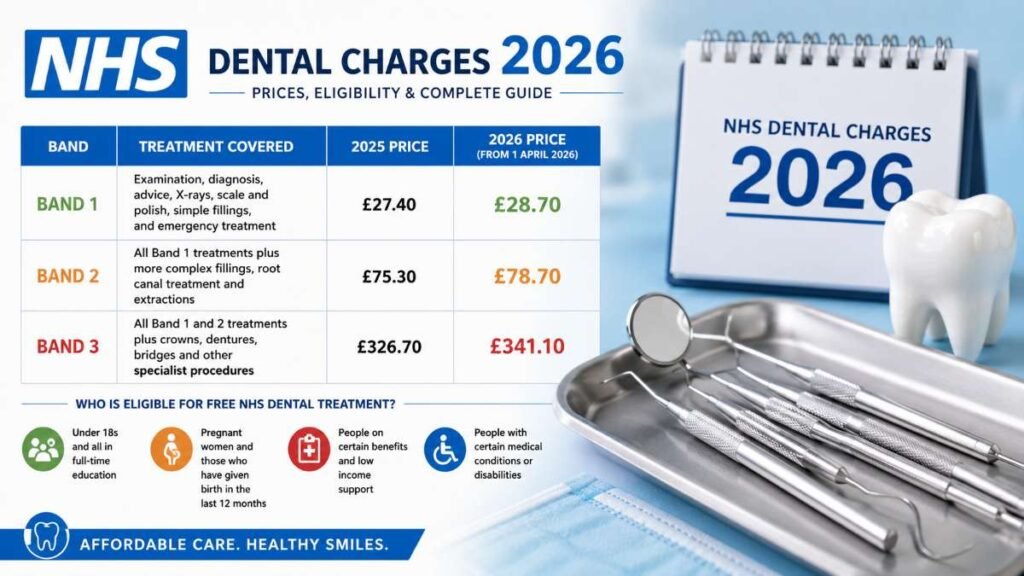
If you do not meet the free criteria, you must contribute toward your care. The 2026 pricing tiers reflect the increased cost of clinical sterilization and professional overheads.
Official NHS Fee Structure 2026 (England)
| Treatment Category | Services Covered | 2026 Patient Fee |
| Level 1 (Basic) | Routine check-ups, diagnostic X-rays, clinical advice, and hygiene cleaning (scale & polish) | £27.90 |
| Level 2 (Restorative) | Includes everything in Level 1 plus fillings, tooth extractions, and root canal work | £76.60 |
| Level 3 (Major) | Includes everything in Levels 1 & 2 plus complex work like crowns, dentures, and bridges | £332.10 |
| Acute Care | Urgent/Emergency appointments for immediate pain relief or temporary repairs | £27.90 |
Understanding these bands is crucial to avoid unexpected costs. For instance, a single Band 2 payment covers multiple fillings if they are part of the same course of treatment. Always ask for a written treatment plan before the work begins. Just as you monitor dental costs, keep an eye on your heart health with our NHS Health Check Over 40 Guide.
If your dentist suggests a treatment that falls into a higher band, ask for a detailed breakdown. Sometimes, what seems like a complex procedure might actually be covered under a lower band if certain clinical criteria are met. Being an informed patient allows you to advocate for the most cost-effective care without compromising on clinical quality.
The Low Income Scheme (HC2) Expert Tip
 The Low Income Scheme (HC2) Expert Tip
The NHS Low Income Scheme (LIS) is a brilliant tool for those who work but have high living costs. You can access free care through an HC2 or HC3 certificate by completing form HC1. Many residents assume that if they aren’t on benefits, they must pay full price—this is a common misconception that leads to thousands of pounds in unnecessary spending.
The HC2 certificate grants 100% help, while the HC3 provides partial support. Remember the £16,000 savings threshold; if your capital is above this, you generally cannot claim. Applying for this scheme can be a financial lifesaver if you require expensive Band 3 work like dentures or crowns. Oral health is often a reflection of your mental state, making a Complete Mindfulness Guide for Beginners UK an essential companion to your routine.
The LIS assessment takes into account your rent, council tax, and other essential outgoings. This means that even if your salary seems high on paper, your “disposable income” might be low enough to qualify you for significant help. Don’t let the paperwork deter you; the savings on a single crown can pay for the time spent filling out the form ten times over.
Regional Variations: The UK Dental Postcode Lottery
 Regional Variations: The UK Dental Postcode Lottery
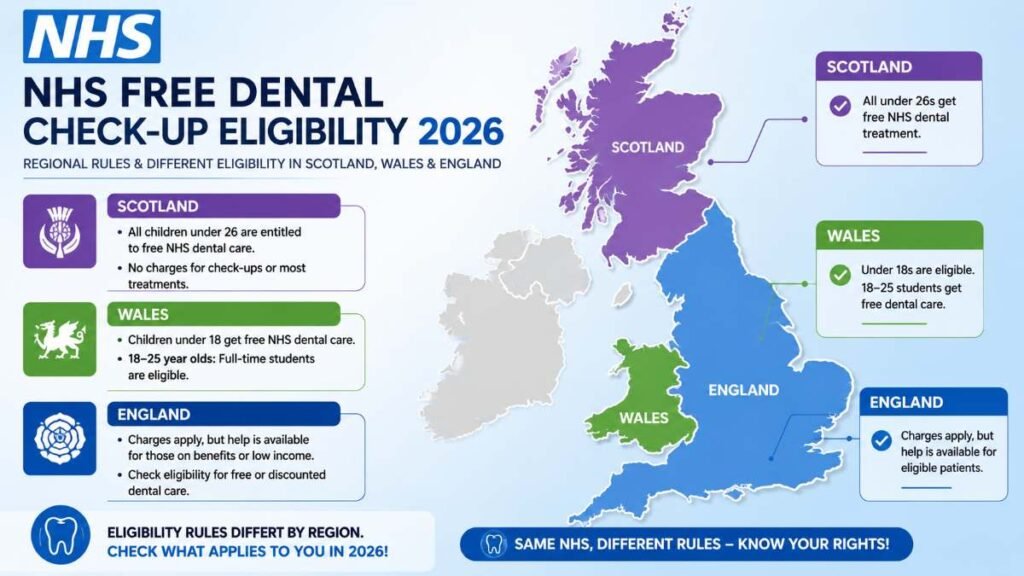
In 2026, where you live significantly determines what you pay. In Scotland, dental examinations are free for every resident, though restorative work like fillings still carries a cost unless you qualify via benefits. This “Free Check-up” policy is designed to encourage early detection of oral cancers and gum disease.
Wales offers free check-ups for those under 25 and over 60, while Northern Ireland operates on a slightly different fee schedule. Navigating these regional differences can be frustrating, especially if you live near a border. If the “postcode lottery” is affecting your peace of mind, consider Stress Management techniques to stay grounded while you locate a local provider.
In Northern Ireland, for example, the charges are calculated as 80% of the dentist’s fee, up to a maximum cap. Comparing these to other regions can be eye-opening. For instance, in England, you pay a fixed Band 2 fee for a filling, but in Northern Ireland, costs are often calculated as a percentage of the dentist’s specific fee. This setup can sometimes make simple repairs cheaper across the border.
Keeping an eye on these subtle differences is a smart move for anyone who lives in one territory but commutes to another for work, as it could save you a significant amount on your dental bill.
Common Pitfalls: Navigating Fines and Essential Precautions
 Common Pitfalls: Navigating Fines and Essential Precautions
The NHS Business Services Authority (NHSBSA) has ramped up automated checks in 2026. Claiming free care without valid proof can lead to a £100 penalty on top of the treatment cost. A common error is the “Age Myth”—being 60+ does not automatically grant free dental care in England, even though it qualifies you for free prescriptions.
Another frequent mistake is assuming your Maternity or Tax Credit certificate is still valid without checking the expiry date. A Recommended Step if you are unsure is to pay upfront and use Form HC5 to claim a refund within three months once your eligibility is confirmed. Accuracy is just as important here as it is when following a Balanced Diet and Healthy Eating Guide UK.
The NHSBSA uses sophisticated data-matching with the DWP and HMRC. If you tick the “Free” box at the dentist, your details are often verified within days. If there is a mismatch, the fine is sent automatically to your home address. To avoid this, always double-check your latest award letters before signing the dental claim form.
Practical Ways to Lower NHS Dental Costs
 Practical Ways to Lower NHS Dental Costs
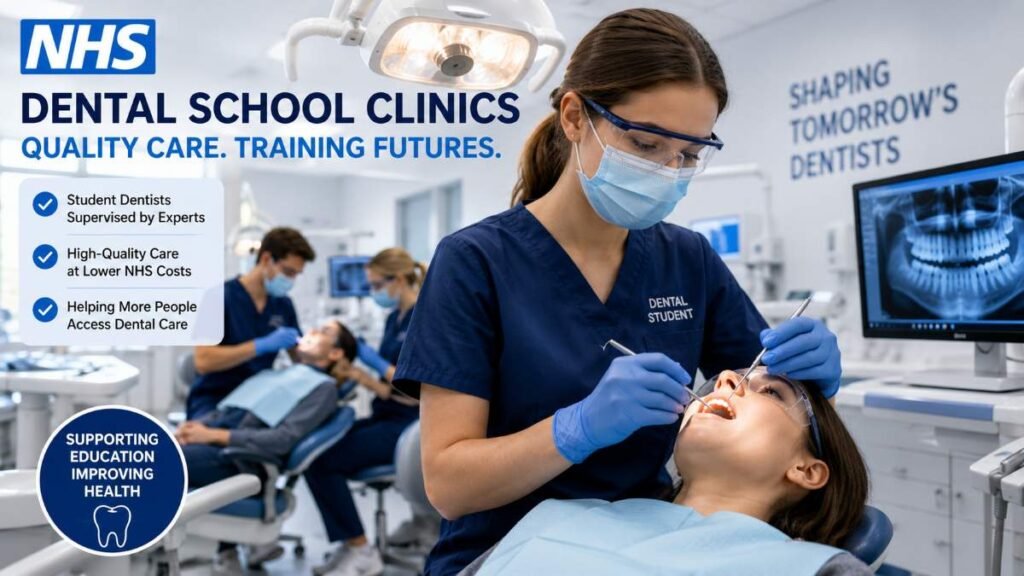
If you are currently ineligible for free care, consider seeking treatment at dental schools like King’s College London or the University of Manchester for lower-cost, supervised care. These clinics are often looking for patients for their final-year students, providing a high standard of care under expert supervision.
Also, explicitly ask for an “NHS slot” when registering, as some practices maintain specific quotas. Investing in preventive tools like electric toothbrushes and interdental cleaners can keep you in Band 1 and avoid expensive procedures. Prevention is the ultimate cost-saver in the long run. For more on optimizing your future, explore Wellness Trends Future Health Longevity.
Another smart move is to look into Dental Capitation Plans like Denplan. While these aren’t NHS, they allow you to spread the cost of your care into monthly payments, often covering all check-ups and hygiene visits for a fixed fee. This can provide financial predictability, ensuring that a sudden toothache doesn’t result in a sudden financial crisis.
Quick Eligibility Checklist: Prepare for Your Visit
 Quick Eligibility Checklist: Prepare for Your Visit
- [ ] Do I have my National Insurance (NI) number ready for the forms?
- [ ] Is my MatEx or HC2 card still in date (check the expiry)?
- [ ] Was my Universal Credit income under the threshold in the last month?
- [ ] Have I asked the clinic specifically for an NHS appointment?
- [ ] Do I have a written treatment plan and a clear cost estimate?
Taking five minutes to run through this checklist before leaving the house can save you hours of administrative headache later. Most dental receptionists are happy to help you verify your details if you have your NI number and benefit letters ready upon arrival.
The Oral-Systemic Link: A Pillar of Preventive Healthcare
 The Oral-Systemic Link: A Pillar of Preventive Healthcare
In 2026, medical professionals increasingly link gum disease to overall health concerns, including heart health and diabetes. By utilizing your eligibility, you are engaging in vital preventive care. Removing plaque reduces harmful bacteria in the mouth, which may support your long-term health and reduce overall body inflammation. Treat your dental check-up as a foundational pillar of your wellness strategy; it is one of the most effective ways to ensure better long-term health.
Modern dentistry is shifting from “drilling and filling” to “predicting and preventing.” Regular check-ups allow your dentist to monitor changes in your oral microbiome and soft tissues. This early intervention can detect oral cancer, signs of vitamin deficiencies, and even the early stages of osteoporosis, often before symptoms appear elsewhere in the body.
🧐 Conclusion: Securing Your Smile in 2026
Understanding your rights is about ensuring financial barriers never stand in the way of your health. The NHS system is designed to be a safety net, but it requires you to be an informed patient. From the Low Income Scheme to regional Scottish benefits, the tools are available for you to use. Take charge of your oral health today, verify your status, and book that appointment with confidence.
Official Resources
- Check Eligibility: NHS Health Costs Checker
- Dental Charges: NHS England Fees
- Low Income Scheme: Apply for HC1 Form
- Find a Dentist: NHS Find a Dentist Tool
Frequently Asked Questions
Q1. I am over 60; is it free in England? No, reaching age 60 does not automatically grant you free care in England, unlike prescriptions. To confirm your NHS Free Dental Check-up Eligibility 2026, you must typically qualify through a low income or specific benefits like the Guarantee Credit element of Pension Credit.
Q2. What should I do if I can’t find an NHS dentist? Finding a provider is the first step to utilizing your NHS Free Dental Check-up Eligibility 2026. You can use the NHS Find a Dentist Tool or call NHS 111 for emergencies. Since capacity varies, persistence is key as many practices only open their NHS lists for very short windows.
Q3. Can I get a refund if I paid while I was eligible? Yes, if you met the criteria for NHS Free Dental Check-up Eligibility 2026 at the time of treatment but paid the fee, you can claim a refund. You must submit Form HC5 within three months of payment, providing your original receipt and proof of eligibility for that date.
✍️👤 About the Author
Dambar R. is a dedicated wellness researcher and the visionary founder of MyHealthyLifeUK. With over a decade of hands-on experience in metabolic science and practical nutrition, he specializes in creating sustainable health transformations for modern lifestyles.
Based on his extensive research, Dambar empowers individuals across the UK and USA to reach their peak fitness goals through science-backed health tips without sacrificing the joy of everyday eating. His mission is to bridge the gap between complex health data and actionable habits that foster long-term vitality and holistic wellness.
⚠️ Medical Disclaimer
The information provided on MyHealthyLifeUK is for educational and informational purposes only. It is not intended to be a substitute for professional medical advice, diagnosis, or treatment.
- Professional Guidance: Always seek the advice of your Physician (GP) or another qualified health provider regarding any medical condition.
- Specialized Advice: For personalized dietary needs, we recommend consulting a Registered Dietitian.
- Safety First: Consult a professional before starting any new fitness or nutrition program.
Never disregard professional medical advice or delay seeking it because of something you have read on this website.