
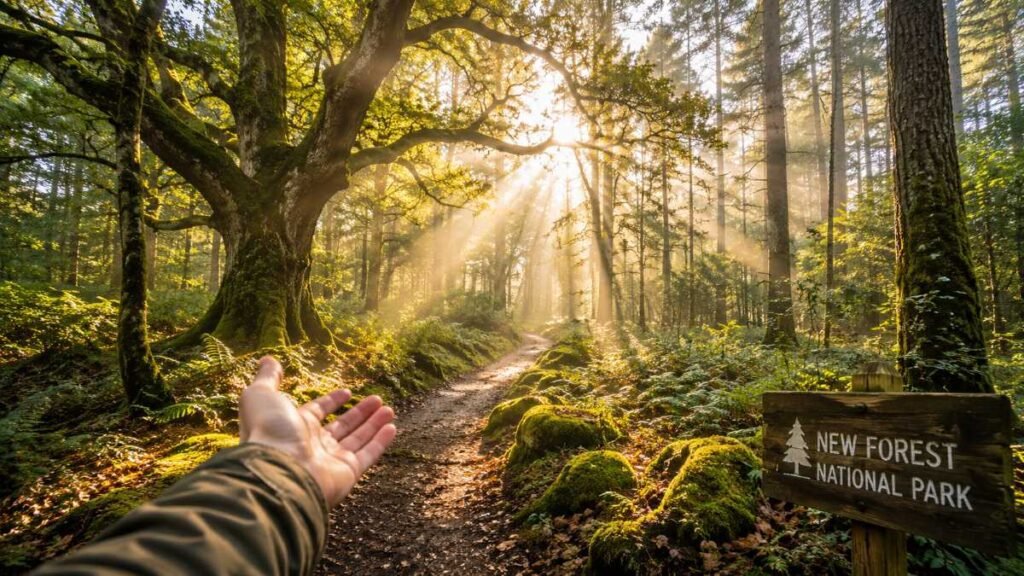
Did you know the average UK professional now spends 7+ hours drowning in blue light? This “Digital Overload” is physically shrinking your brain’s ability to handle stress. As urban noise peaks in 2026, a powerful biological secret has emerged: Shinrin-yoku. In this UK Guide to Forest Bathing, we reveal how certain tree compounds trigger a deep neurological reset that no digital detox can touch. Stop just “walking” and start activating your immune system. Ready to reclaim your focus from the city’s chaos? The future of health is green.
🧪 The Science of "Phytoncides": How Trees Interact with Your Physiology
Forest Bathing is grounded in rigorous biochemistry rather than just vague “wellness trends.” When you walk through a dense UK woodland, the trees around you are actively releasing organic compounds called Phytoncides. These are the tree’s natural defense mechanisms against rot, fungi, and insects. According to research published by the National Center for Biotechnology Information (NCBI), when humans inhale these wood-essential oils, our bodies respond by significantly increasing the count and activity of Natural Killer (NK) cells. These cells are a critical part of our innate immune system, responsible for responding to virally infected cells and maintaining long-term cellular health.
The most profound secret of this UK Guide to Forest Bathing is nature’s ability to shift our nervous system from the high-alert “Fight or Flight” mode into the restorative “Rest and Digest” state. Clinical data suggests that forest therapy leads to an immediate and measurable drop in cortisol—the primary stress hormone—effectively helping to balance the physiological toll of urban environments. Beyond just cortisol, it lowers blood pressure and heart rate, acting as a natural calmative for the central nervous system. This “Green Wash” helps clear the mental fog and metabolic waste that accumulates during a high-stakes, 60-hour work week in the city, allowing your brain to enter a state of deep repair.
📊 Data Insight: Forest Bathing vs. Urban Walking
Metric | Urban High Street Walk | Forest Bathing (Deep Woods) |
Cortisol Reduction | 5% – 8% | 15% – 22% |
NK Cell Activity | Minimal Change | Significant Increase (Up to 30 days) |
Adrenaline Level | Remains Elevated | Measurable 30% Drop |
Brain Wave State | Beta (Alert/Anxious) | Alpha (Relaxed/Reflective) |
Figures compiled from forest therapy observational studies and NCBI-linked research.
📱 Mental Fatigue: Reclaiming Your Focus in the UK Cityscape
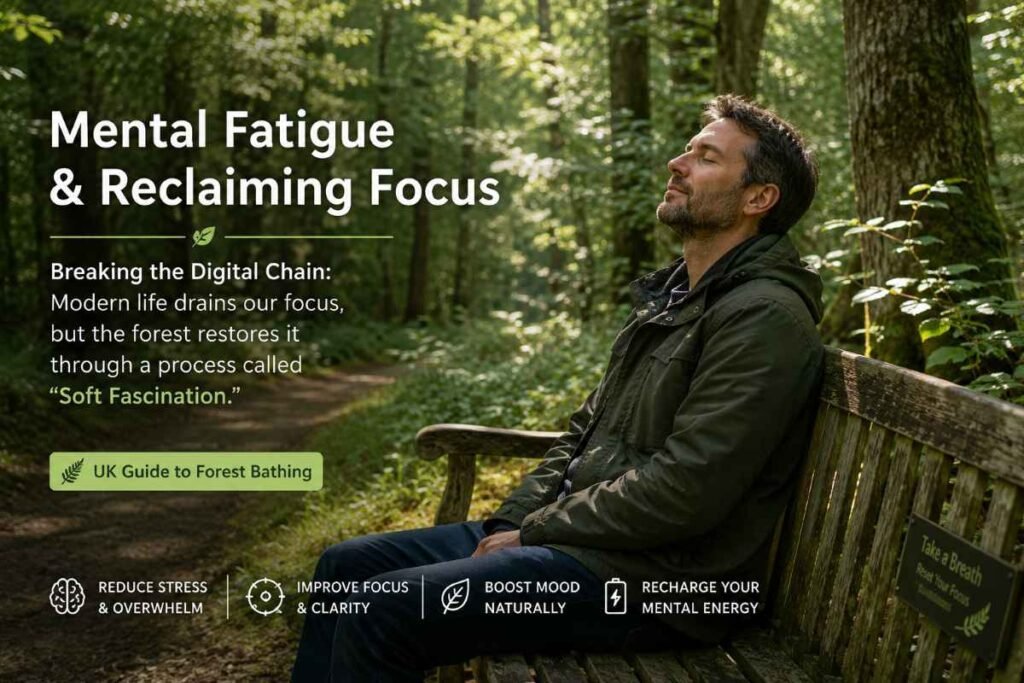
We are currently living in an “Attention Economy” where every digital notification is designed to hijack your dopamine receptors and deplete your cognitive reserve. This constant bombardment leads to what psychologists call “Directed Attention Fatigue,” a state where you lose the ability to focus deeply on complex tasks or maintain emotional stability. Forest bathing introduces the vital concept of “Soft Fascination.” When you observe the natural fractals of a leaf, the rhythmic movement of a stream, or the swaying of branches, your brain begins to recover its executive function without the active effort required by backlit screens.
This UK Guide to Forest Bathing is especially critical for professionals who have transitioned to a 4-day work week in the UK but still find it hard to mentally “switch off” during their three-day weekends. Nature immersion has been shown to improve cognitive flexibility and creative problem-solving by allowing the brain to enter a state of restful awareness. To truly maximize this neurological recovery, many UK biohackers are now pairing their woodland walks with a 7-day dopamine detox reset to completely recalibrate their brain’s reward pathways. This dual approach ensures they return to their professional lives with renewed emotional intelligence and a heightened capacity for strategic thinking.
🇬🇧 Top 5 "Healing Forests" in the UK for Your First Session
For a true therapeutic effect, you need ancient woodlands with high biodiversity and established ecosystems. In the UK, we are fortunate to have access to protected forests that offer high concentrations of beneficial tree aerosols and negative ions. For this UK Guide to Forest Bathing, we recommend these five premier locations that provide the best sensory environment for a total reset:
- The New Forest (Hampshire): Its unique mix of ancient oaks, heathland, and open glades provides a vast, quiet landscape for deep immersion.
- Sherwood Forest (Nottinghamshire): Home to some of the oldest trees in Europe, it offers a sense of “deep time” that is ideal for sensory grounding and perspective.
- Fountains Abbey & Studley Royal (Yorkshire): A UNESCO World Heritage site where the combination of water features and old-growth woods creates a unique microclimate of tranquility.
- Gwydir Forest Park (Wales): The dense Pine, Larch, and Spruce forests here are particularly rich in phytoncides, making it a powerhouse for respiratory and immune health.
- Thetford Forest (Norfolk): With its flat, accessible trails and high pine canopy, it is perfect for those practicing slow, mindful movement without the distraction of difficult terrain.
Expert Tip: Before heading out, especially if you are living in a high-traffic urban hub, it is wise to check the local air quality (PM2.5) metrics. While city air can be taxing on the prefrontal cortex, the filtered, oxygen-rich air of a forest serves as a biological “wash” for your respiratory and neurological systems. By choosing a low-pollution window for your forest visit, you ensure that your neurons are receiving the cleanest environment possible for cellular repair.
🧘♂️ The 4-Step "Forest Immersion" Protocol for Beginners
Forest bathing is not a hike, a fitness challenge, or a social media opportunity; it is a dedicated sensory exercise. The goal is to “be present” rather than “be productive.” To gain the full physiological benefits outlined in this UK Guide to Forest Bathing, follow this simple but strict immersion protocol developed by experts:
- Step 1: Disconnect and Sever the Digital Tether: Turn your phone completely off or leave it in your vehicle. The psychological benefit begins the moment your brain realizes it cannot be interrupted by external demands or the “phantom vibration” of a notification.
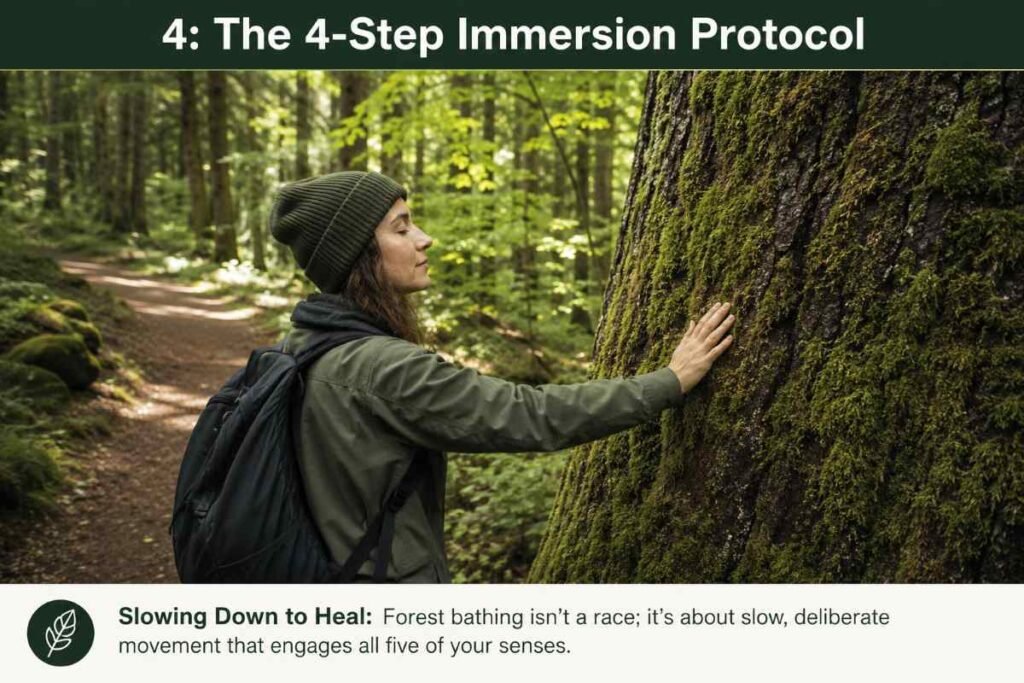
- Step 2: The Snail’s Pace: This isn’t walking for weight loss; it’s about slow, deliberate movement. You should walk at a pace that feels almost unnaturally slow, allowing your peripheral vision to pick up the smallest movements in the canopy.
- Step 3: Activate Your Senses (The 5-Senses Scan): * Sight: Look for the “Komorebi”—the Japanese term for sunlight filtering through branches.
- Sound: Focus on the “white noise” of the wind or the distant rustle of forest floor inhabitants.
- Touch: Feel the texture of tree bark, the dampness of the air on your skin, or the coolness of a stone.
- Step 4: Practice Stillness (The 20-Minute Rule): Find a safe, quiet spot and sit in total silence. This is where your vagus nerve begins to signal to your heart and lungs to slow down, stabilizing your heart rate variability (HRV) and calming your entire internal rhythm
🏥 Why the NHS is Embracing "Social Prescribing" in 2026
The UK’s medical establishment is finally catching up with decades of environmental research. The NHS (National Health Service) now frequently uses “Social Prescribing” to help patients manage stress management and mild-to-moderate anxiety without immediately turning to pharmaceuticals. In several UK-based observational trials, regular forest immersion has shown results comparable to light lifestyle interventions in improving overall mood and reducing the symptoms of burnout.
This UK Guide to Forest Bathing highlights a key biological shift: nature helps our bodies recognize a “safe environment,” which is essential for recovering from the chronic high-stress states that modern cities induce. When we feel safe, our bodies can allocate energy toward repair and immunity rather than defense. The World Health Organization (WHO) has also begun advocating for increased urban green spaces, noting that consistent access to nature is a fundamental requirement for public mental health and longevity in the 21st century.
🍏 The Connection Between Gut Health and Woodland Air
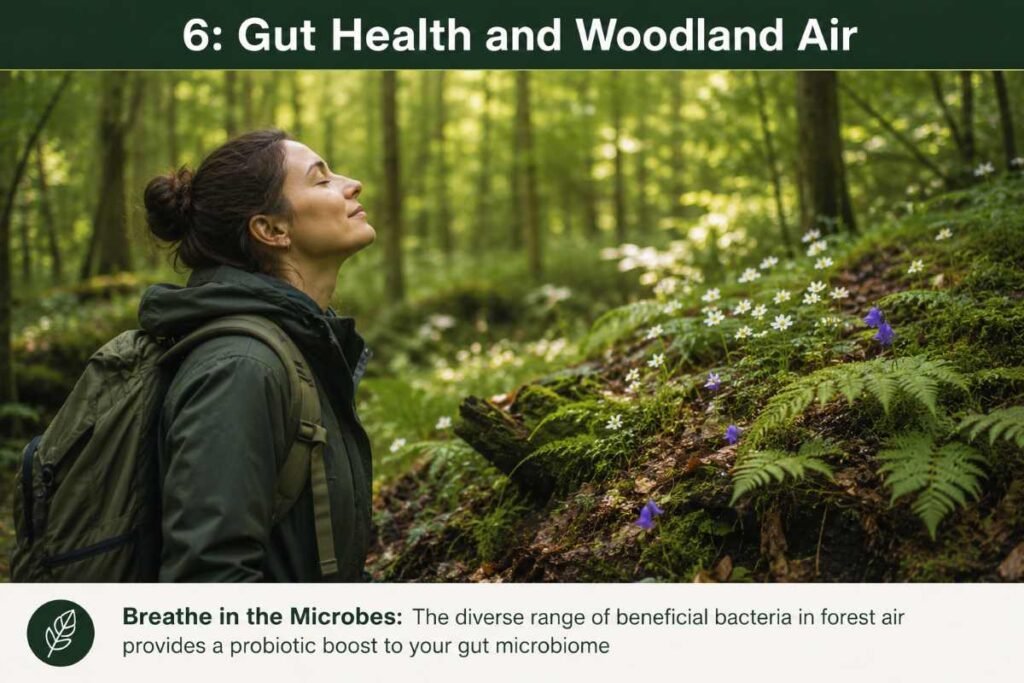
It may sound surprising to the modern urbanite, but the air in an ancient forest is rich in beneficial microbes and soil-based organisms that are entirely absent from sterilized urban offices. When we spend time in these biodiverse environments, we interact with a diverse range of bacteria that can actually support our internal microbiome through inhalation and skin contact. This UK Guide to Forest Bathing suggests that nature immersion is a quiet but effective way to support your gut health guide for beginners.
Research into the “Hygiene Hypothesis” suggests that a lack of exposure to natural microbes can weaken our immune resilience and increase the risk of allergies and autoimmune issues. By spending time in “living” air, you are essentially providing a probiotic boost to your system. By combining your forest walks with a diverse, nutrient-rich diet, you are supporting your health from both an environmental and nutritional perspective, creating a “double-shield” against the inflammatory stressors of modern life.
🧪 Environmental Biohacking: Neutralizing the Urban Exposome
In 2026, we must accept that our “Exposome”—the total sum of environmental factors we encounter—is often hostile to our biology. Living in a major city means dealing with noise pollution, artificial light, and ultra-processed foods (UPF) that trigger systemic inflammation. Forest bathing is the ultimate environmental biohack because it temporarily removes these stressors, allowing the body’s natural detoxification and repair mechanisms to take over.
While many people focus on high-tech gadgets to track their health, the smartest move is to return to the foundational environments we evolved for. Forest air is rich in negative ions, which are known to increase oxygen flow to the brain and improve daytime alertness and mood. This is why a weekend in the woods often feels more refreshing than a week at a luxury indoor spa; it is a cellular-level rejuvenation that aligns with the principles of longevity and preventative care.
🌙 The Glymphatic Flush: Nature’s Role in Deep Sleep
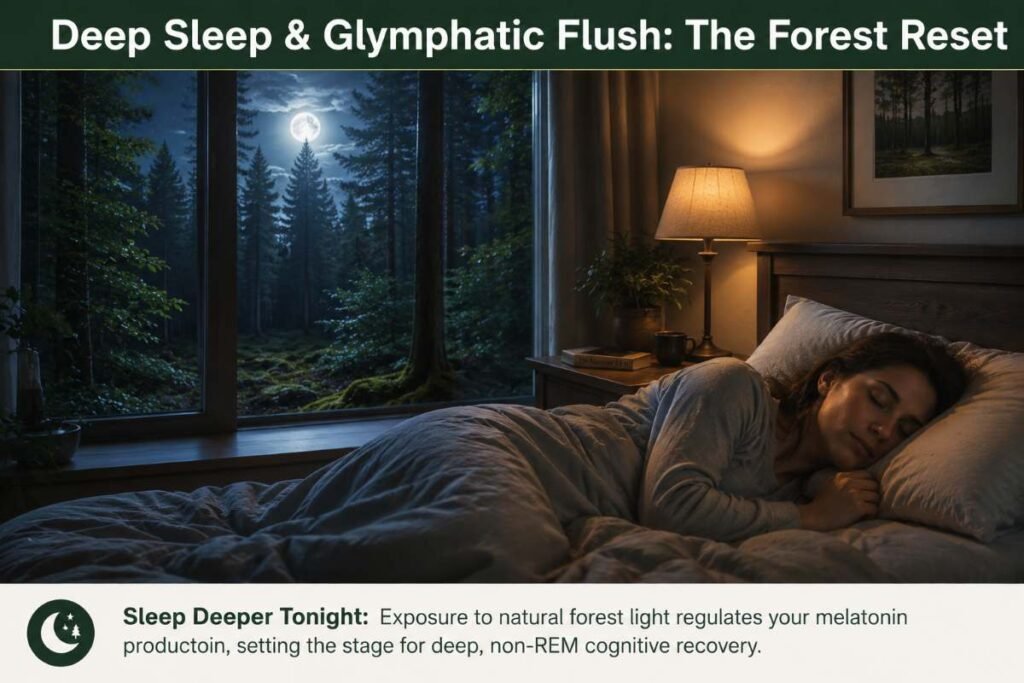
The ultimate goal of any health routine is high-quality recovery, and that begins with sleep. Exposure to the natural, unfiltered light of a forest—even on a typical grey UK afternoon—helps regulate your circadian rhythm by signaling to your brain when to produce melatonin. This ensures that when you return home, your body is better prepared to follow a consistent 7-hour sleep rule for deep, non-REM recovery.
Deep sleep is the only time the brain’s “Glymphatic System” can effectively clear out the neurotoxic waste products gathered during your time in the city. By reducing inflammatory “noise” through forest bathing during the day, you make it significantly easier for your brain to enter the deep stages of sleep required for long-term cognitive health. Nature doesn’t just help you relax; it sets the stage for the most important biological “cleaning” process your brain possesses.
❓ Frequently Asked Questions
Q1: Does it work in the British winter? Yes! While phytoncides peak in summer, this UK Guide to Forest Bathing highlights that winter’s “visual silence” and crisp air are perfect for clearing mental fatigue. Nature’s healing power works year-round.
Q2: How often should I practice Forest Bathing? A 2-hour weekly session is the “Gold Standard,” but even 20 minutes helps. Following this UK Guide to Forest Bathing will help you lower cortisol and boost mood, even in short bursts.
Q3: Can I do this in a city park? City parks work, but for a full “neurological reset,” ancient woodlands are better. This UK Guide to Forest Bathing recommends deep forests for higher biodiversity, cleaner air, and total silence.
🏁 Conclusion: A Practical Investment in Your Cognitive Future
Ultimately, forest bathing is not a luxury or a weekend hobby; it is a practical, science-backed response to the demands of modern urban life. We evolved to thrive in natural environments, and the modern city often places a strain on our biology that we simply aren’t equipped to handle indefinitely. This UK Guide to Forest Bathing serves as a reminder that the most effective solutions for stress and exhaustion are often the simplest ones. The next time you feel overwhelmed by the relentless pace of London, Manchester, or Birmingham, find the nearest ancient woodland. Your mind, your immune system, and your long-term health will thank you. The forest is waiting.
✍️👤 About the Author
Dambar R. is a dedicated wellness researcher and the visionary founder of MyHealthyLifeUK. With over a decade of hands-on experience in metabolic science and practical nutrition, he specializes in creating sustainable health transformations for modern lifestyles.
Based on his extensive research, Dambar empowers individuals across the UK and USA to reach their peak fitness goals through science-backed health tips without sacrificing the joy of everyday eating. His mission is to bridge the gap between complex health data and actionable habits that foster long-term vitality and holistic wellness.
⚠️ Medical Disclaimer
The information provided on MyHealthyLifeUK is for educational and informational purposes only. It is not intended to be a substitute for professional medical advice, diagnosis, or treatment.
- Professional Guidance: Always seek the advice of your Physician (GP) or another qualified health provider regarding any medical condition.
- Specialized Advice: For personalized dietary needs, we recommend consulting a Registered Dietitian.
- Safety First: Consult a professional before starting any new fitness or nutrition program.
Never disregard professional medical advice or delay seeking it because of something you have read on this website.