

Early detection is the most significant determinant of clinical outcomes in oncology. While the majority of breast abnormalities are benign, recognizing the objective early warning signs of breast cancer is a critical skill for all women. This guide provides a clinical perspective on physiological changes, the importance of diagnostic screening, and the established pathways for medical intervention. By adhering to evidence-based practices, patients can ensure that any potential pathology is identified during the earliest, most treatable stages.
“Want to master your health? Before we dive into the details, make sure you explore our comprehensive Master Your Diet In The UK guide to build a foundation that actually lasts.”
 Clinical Indicators: Identifying Breast Lumps
 Clinical Indicators: Identifying Breast Lumps
The most frequent clinical presentation of malignancy is a new, palpable mass. It is a common misconception that all malignant masses are painful; in clinical practice, the majority of early warning signs of breast cancer involving a mass are painless, firm, and irregular in texture.
Unlike benign cysts, which often fluctuate in size due to hormonal cycles, a malignant mass typically remains fixed and does not regress. Clinicians advise that any new, persistent mass should be categorized as suspicious until proven otherwise through imaging.
- Clinical Assessment Criteria:
- Texture: Masses often feel hard, non-tender, and possess irregular borders.
- Mobility: Malignant tumors typically demonstrate limited mobility compared to surrounding fatty tissue.
- Persistence: Unlike benign nodules, these do not fluctuate in size relative to the menstrual cycle.
- Axillary Involvement: Palpable lymph nodes in the underarm (axillary) area can indicate metastatic spread.
For those interested in general health maintenance, see our guide on simple healthy living tips.

Dermatological Changes and Texture
 Dermatological Changes and Texture
Changes to the breast skin often signify localized inflammation or underlying lymphatic disruption. One of the classic early warning signs of breast cancer is peau d’orange (orange peel skin), where the skin develops a dimpled, thickened texture.
This occurs due to the obstruction of dermal lymphatics by malignant cells, leading to localized edema. Clinicians warn that this physical alteration is not a sign of superficial dryness, but a potential indication of deep tissue pathology. It is imperative to observe these changes in a well-lit environment and compare the symmetry of both breasts.
- Objective Observations:
- Dimpling: Puckering or tethering of the skin during movement.
- Erythema: Persistent, localized redness or increased skin temperature.
- Induration: Thickening or hardening of the breast skin.
- Ulceration: Persistent sores that fail to respond to standard dermatological treatment.
Nipple Abnormalities and Secretions
 Nipple Abnormalities and Secretions
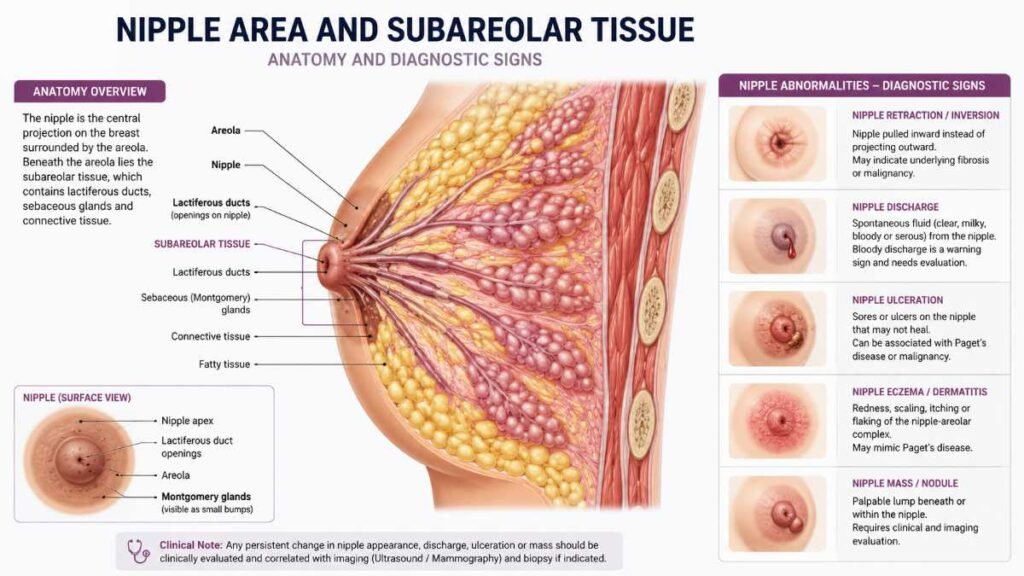
Nipple morphology provides significant clinical data regarding subareolar tissue health. A primary early warning signs of breast cancer includes spontaneous, unilateral nipple discharge that warrants immediate investigation.
While physiological discharge is often bilateral and considered benign, pathological discharge—particularly if it is blood-stained or occurs without stimulation—requires diagnostic imaging. Furthermore, Paget’s disease can present as persistent dermatitis, often misdiagnosed as simple eczema. “Keeping your blood pressure within a healthy range is essential for long-term heart health.”
Critical Symptom Checklist:
- Inversion: A sudden, recent retraction of the nipple inward.
- Exudate: Spontaneous bloody or serous (clear) fluid production.
- Dermatitis: Persistent scaling, crusting, or erosion of the nipple surface.
- Asymmetry: A sudden shift in the alignment or orientation of the nipple.
Evaluating Breast Pain as a Diagnostic Factor
 Evaluating Breast Pain as a Diagnostic Factor
While breast pain (mastalgia) is frequently associated with cyclical hormonal fluctuations, persistent, localized pain is occasionally among the early warning signs of breast cancer.
Unlike hormonal pain, which is typically bilateral and diffuse, malignancy-related discomfort is often unilateral and fixed to a specific quadrant. Patients should utilize a symptom log to differentiate between transient hormonal aches and abnormal, focal pain that requires clinical review. Never assume localized pain is “muscle strain” if it remains stagnant in one precise spot for weeks.
Symptom Feature | Malignant Indicator | Benign/Cyclical Indicator |
Lump | Hard, fixed, painless | Soft, tender, movable |
Pain | Persistent, localized | Cyclic, diffuse, bilateral |
Tissue | Texture/Contour change | Uniform/Soft consistency |
Standardized Diagnostic Pathways
 Standardized Diagnostic Pathways
Clinical diagnosis relies on the “Triple Assessment” protocol: physical examination, diagnostic imaging, and tissue sampling. When presenting with early warning signs of breast cancer, clinicians utilize mammography and ultrasound to characterize the mass.
A core-needle biopsy remains the definitive procedure for pathological confirmation. This systematic approach ensures high diagnostic accuracy and facilitates prompt treatment planning for those who require it. Advanced imaging techniques can identify suspicious microcalcifications long before they are palpable to the touch. For concerns regarding blood-based metabolic markers, review our private blood test uk options.
- Protocol Components:
- Clinical Examination: Professional assessment by a breast specialist or oncologist.
- Diagnostic Mammography: High-resolution imaging to identify calcifications or densities.
- Breast Ultrasound: Used to distinguish cystic (fluid-filled) versus solid masses.
- Core-Needle Biopsy: Histopathological analysis of sampled tissue cells.
Systematic Screening and Self-Awareness
 Systematic Screening and Self-Awareness
Regular self-monitoring allows for the identification of interval changes. The most effective window for examination is 7–10 days post-menses, when tissues are least affected by hormonal swelling.
Just as one might master your diet in the uk to optimize metabolic health, routine screening should be a disciplined health priority. By keeping a detailed record of your breast’s baseline structure, you become the first line of defense in identifying new early warning signs of breast cancer.
- Self-Examination Habits:
- Maintain a consistent monthly self-assessment schedule.
- Use finger pads in systematic, circular motions across all quadrants.
- Inspect breasts in a mirror for contour abnormalities while hands are at rest and raised.
Document any persistent changes for your physician’s review.

Modifiable Risk Factors
 Modifiable Risk Factors
Evidence suggests that systemic inflammation and metabolic health contribute to long-term oncogenic risk. Reducing exposure to carcinogens and maintaining a healthy body composition are evidence-based strategies for risk mitigation.
Adopting a structured approach to nutrition can assist in maintaining a healthy BMI, thereby reducing adipose-derived estrogen production, which is a known driver in many cases. Focusing on nutrient-dense, fiber-rich foods helps support the cellular health required to combat the early warning signs of breast cancer at a systemic level.
- Evidence-Based Risk Reduction:
- Weight Management: Reducing body fat to decrease hormone production.
- Physical Activity: Regular, moderate-to-vigorous exercise improves metabolic health.
- Alcohol Limitation: Lowering intake is correlated with reduced oncogenic risk.
Dietary Quality: Prioritizing best fat burning foods for weight loss to limit metabolic inflammation.
Genetic Predisposition and Family History
 Genetic Predisposition and Family History
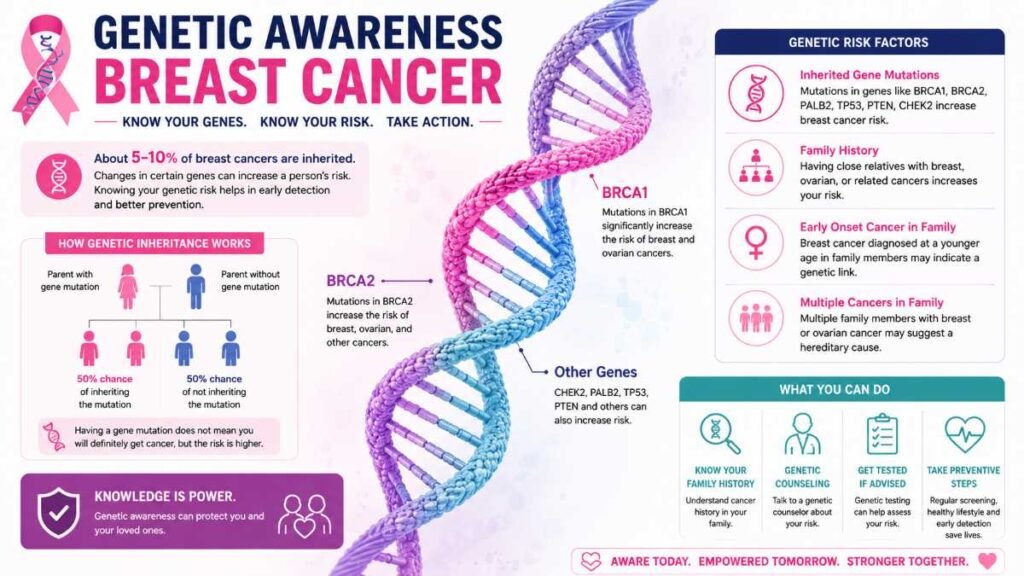
Genetic factors account for approximately 5–10% of breast cancer cases. Patients with a first-degree relative—such as a mother or sister—who has had breast or ovarian cancer should consider genetic counseling regarding BRCA1 and BRCA2 mutations.
Understanding early warning signs of breast cancer within a genetic context allows for a personalized, high-intensity surveillance schedule. By mapping out your pedigree, your physician can offer the most accurate diagnostic strategy to ensure that your risk is actively managed rather than passively observed.
- Genetic Risk Protocols:
- Detailed audit of maternal and paternal family oncological history.
- Referral for BRCA gene mutation testing if clinical criteria are met.
- Initiation of biennial mammograms at a younger, individualized age.
Psychological Resilience and Stress Management
The psychological burden of screening and health monitoring can be significant. Chronic stress management is vital for maintaining immune function and ensuring adherence to clinical protocols.
If you find the process of identifying early warning signs of breast cancer overwhelming, utilizing structured mindfulness practices can help you stay grounded. Maintaining mental clarity is an essential component of an effective health strategy. Resources such as a complete mindfulness guide for beginners uk can be exceptionally helpful in mitigating health-related worry.
- Stress Management Strategies:
- Prioritization of restorative 7-hour sleep cycles.
- Utilization of mindfulness-based cognitive strategies.
- Engagement with support networks to reduce health-related anxiety.
Navigating Healthcare: Why Professional Guidance Matters
Identifying the early warning signs of breast cancer is a critical first step, but it must be followed by immediate professional action. Self-examination creates awareness, but it is never a substitute for clinical diagnostics. When you detect persistent changes, a “wait-and-see” approach can be dangerous.
Engaging with a healthcare provider ensures your concerns are evaluated through standardized clinical protocols:
- Clinical Evaluation: Professional assessment through clinical palpation and high-resolution imaging.
- Proactive Monitoring: In the UK, discuss any persistent findings during an NHS health check to maintain accurate baseline health data.
- Rapid Diagnostics: If you require urgent clarity, private healthcare resources can often expedite the diagnostic process and provide faster access to specialists.
- Definitive Testing: Advanced histopathological testing remains the gold standard for confirmation.
The Bottom Line: Timely medical intervention is the most significant factor in achieving positive clinical outcomes. By integrating professional oversight into your wellness routine, you transform from a passive observer into an active manager of your long-term oncological health.
Take Action: Prioritize Early Detection
“Recognizing the early warning signs of breast cancer is vital for timely intervention. If you notice any persistent changes, prioritize a clinical assessment immediately. Early detection remains your most powerful tool; take charge of your health and schedule your screening today.”

🗣️ Frequently Asked Questions
1. Which early signs of breast cancer often go unnoticed? Beyond lumps, look for skin dimpling, “orange peel” texture, or nipple inversion. Recognizing these early warning signs of breast cancer is vital, as they are often overlooked.
2. What are the common symptoms of a breast lump? A malignant lump is typically firm, irregular, and fixed in place. Unlike benign cysts, these early warning signs of breast cancer are usually painless.
3. How to differentiate a lump from tissue? Normal tissue feels “ropey” and changes cyclically. A suspicious mass feels like a hard, immovable pebble.
4. Does cancer cause pain? Persistent, localized pain can be one of the early warning signs of breast cancer and requires clinical review.
✍️👤 About the Author
Dambar R. is a dedicated wellness researcher and the visionary founder of MyHealthyLifeUK. With over a decade of hands-on experience in metabolic science and practical nutrition, he specializes in creating sustainable health transformations for modern lifestyles.
Based on his extensive research, Dambar empowers individuals across the UK and USA to reach their peak fitness goals through science-backed health tips without sacrificing the joy of everyday eating. His mission is to bridge the gap between complex health data and actionable habits that foster long-term vitality and holistic wellness.
⚠️ Medical Disclaimer
The information provided on MyHealthyLifeUK is for educational and informational purposes only. It is not intended to be a substitute for professional medical advice, diagnosis, or treatment.
- Professional Guidance: Always seek the advice of your Physician (GP) or another qualified health provider regarding any medical condition.
- Specialized Advice: For personalized dietary needs, we recommend consulting a Registered Dietitian.
- Safety First: Consult a professional before starting any new fitness or nutrition program.
Never disregard professional medical advice or delay seeking it because of something you have read on this website.