
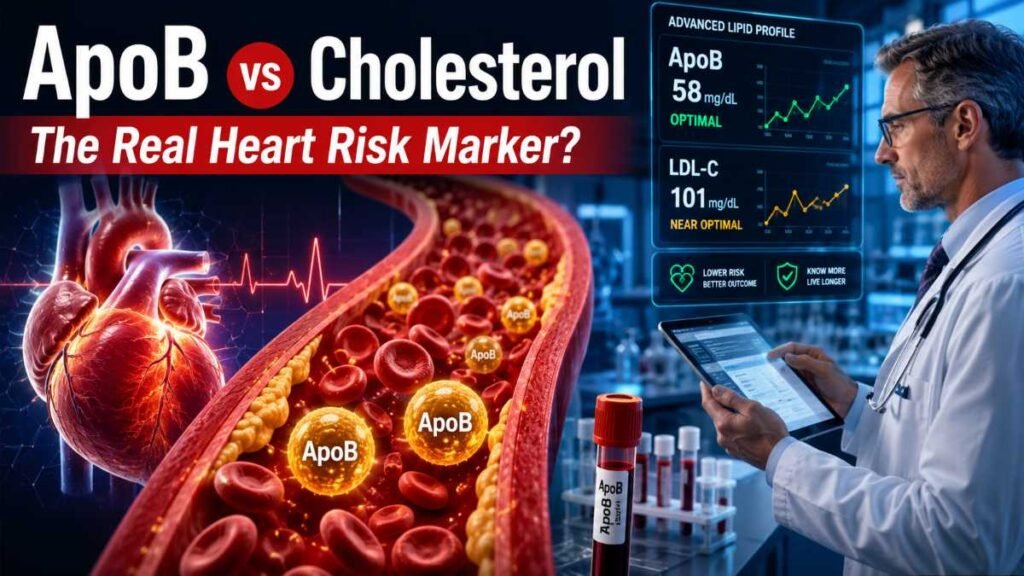
Is your “normal” cholesterol report a ticking time bomb? Millions follow standard medical advice, celebrating “perfect” LDL numbers, yet suffer sudden heart attacks every single day. In 2026, top longevity experts are exposing the traditional lipid panel as an incomplete, dangerous map of your arterial health. To uncover your true cardiovascular risk, you must look deeper. The ApoB Blood Test cuts through the hidden metrics, exposing whether you are genuinely protected or living under a false sense of security. Don’t risk your biological future on outdated science.
 The Particle Count: Why ApoB Blood Test vs Cholesterol Matters
 The Particle Count: Why ApoB Blood Test vs Cholesterol Matters
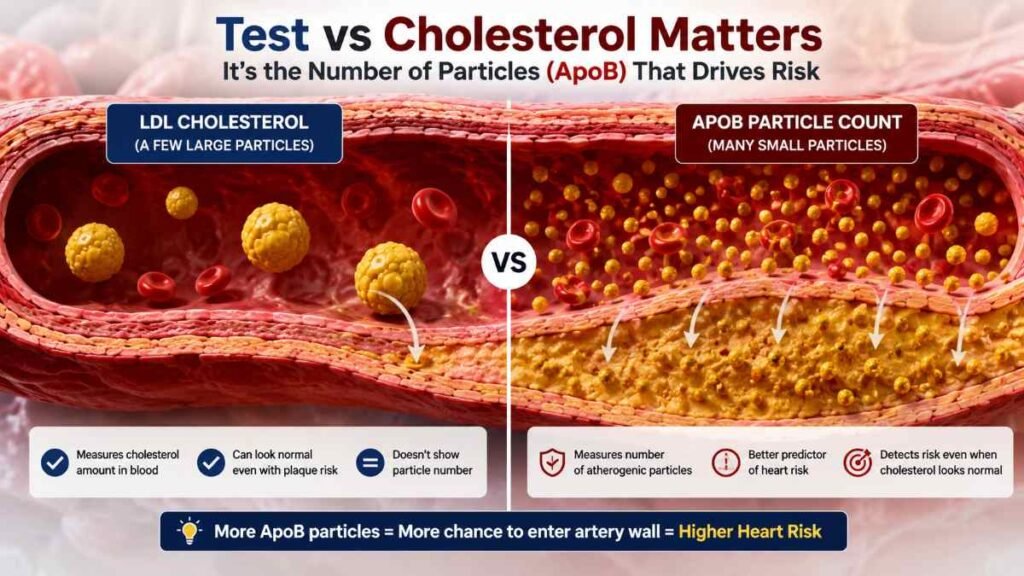
For decades, we’ve measured cholesterol by weight (mg/dL), which is like measuring the total weight of passengers in a fleet of cars to predict traffic congestion. However, heart disease isn’t caused by the weight of the cholesterol, but by the number of particles that carry it. The ApoB Blood Test vs Cholesterol comparison reveals that Apolipoprotein B is the “passport” found on every single potentially plaque-forming particle. Whether it is LDL, VLDL, or IDL, if it has an ApoB protein attached, it has the ability to enter your arterial wall and start the process of atherosclerosis.
In 2026, top-tier clinics in the USA are moving away from calculated LDL because it fails to account for particle concentration. High particle counts represent more “lottery tickets” for a heart attack. If you are focused on wellness trends for longevity, you cannot afford to ignore this metric. Much like walking for weight loss, maintaining low ApoB levels is a long-term investment in your future self. When you understand that one large LDL particle and three small LDL particles might weigh the same but carry three times the risk, the necessity of an ApoB test becomes undeniable for anyone serious about disease prevention.
The Comparison Sheet: Standard Lipid Panel vs. ApoB
 The Comparison Sheet: Standard Lipid Panel vs. ApoB
Understanding the technical differences is key to mastering your health data. While standard tests are cheap and widely available, they often miss “Discordance”—a state where LDL is low but ApoB is high, leaving patients dangerously misinformed.
Feature | Standard Cholesterol (LDL-C) | ApoB Blood Test (ApoB) |
What it measures | Weight of the cargo (Cholesterol) | Number of the vehicles (Particles) |
Accuracy | Indirect & often estimated | Direct & extremely precise |
Risk Prediction | Moderate (Misses 20-30% of cases) | Superior (Gold standard in 2026) |
Metabolic Context | Affected by slow metabolism | Stable marker of arterial risk |
Clinical Value | Basic screening | High-stakes longevity & biohacking |
The Artery Wall Battle: How ApoB Drives Plaque
 The Artery Wall Battle: How ApoB Drives Plaque
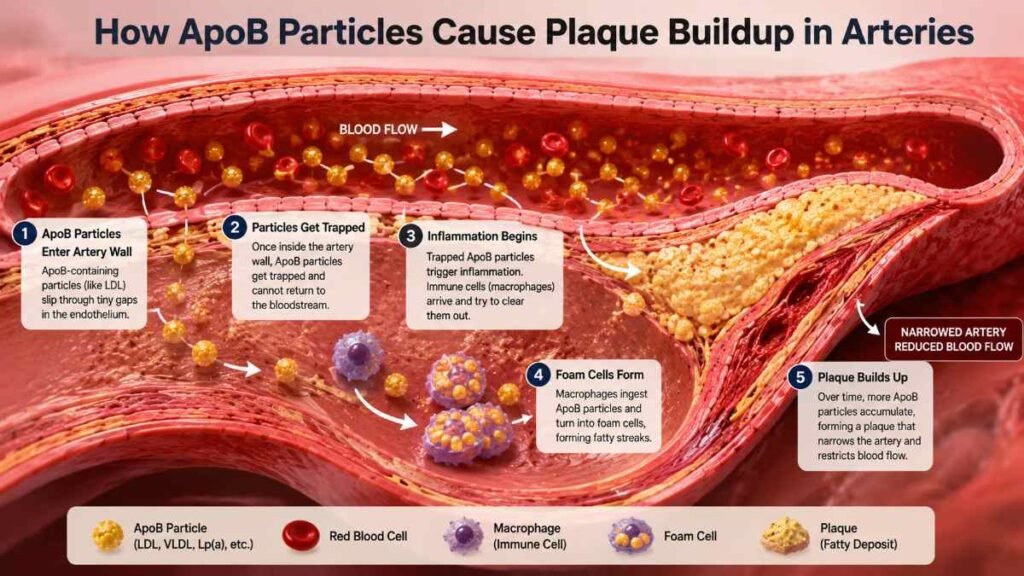
The real danger starts when these particles become trapped in the sub-endothelial space of the arterial wall. Because ApoB particles are small and “atherogenic,” they can easily penetrate the lining of your arteries. Once inside, they become oxidized, triggering an aggressive immune response that leads to plaque buildup. This is why the ApoB Blood Test vs Cholesterol metric is so critical; it tells you exactly how many “invaders” are trying to enter your arterial walls at any given second.
For professionals in the USA managing high stress, this risk is amplified. As you look for ways to how to lower cortisol levels fast, you must also ensure your blood chemistry isn’t silently creating a physical emergency. Stress can worsen lipid profiles, but ApoB remains the most stable indicator of whether those lipids are actually causing damage. According to research from the American College of Cardiology, lowering ApoB is the most effective way to halt or even reverse the progression of heart disease. It is the literal foundation of cardiovascular “damage control.”
The 2026 Protocol: Getting Your ApoB Tested
 The 2026 Protocol: Getting Your ApoB Tested
In the USA, you no longer have to wait for your annual physical to get this data. Private labs like Quest Diagnostics and Labcorp allow you to order an ApoB test directly, putting the power of diagnostics in your hands.
- Optimal Range: For those seeking “Elite” health, an ApoB level below 60 mg/dL is often the target. For high-risk individuals, doctors may push for below 40 mg/dL.
- Cost vs. Value: While a standard panel is $20, an ApoB test ranges from $30-$60. Given that heart disease is the #1 killer, the ROI on the ApoB Blood Test vs Cholesterol upgrade is immeasurable.
- UK Context: If you are in London or Manchester, you can access these tests through private health checks or by utilizing your NHS health check over 40 guide to ask for advanced lipid markers. Understanding your options through the NHS Right to Choose framework can also help you navigate private referrals for more comprehensive blood work.
Nutrition & The ApoB Response: What to Eat
 Nutrition & The ApoB Response: What to Eat
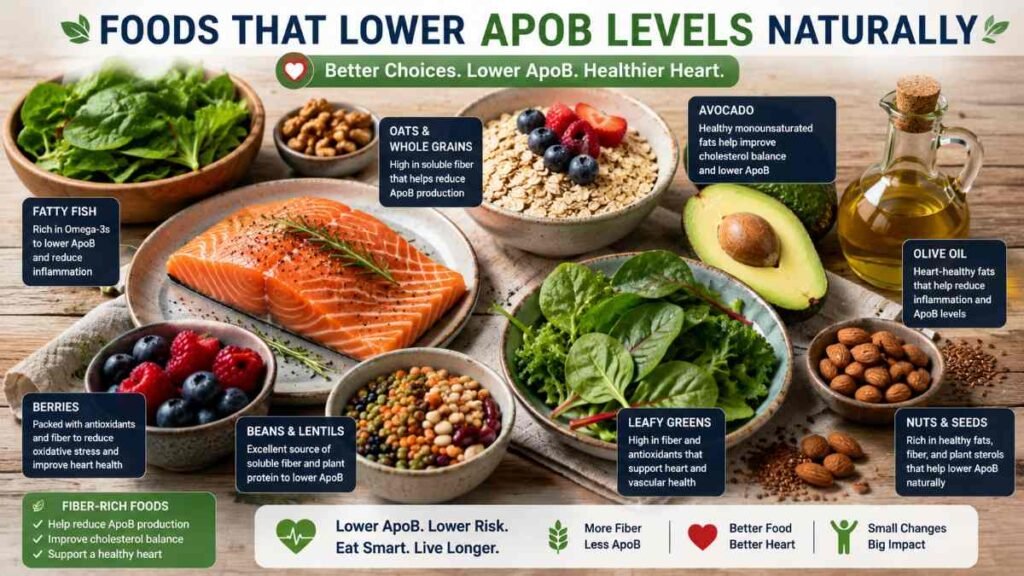
If your ApoB is high, your diet needs a surgical adjustment. It’s not just about “eating healthy”; it’s about reducing the specific fats that signal the liver to produce more ApoB particles. This is a foundational part of mastering your diet in the UK or the USA.
- Fiber is King: Soluble fiber binds to bile acids, forcing the liver to use up cholesterol to make more, thereby lowering your circulating ApoB. Incorporating a high fiber meal plan is your best natural defense against rising particle counts.
- Saturated Fat Sensitivity: Some people are “Hyper-responders” to saturated fat. For these individuals, butter and coconut oil can send ApoB skyrocketing. Monitoring your intake is as vital as following a Mediterranean diet UK weight loss guide.
- The Omega-3 Factor: High-quality fish oil can help lower triglycerides, which indirectly helps clear ApoB particles faster. Check the latest Omega-3 research for focus to see how these fats benefit the brain as well as the heart.
Why This Matters for Cognitive Longevity
 Why This Matters for Cognitive Longevity
A healthy heart is a healthy brain. The same ApoB particles that clog heart arteries can also affect the micro-vessels in the brain, leading to “vascular dementia” or chronic brain fog. By winning the ApoB Blood Test vs Cholesterol battle, you are also protecting your future cognitive sovereignty. If your arterial system is cluttered with plaque, your brain receives less oxygen and vital nutrients, leading to a slow decline in executive function over time.
In the high-stakes economy of 2026, mental clarity is a competitive advantage. If your blood is “thick” with atherogenic particles, your oxygen delivery is less efficient. This is why nootropics for focus and memory work best when your underlying cardiovascular health is optimized. High-level performance starts in the blood, and a clear ApoB profile is the ultimate “clean slate” for brain optimization. Combining cardiovascular health with a complete mindfulness guide for beginners ensures both your hardware and software are running at peak capacity
The Synergy: ApoB, Metabolism, and Weight Loss
 The Synergy: ApoB, Metabolism, and Weight Loss
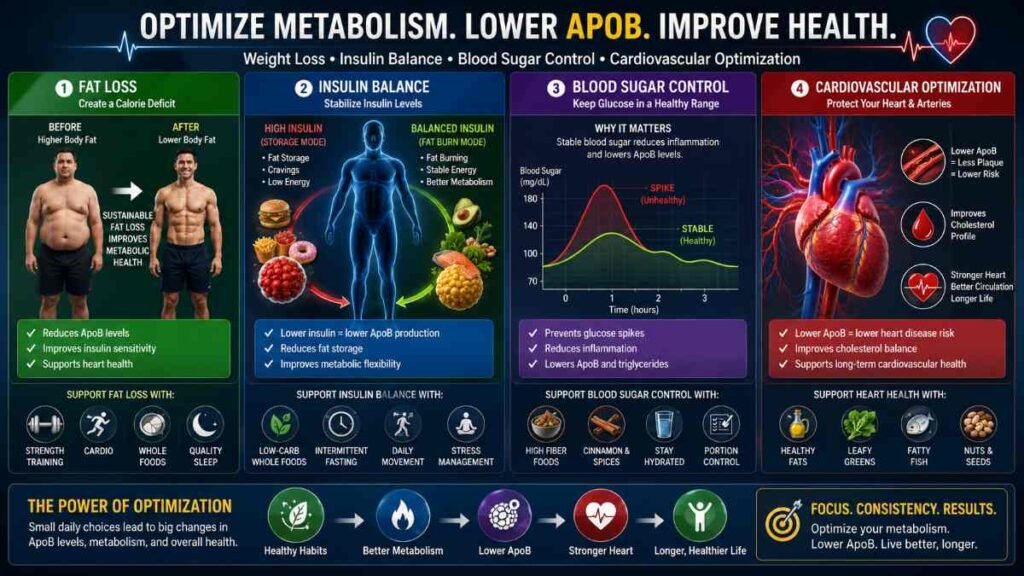
There is a metabolic “vicious cycle” where insulin resistance drives up ApoB levels. When your body cannot manage glucose effectively, it produces more VLDL particles, which eventually turn into small, dense LDL (all carrying ApoB). If you are struggling with weight, following a calorie deficit guide for weight loss can help, but you must also address the quality of your lipids to break the inflammatory cycle.
Research published in the Journal of the American Medical Association (JAMA) suggests that even modest weight loss can significantly improve your ApoB Blood Test vs Cholesterol ratio. By combining healthy meal prep for weight loss with advanced blood tracking, you ensure that your fat loss journey is actually making you healthier on the inside, not just looking better on the outside. Metabolic health and heart health are two sides of the same coin; you cannot optimize one without addressing the other. Proactive monitoring ensures that your intermittent fasting diet plan is actually delivering the cellular cleanup it promises.
Genetics and the ApoB Baseline: The LP(a) Factor
 Genetics and the ApoB Baseline: The LP(a) Factor
While diet and exercise are foundational, your ApoB Blood Test vs Cholesterol results are also heavily influenced by your genetic blueprint. One often-overlooked marker is Lipoprotein(a), or Lp(a), which is a highly inflammatory and “sticky” relative of LDL. If you have a family history of early heart attacks despite a “healthy” lifestyle, your ApoB may be elevated due to these genetic particles that do not respond to traditional diet changes in the same way.
Understanding your genetic baseline is a cornerstone of genetic testing for weight loss and longevity. In 2026, we are moving toward “Pharmacogenomics,” where your blood markers dictate exactly which supplements or medications will work for your body. If your ApoB remains high despite a Whole30 diet plan in USA, it may indicate a genetic predisposition that requires more targeted intervention. This knowledge is power; it stops you from blaming your “willpower” and starts you on a path of scientific precision tailored to your DNA.
Cellular Energy and Arterial Protection
 Cellular Energy and Arterial Protection
The health of your arteries isn’t just about what’s floating in the blood; it’s about the resilience of the arterial walls themselves. High ApoB levels create an oxidative environment that drains cellular energy. To combat this, 2026 longevity experts focus on mitochondrial support. When your cells have enough ATP (energy), they can better manage the repair processes required after exposure to inflammatory particles. This is why NMN anti-aging benefits are being studied in the context of cardiovascular health.
By stacking your ApoB Blood Test vs Cholesterol optimization with senolytic stacks to clear zombie cells, you are attacking heart disease from two angles: reducing the “trash” (ApoB) and improving the “trash collectors” (your cells). This holistic approach is what defines modern biohacking. It ensures that your mindful eating and self-care routine is supported by a robust biological infrastructure, allowing your body to withstand the stresses of the modern environment while maintaining pristine arterial pathways.
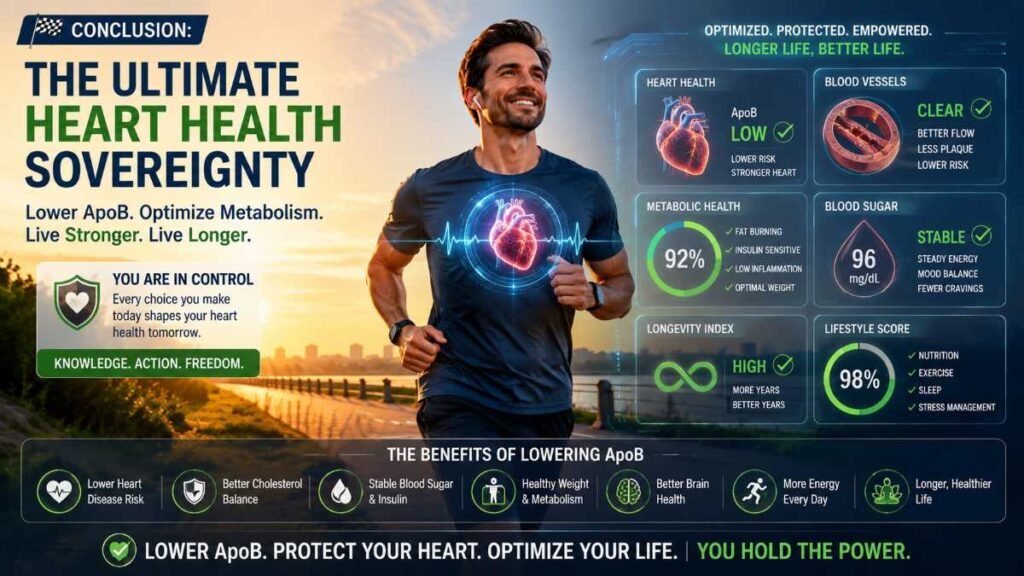
🏁 Conclusion: The Ultimate Heart Health Sovereignty
Traditional cholesterol metrics are 20th-century history—the ApoB Blood Test is the 21st-century truth for real cardiovascular protection. Don’t leave your biological future to outdated standards. Reclaim your health sovereignty today, test your particle count, and back your longevity goals with undeniable, precise data.
❓ Frequently Asked Questions
Q: Can ApoB be low while LDL is high?
A: It is rare but possible. This usually means you have very large, “fluffy” LDL particles that carry a lot of weight but are fewer in number. If you see this pattern, scheduling an ApoB Blood Test is the best way to confirm your actual particle count.
Q: Does exercise lower ApoB?
A: Yes, regular aerobic exercise helps clear VLDL particles from your bloodstream, which directly reduces your total ApoB count over time.
Q: Is ApoB covered by insurance in the USA?
A: Often yes. If you have a family history of early heart disease or high cholesterol, most insurance providers will cover the ApoB Blood Test.
Q: How often should I test my ApoB?
A: For most people tracking their longevity, getting an ApoB Blood Test once a year is enough. However, if you are making major dietary adjustments or changing medications, testing every 3 months is ideal.
Q: Where can I read official UK guidelines?
A: You can consult the NICE portal or check the NHS health check over 40 guide for more information on advanced lipid markers.
✍️👤 About the Author
Dambar R. is a dedicated wellness researcher and the visionary founder of MyHealthyLifeUK. With over a decade of hands-on experience in metabolic science and practical nutrition, he specializes in creating sustainable health transformations for modern lifestyles.
Based on his extensive research, Dambar empowers individuals across the UK and USA to reach their peak fitness goals through science-backed health tips without sacrificing the joy of everyday eating. His mission is to bridge the gap between complex health data and actionable habits that foster long-term vitality and holistic wellness.
⚠️ Medical Disclaimer
The information provided on MyHealthyLifeUK is for educational and informational purposes only. It is not intended to be a substitute for professional medical advice, diagnosis, or treatment.
- Professional Guidance: Always seek the advice of your Physician (GP) or another qualified health provider regarding any medical condition.
- Specialized Advice: For personalized dietary needs, we recommend consulting a Registered Dietitian.
- Safety First: Consult a professional before starting any new fitness or nutrition program.
Never disregard professional medical advice or delay seeking it because of something you have read on this website.