
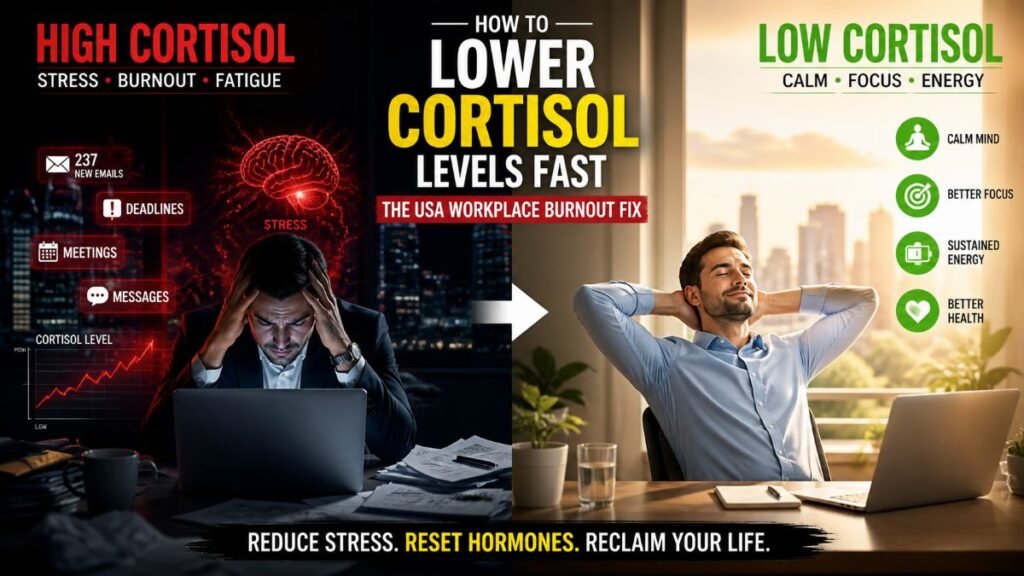
Most Americans mistake chronic exhaustion for “hustle culture” success, ignoring the biological emergency within. If you’re waking up drained, battling stubborn belly fat, and feeling that restless “wired-but-tired” energy, your endocrine system is screaming for help. In the cutthroat USA corporate world, these aren’t just busy days—it’s hormonal dysregulation. This guide cuts through the noise to show you how to lower cortisol levels fast using high-performance physiological resets. Stop chasing miracle cures and start recalibrating your body with clinical precision. It’s time to reclaim your edge.
🧠The Biological Reality of USA Workplace Burnout
The modern American professional environment often functions as a 24/7 stress simulator. Whether navigating executive meetings in Manhattan or remote deadlines in Silicon Valley, the human brain struggle to distinguish between a physical threat and a high-stakes digital notification. This persistent state of “High Alert” keeps the adrenal glands in a state of chronic hyper-vigilance.
To truly understand how to lower cortisol levels fast, one must recognize the Cortisol Awakening Response (CAR). In a balanced system, cortisol peaks shortly after waking to provide alertness and follows a downward trajectory throughout the day in alignment with the Circadian Rhythm. Chronic burnout flattens this natural curve, leading to “flat-lining”—where cortisol remains high at night, causing insomnia, and low in the morning, causing brain fog. This dysregulation is a primary catalyst for systemic inflammation and accelerated cognitive aging.
🧬Why High Cortisol is the Silent Performance Killer
In the USA’s competitive market, “powering through” is a common mantra, yet it is biologically counterproductive. Chronically elevated glucocorticoids act like a corrosive agent on metabolic health. During a stress response, the liver increases glucose output into the bloodstream—a mechanism meant for physical escape that becomes toxic when the individual remains sedentary at a desk.
Knowing how to reduce stress hormones naturally is critical because this excess circulating glucose, paired with stress-induced insulin resistance, directly contributes to visceral adipose tissue (belly fat). Furthermore, clinical research suggests that chronic stress reduces the efficiency of the prefrontal cortex—the “CEO” of the brain responsible for logic and impulse control. This creates a cycle where burnout leads to poor professional judgment and further stress. Addressing this is as vital as any Effective Long-Term Symptom Management plan.

⚖️Comparison: Healthy Stress vs. Toxic Burnout
Feature | Healthy Acute Stress (Eustress) | Chronic Workplace Burnout |
Cortisol Duration | Temporary Spike & Recovery | Persistent High Baseline |
Recovery Window | Minutes to Hours | Weeks to Months |
Metabolic Impact | Short-term Glucose Mobilization | Chronic Insulin Resistance Risk |
Cognitive Effect | Enhanced Alertness | Brain Fog & Decision Fatigue |
Sleep Interaction | Minimal Disruption | Severe Melatonin Inhibition |
🔄The "Insider" Strategy on How to Lower Cortisol Levels Fast
Many wellness blogs advise patients to “just relax,” a suggestion that is clinically insufficient for someone facing corporate deadlines. The most effective interventions for how to lower cortisol levels fast are physiological rather than psychological. You must use the body’s hardware to override the brain’s software.
- The Vagus Nerve Reset: The Physiological Sigh—a double inhale followed by a long, slow exhale—is one of the fastest ways to stimulate the Vagus Nerve. This mechanically signals the nervous system to shift from Sympathetic (fight-or-flight) to Parasympathetic (rest-and-digest).
- Acute Cold Exposure: Splashing ice water on the face or a 30-second cold burst at the end of a shower triggers the “Mammalian Dive Reflex,” which can acutely improve heart rate variability (HRV) and lower the heart rate.
Light Anchoring: Viewing natural sunlight within 30 minutes of waking reinforces the CAR. This biological “anchor” ensures your body knows when to start and, crucially, when to stop producing cortisol for the day.
🥗 Nutrition Hacks for Adrenal Recovery
Dietary habits in the USA often provide “fuel for the fire” of stress. High-glycemic snacks and excessive late-day caffeine provide a temporary surge but lead to a massive cortisol rebound during the “crash.” To implement how to lower cortisol levels fast, you must prioritize glycemic stability.
Magnesium is commonly depleted during periods of chronic stress, leading to muscle tension and anxiety. Incorporating magnesium-rich foods like pumpkin seeds, Swiss chard, and dark chocolate can help act as a natural calcium-channel blocker in the nervous system. Additionally, high-quality protein at breakfast helps prevent the catabolic (muscle-wasting) effects of high cortisol. This nutritional discipline is a cornerstone of a successful Dopamine Detox intended to restore focus.

🪑 Workplace Ergonomics and Hormonal Health
Your physical posture acts as a constant biofeedback loop. Slumping over a screen for eight hours restricts diaphragmatic breathing, which the brain interprets as a sign of distress. To implement how to lower cortisol levels fast, you must audit your “environmental scaffolding.”
Utilizing a standing desk and scheduling “movement snacks”—two-minute walks every 45 minutes—disrupts the sedentary stress cycle. Research cited by institutions like the Mayo Clinic indicates that light non-exercise activity can significantly dampen the circulating stress response caused by mental strain. It is not about an intense workout; it is about preventing the metabolic stagnation that fuels hormonal burnout while maintaining simple healthy living habits.
⏱️ Elite Framework: The Fast vs. Slow Fix
The biggest mistake in stress management is chasing immediate relief without building a resilient foundation. Understanding how to lower cortisol levels fast requires a tiered approach.
- Fast (Minutes): Physiological Sighing, Cold Splash, and Posture Reset. These target the Vagus Nerve for immediate nervous system de-escalation.
- Medium (Days): Strategic caffeine timing (delaying intake until 90 minutes after waking) and implementing strict work-life digital boundaries.
- Slow (Weeks): Consistent sleep-wake cycles, micronutrient repletion, and workload restructuring. This is where the baseline hormonal reset occurs.
🌿The 2026 Supplement Protocol for Burnout
While lifestyle is the primary driver, certain targeted nutrients can support the body’s internal regulation. When people research how to lower cortisol levels fast, adaptogens like Ashwagandha and Phosphatidylserine frequently appear.
Clinical evidence for these is moderate but promising. Ashwagandha has been shown in some studies to reduce perceived stress and serum cortisol levels over 8 weeks. Phosphatidylserine is often utilized by high-performance professionals to “blunt” the cortisol spike following intense mental exertion. However, results vary, and these should never replace foundational sleep habits. It is critical to consult a medical professional, as certain adaptogens can interfere with thyroid function or existing medications. This precaution is central to Modern Mental Health Management

📵Setting Digital Boundaries in the USA
The “always-on” digital culture is the primary driver of the American burnout epidemic. To truly master how to lower cortisol levels fast, one must implement a “Digital Sunset.” Late-night work emails trigger a cortisol response that directly antagonizes melatonin, the hormone required for deep, restorative sleep.
Without deep sleep, the brain cannot clear metabolic waste (via the glymphatic system), making you more reactive to stress the following day. Establish a hard “Off-Grid” time—at least 90 minutes before bed. This isn’t just a productivity tip; it is a biological necessity for hormonal preservation.
💰Cortisol Management: The Financial Benefit
Burnout is as much an economic issue as it is a health one. In the USA, chronic stress leads to higher medical co-pays, frequent sick leave, and potentially a shortened career span. Knowing how to lower cortisol levels fast is a high-ROI (Return on Investment) career skill.
Stress-Related Cost | Estimated Annual Impact (USA) | Cost with Management |
Healthcare Out-of-Pocket | $1,500 – $4,000 | Significant Reduction |
Productivity Loss | 15-30% of Salary | 0% |
Burnout Recovery Time | 3-6 Months Unpaid | Preventive Maintenance |
Total ROI | High | Immense |
By investing in hormonal health now, you are securing your long-term cognitive stability and financial future
🛡️Post-Burnout Advocacy: Reclaiming Agency
Reversing burnout requires a shift in how you interface with the high-pressure USA corporate culture. Once you learn how to lower cortisol levels fast, you gain the hormonal clarity needed to set professional boundaries and advocate for your health.
The most important realization is that most burnout isn’t caused by the workload itself—it’s caused by a lack of recovery. Your brain is a metabolic “Ferrari” that requires high-octane recovery to perform. Stop viewing rest as a reward for hard work and start viewing it as the fuel that makes hard work possible.

✨Conclusion: Strategic Recovery in a High-Stress World
The ability to understand how to lower cortisol levels fast by merging acute physiological techniques with long-term lifestyle resets is a superpower in the modern economy. Your health is your most valuable asset—don’t let the corporate grind liquidate it. By following this evidence-based roadmap, you are not just managing stress; you are taking ownership of your biological future.
Reviewed by: Health & Wellness Content Specialist
💡Frequently Asked Questions
- How long does it actually take to reset high cortisol?
While you can dampen acute spikes in minutes using the Vagus Nerve reset, a full recalibration of a dysregulated baseline usually takes 4 to 8 weeks of consistent intervention.
- Is caffeine completely forbidden during burnout recovery?
No, but timing is the key. Avoid caffeine for the first 90 minutes of the day to allow your natural Cortisol Awakening Response to work. All caffeine should ideally stop by noon to protect evening sleep.
- Can exercise actually make my cortisol worse?
Yes. High-Intensity Interval Training (HIIT) can acutely increase cortisol. If you are already in deep burnout, prioritize “Zone 2” activities like walking or swimming until your baseline is restored.
✍️👤 About the Author
Dambar R. is a dedicated wellness researcher and the visionary founder of MyHealthyLifeUK. With over a decade of hands-on experience in metabolic science and practical nutrition, he specializes in creating sustainable health transformations for modern lifestyles.
Based on his extensive research, Dambar empowers individuals across the UK and USA to reach their peak fitness goals through science-backed health tips without sacrificing the joy of everyday eating. His mission is to bridge the gap between complex health data and actionable habits that foster long-term vitality and holistic wellness.
⚠️ Medical Disclaimer
The information provided on MyHealthyLifeUK is for educational and informational purposes only. It is not intended to be a substitute for professional medical advice, diagnosis, or treatment.
- Professional Guidance: Always seek the advice of your Physician (GP) or another qualified health provider regarding any medical condition.
- Specialized Advice: For personalized dietary needs, we recommend consulting a Registered Dietitian.
- Safety First: Consult a professional before starting any new fitness or nutrition program.
Never disregard professional medical advice or delay seeking it because of something you have read on this website.