
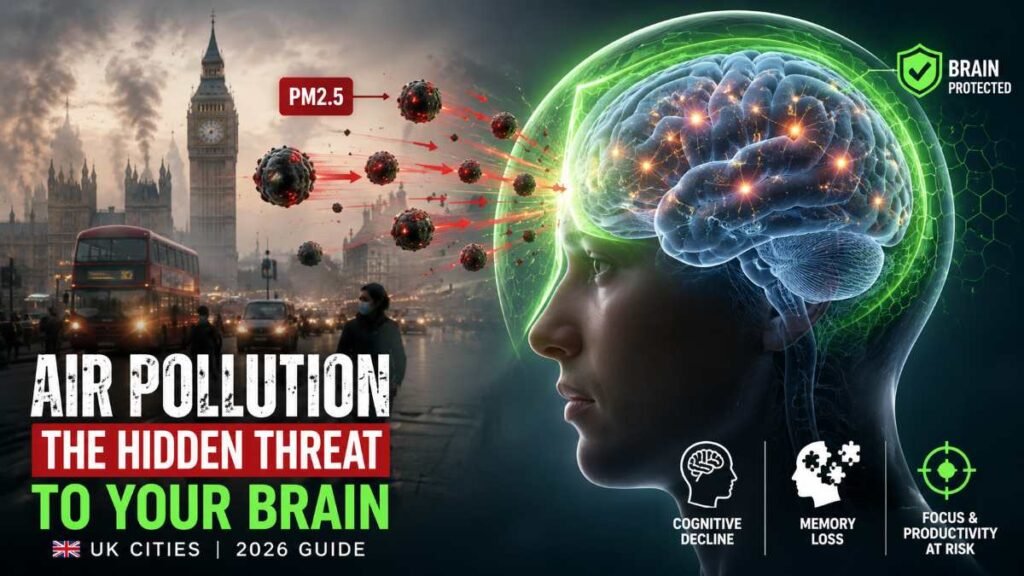
Is the urban air in London or Manchester affecting your long-term cognitive health? You’ve optimized your diet with a Mediterranean diet guide, you’re tracking your sleep, and you’ve even mastered Neurofeedback Training at Home to stay sharp. However, growing evidence suggests that a microscopic environmental factor might be challenging your cognitive defenses.
In 2026, researchers are identifying a significant link: ultra-fine soot, known as PM2.5, isn’t just a respiratory concern—it can migrate directly into the brain’s emotional and memory centers. Understanding The Impact of Air Quality (PM2.5) on Cognitive Decline in UK Cities is now a critical priority for anyone living in a modern metropolis. This guide explores how these particles bypass our biology and what biohacking protocols can neutralize the damage before it manifests as permanent cognitive drift or early-onset dementia.
🧠 [In Simple Terms – For Everyone]
What is PM2.5? These are microscopic particles of dust, soot, and smoke that are invisible to the naked eye. Because they are so incredibly small, they can travel deep into your lungs, enter your bloodstream, and even reach your brain. Long-term exposure to these particles can impair memory, reduce focus, and diminish overall cognitive strength. In this article, we will explore how residents of major UK cities—such as London, Manchester, and Birmingham—can protect their brain health from this invisible environmental threat.
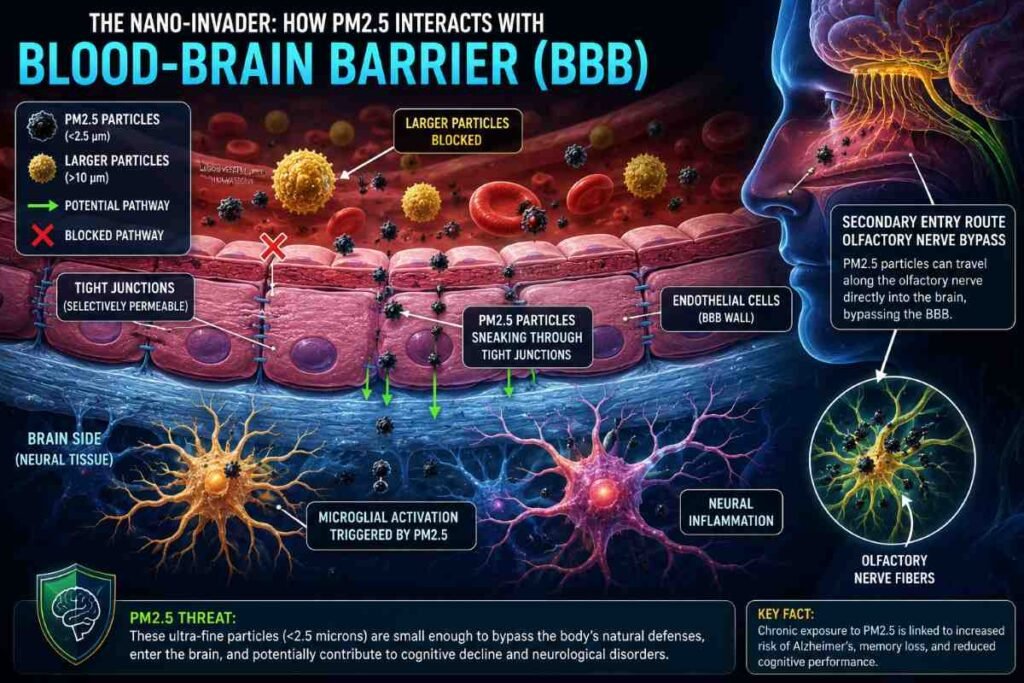
 The Nano-Invader: How PM2.5 Interacts with the Blood-Brain Barrier
 The Nano-Invader: How PM2.5 Interacts with the Blood-Brain Barrier
Most people assume pollution impact is limited to the lungs, but PM2.5 particles are less than 3% the diameter of a human hair. Their microscopic size allows them to travel through the olfactory bulb and potentially interact with the blood-brain barrier—a protective shield that most substances cannot cross. Once these particles accumulate, they can trigger “Microglial Activation,” where the brain’s internal defense system remains in a heightened state of activity.
This persistent immune response is a primary factor in The Impact of Air Quality (PM2.5) on Cognitive Decline in UK Cities. Unlike a temporary cold, this neural inflammation doesn’t just switch off; it contributes to the gradual accumulation of amyloid plaques, similar to what is seen in aging. Just as a gut health guide for beginners highlights the importance of a strong intestinal lining, your neurological health depends on the integrity of your blood-brain barrier. Chronic exposure can lead to micro-inflammations in the hippocampus—the area responsible for memory and spatial navigation. Strengthening this barrier with specific lipids and avoiding ultra-processed foods is the first line of defense in urban biohacking.
UK City Snapshot: PM2.5 Metrics & Neurological Risk Mapping
 UK City Snapshot: PM2.5 Metrics & Neurological Risk Mapping
Air quality varies significantly across the United Kingdom. While initiatives like ULEZ and the UK smoking ban have improved indoor environments, the legacy of heavy traffic and industrial hubs continues to influence outdoor air quality. Professionals working in Central London or Birmingham’s industrial corridors are exposed to higher concentrations during peak hours, often without realizing the metabolic toll.
UK City | Avg PM2.5 (µg/m³) | Cognitive Impact Score | Primary Source |
London | 12.5 – 15.0 | High | Transport & Tech Hubs |
Manchester | 10.8 – 13.0 | Moderate/High | Heating & Industry |
Birmingham | 11.2 – 14.0 | High | Logistics & Commuter Flow |
Edinburgh | 7.0 – 9.0 | Low/Moderate | Coastal Air & Traffic |
Addressing The Impact of Air Quality (PM2.5) on Cognitive Decline in UK Cities requires understanding these “Cognitive Hotspots.” Data from 2026 suggests that living within 50 meters of a major A-road in the UK can increase oxidative stress markers in the brain by up to 15%. This is why monitoring local air quality via apps is as essential as following a 7-day weight loss diet plan. By timing your outdoor exercise to low-pollution windows, you significantly reduce the cumulative “toxic load” on your neurons.
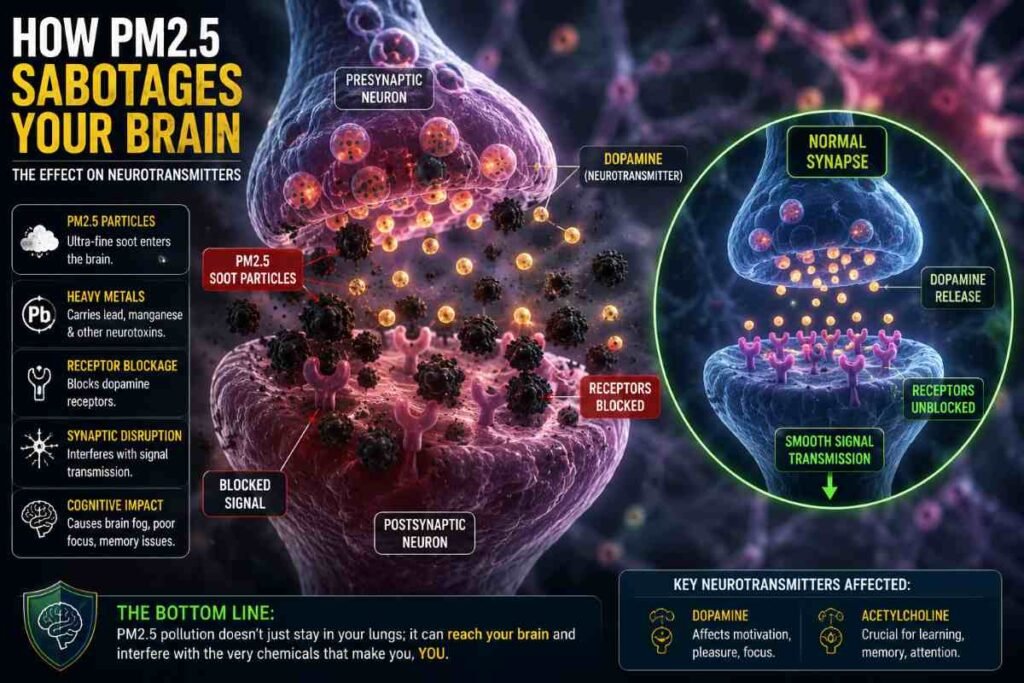
The "Bio-Chemical" Sabotage: Neurotransmitters Under Pressure
 The "Bio-Chemical" Sabotage: Neurotransmitters Under Pressure
When particulate matter enters the neurological system, it doesn’t remain inert. It can disrupt the balance of Dopamine and Acetylcholine—the chemicals responsible for motivation and memory. This interference is why many city dwellers experience “Brain Fog” that doesn’t resolve with rest or stimulants. The correlation between The Impact of Air Quality (PM2.5) on Cognitive Decline in UK Cities and mental clarity is a growing field of study, showing that high-pollution days can force the brain to expend 20% more glucose just to maintain basic focus.
This oxidative stress is why urban biohackers are increasingly turning to nootropics for focus and memory to provide a biochemical buffer. PM2.5 particles often carry heavy metals like lead and manganese, which mimic neurotransmitters and “clog” neural receptors. Much like how Lectins vs Oxalates can irritate the gut and cause systemic issues, PM2.5 irritates the neurons directly. This may lead to a “leaky brain” state where inflammatory cytokines circulate more freely, making deep concentration more difficult to achieve during high-stakes professional work.
The 2026 Protection Protocol: Strengthening Your Biological Shield
 The 2026 Protection Protocol: Strengthening Your Biological Shield
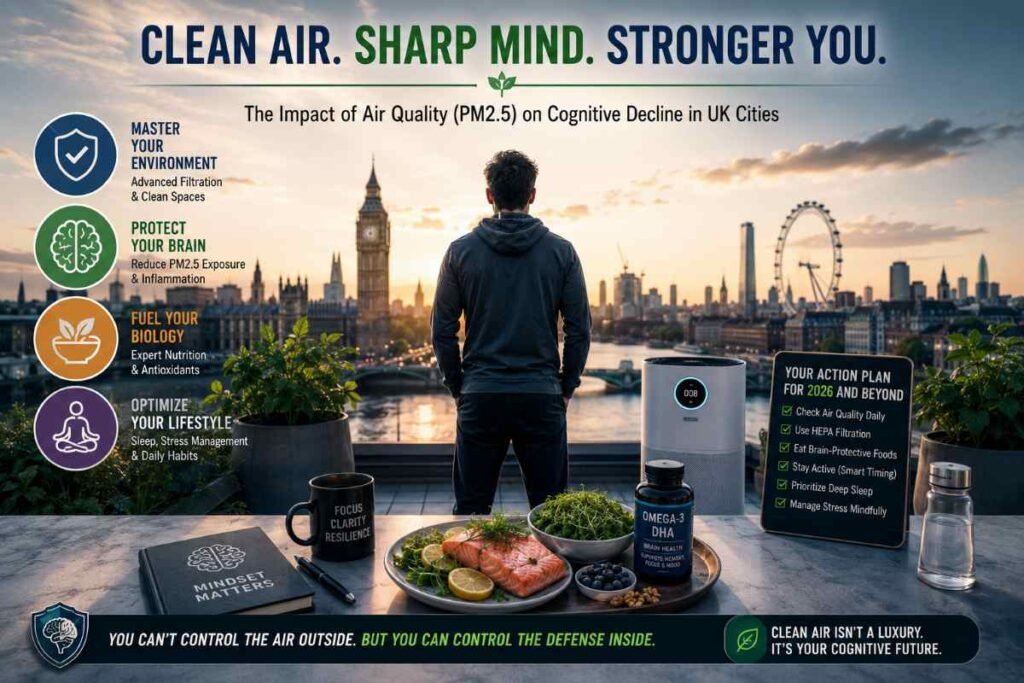
To mitigate The Impact of Air Quality (PM2.5) on Cognitive Decline in UK Cities, a multi-layered approach to environmental biohacking is required. You cannot simply wait for government policy to change; you must harden your own biology against the atmospheric assault.
- HEPA-13/14 Filtration: Ensure your living and working spaces use medical-grade filtration to capture ultra-fine particles that standard filters miss.
- Sulforaphane & Antioxidants: Compounds in broccoli sprouts help the body’s natural detoxification pathways excrete pollutants. Combining this with NMN anti-aging benefits can support cellular repair after a day in the city.
- Optimal Breathing: Nasal breathing acts as a natural pre-filter. If you are walking for weight loss, avoid mouth breathing which allows unfiltered air to reach the lungs and bloodstream more directly.
Light Syncing: Use a circadian lighting guide to ensure high-quality sleep, which is the only time the brain can effectively clear out these microscopic invaders.
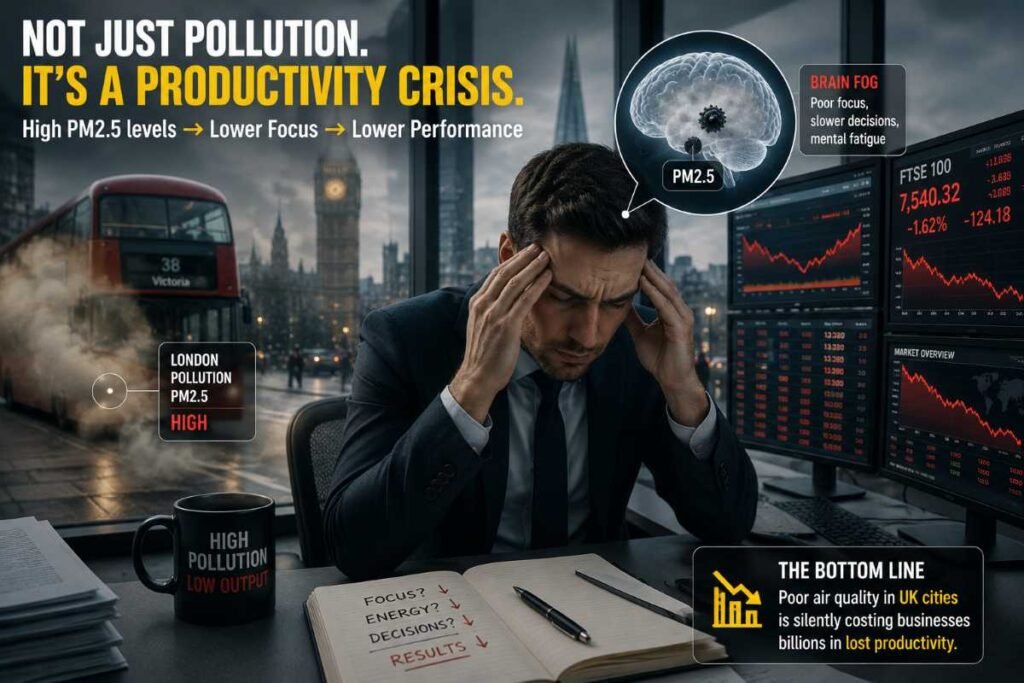
The Workforce Challenge: Air Quality and UK Productivity
 The Workforce Challenge: Air Quality and UK Productivity
By 2026, the economic impact of air quality on the UK workforce is becoming impossible to ignore. Studies show that on high-pollution days, professional productivity in London’s financial districts can dip significantly. When we examine The Impact of Air Quality (PM2.5) on Cognitive Decline in UK Cities, we see that it’s not just a health issue, but a performance barrier that affects decision-making and emotional intelligence.
Effective stress management now involves checking the air quality index before planning intensive creative tasks. Progressive UK companies are beginning to view air quality as a “performance asset,” investing in internal air scrubbing technology. This environmental optimization ensures that employees aren’t battling “pollutant-induced fatigue” while trying to meet deadlines. For the individual, using a mindfulness guide for beginners can help lower the cortisol spikes that pollution often triggers.
The Glymphatic Cleanse: Your Nightly Brain Wash
 The Glymphatic Cleanse: Your Nightly Brain Wash
The most overlooked defense against The Impact of Air Quality (PM2.5) on Cognitive Decline in UK Cities is the glymphatic system. This is the brain’s unique “drainage” system that only turns on during deep, non-REM sleep. It literally flushes out metabolic waste and potentially small particulate matter that has accumulated during the day.
To maximize this, following a 7-hour sleep rule is non-negotiable. If you live in a city, your glymphatic system has more “trash” to clear out every night. Strengthening your vagus nerve exercises can help transition your body into the deep parasympathetic state required for this drainage to be effective. Without this nightly “neural pressure wash,” the PM2.5 you breathe in during your morning commute stays in your neural tissue, slowly degrading your cognitive reserve.
Nutritional Antidotes: Building Internal Resilience
 Nutritional Antidotes: Building Internal Resilience
Your kitchen is your first line of defense against environmental toxins. To truly combat The Impact of Air Quality (PM2.5) on Cognitive Decline in UK Cities, you need a diet rich in “Sulfur” and “DHA.” These nutrients provide the raw materials for Glutathione, the body’s master antioxidant.
Focusing on healthy high protein foods helps produce the amino acids needed to neutralize heavy metals carried by soot. Furthermore, the latest omega-3 research shows that Omega-3 fatty acids can help maintain the volume of the brain’s white matter, even in polluted areas. By eating specifically for environmental defense, you create a biological “buffer” that protects your cognitive sovereignty. This is far more effective than any generic nutrition guide for beginners because it focuses on the specific stressors of urban life.

Long-Term Longevity: The Exposome Factor
 Long-Term Longevity: The Exposome Factor
In 2026, longevity isn’t just about genes; it’s about your “Exposome”—the total sum of environmental factors you encounter. Addressing The Impact of Air Quality (PM2.5) on Cognitive Decline in UK Cities is as important as any Weight Loss Guide because your brain health dictates your quality of life as you age.
Data shows that people who combine clean air protocols with mindful eating and self-care have significantly lower biological ages. This holistic approach ensures that your external environment doesn’t undo the hard work you put into your internal health. Mastering your diet in the UK must now include an “Air Quality Strategy” to ensure you are truly bio-optimized for the decades to come.
🏁 Conclusion: A Critical Lifestyle Consideration
Your cognitive future is heavily influenced by the environment you inhabit. By acknowledging The Impact of Air Quality (PM2.5) on Cognitive Decline in UK Cities, you transition from being a passive resident to an active biohacker. Reclaiming your mental clarity is about mastering your environment, using advanced filtration, and supporting your biology with expert-led nutrition. In the urban landscape of 2026, clean air is the ultimate foundation for a sharp and enduring mind.
❓ Frequently Asked Questions
Q: Can air filters really protect my brain?
A: Yes, high-quality HEPA-13 filters can significantly reduce the impact of air quality (PM2.5) on cognitive decline in UK cities by removing up to 99.97% of ultra-fine particulate matter inside your home, giving your brain a safe space to recover.
Q: Is indoor pollution worse than outdoor?
A: Often, yes. Cooking, household chemicals, and poor ventilation can trap harmful particulates indoors. To counter the impact of air quality (PM2.5) on cognitive decline in UK cities, use simple healthy living tips like opening windows for cross-ventilation only during low-traffic hours.
Q: Can cold showers help?
A: Cold exposure can boost your metabolic rate and activate the nervous system, helping your body manage the systemic neural inflammation triggered by urban air pollution.
Q: Is there a specific test for pollution impact?
A: While there is no direct test to measure “brain soot,” monitoring your C-Reactive Protein (CRP) levels can show if environmental factors are causing systemic inflammation. Tracking this is a smart biohacking step to measure the impact of air quality (PM2.5) on cognitive decline in UK cities and assess your overall toxic load.
✍️👤 About the Author
Dambar R. is a dedicated wellness researcher and the visionary founder of MyHealthyLifeUK. With over a decade of hands-on experience in metabolic science and practical nutrition, he specializes in creating sustainable health transformations for modern lifestyles.
Based on his extensive research, Dambar empowers individuals across the UK and USA to reach their peak fitness goals through science-backed health tips without sacrificing the joy of everyday eating. His mission is to bridge the gap between complex health data and actionable habits that foster long-term vitality and holistic wellness.
⚠️ Medical Disclaimer
The information provided on MyHealthyLifeUK is for educational and informational purposes only. It is not intended to be a substitute for professional medical advice, diagnosis, or treatment.
- Professional Guidance: Always seek the advice of your Physician (GP) or another qualified health provider regarding any medical condition.
- Specialized Advice: For personalized dietary needs, we recommend consulting a Registered Dietitian.
- Safety First: Consult a professional before starting any new fitness or nutrition program.
Never disregard professional medical advice or delay seeking it because of something you have read on this website.