
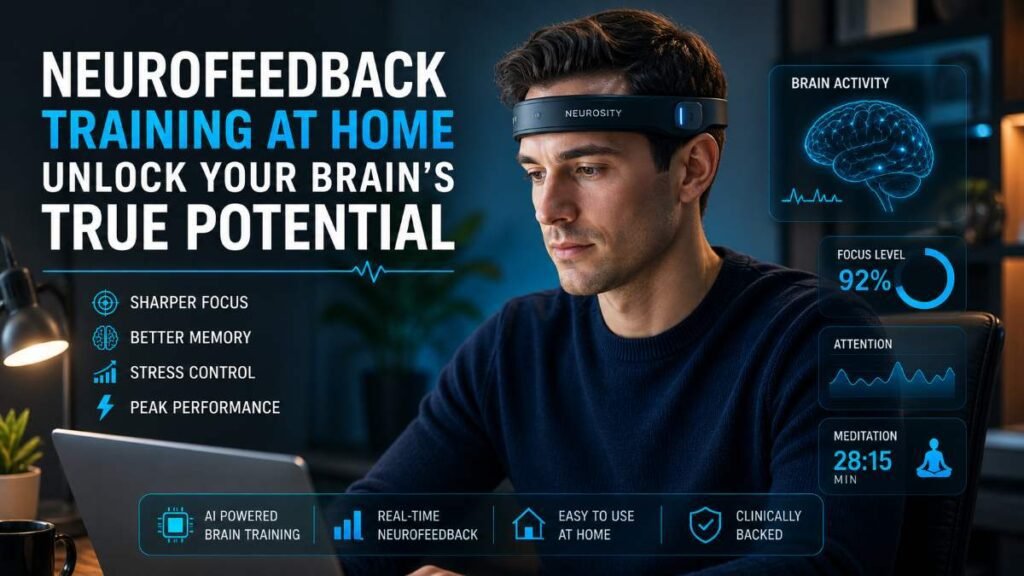
Is your morning coffee feeling more like a temporary bandage than a real energy boost? In the UK’s fast-paced health landscape of 2026, thousands are ditching traditional stimulants for a sophisticated medical biohack that aims to quieten the “scattered brain” syndrome. We’re talking about Neurofeedback Training at Home—a cutting-edge technology that doesn’t just mask mental fatigue but trains your brain’s electrical architecture to sustain focus. If you’ve struggled with persistent brain fog, erratic productivity, or that “racing mind” feeling that leaves you drained by noon, you might be surprised to learn how these devices are shifting the treatment of cognitive performance. This isn’t just another supplement; it represents a potential neurological reset designed for the modern age, helping individuals transition from a state of “surviving” to “thriving.”
 The Deep Science: How Neurofeedback Training at Home Works
 The Deep Science: How Neurofeedback Training at Home Works
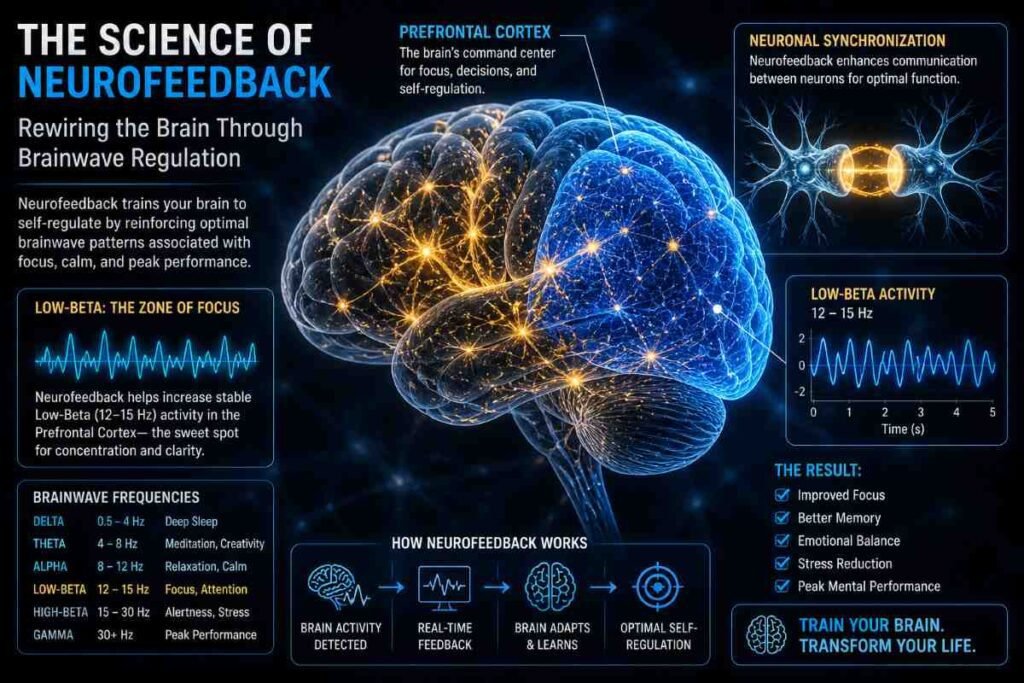
Neurofeedback Training at Home is a subset of biofeedback that utilizes a Brain-Computer Interface (BCI) to provide real-time data on your brain’s electrical activity. Unlike medications that change brain chemistry, neurofeedback uses the principles of Operant Conditioning to reward the brain for producing “healthy” frequencies. This process targets the sub-cortical regions, training the brain to shift from high-theta (distraction) to low-beta (active focus) states. By receiving instant auditory or visual rewards, your neurons learn to fire in a more synchronized manner, effectively reducing the “noise” that leads to cognitive fatigue.
- Neuroplasticity and Synaptogenesis: By rewarding specific brainwave patterns like SMR (Sensory Motor Rhythm), you are physically strengthening the neural pathways responsible for executive function. This isn’t a temporary shift; it is a long-term structural change where your brain creates new, permanent synaptic connections that make entering a “Flow State” effortless during high-pressure tasks.
- Brainwave Regulation: Most focus issues stem from an “arousal mismatch”—where the brain produces too many slow Theta waves during the day. Neurofeedback Training at Home trains the brain to inhibit these drowsy waves and boost the fast-wave activity required for deep work. This recalibration ensures that your mental energy is distributed efficiently across the prefrontal cortex.
Comparison: Best Neurofeedback Devices of 2026
 Comparison: Best Neurofeedback Devices of 2026
To maximize your investment, you must choose between EEG (Electrical signals) and fNIRS (Blood flow). EEG is the gold standard for speed and detecting micro-voltage shifts, while fNIRS is revolutionary for strengthening the “physical” focus muscle by monitoring oxygenated blood flow. Professionals in the UK often prefer EEG for rapid cognitive response training, whereas the US market has seen a surge in hybrid models that combine both for a 360-degree view of neural health.
Best For | Best For Deep Work & Coders | Best For Recovery & Beginners |
Technology | Technology 8-Channel EEG | Technology EEG + fNIRS + PPG |
Key Feature | Key Feature Automated Flow State Tracking | Key Feature Sleep & Meditation Focus |
The Neurosity Crown is the ultimate powerhouse for professionals who demand uninterrupted productivity. It uses high-density EEG sensors to track your concentration levels with millisecond precision. If you get distracted, its advanced algorithms can trigger environmental cues, like shifting your noise-canceling headphones or changing your workspace lighting, to nudge your brain back into the zone.
The Muse S Athena is the most versatile hybrid on the market today. By combining traditional EEG with fNIRS technology, it tracks both your brain’s electrical rhythm and the actual blood oxygenation in your frontal lobes. This dual-sensing approach ensures a comprehensive recovery and focus routine, making it the top choice for those balancing high-stress careers with the need for restorative rest
5 Key Observations: Why Neurofeedback Training at Home is Trending
 5 Key Observations: Why Neurofeedback Training at Home is Trending
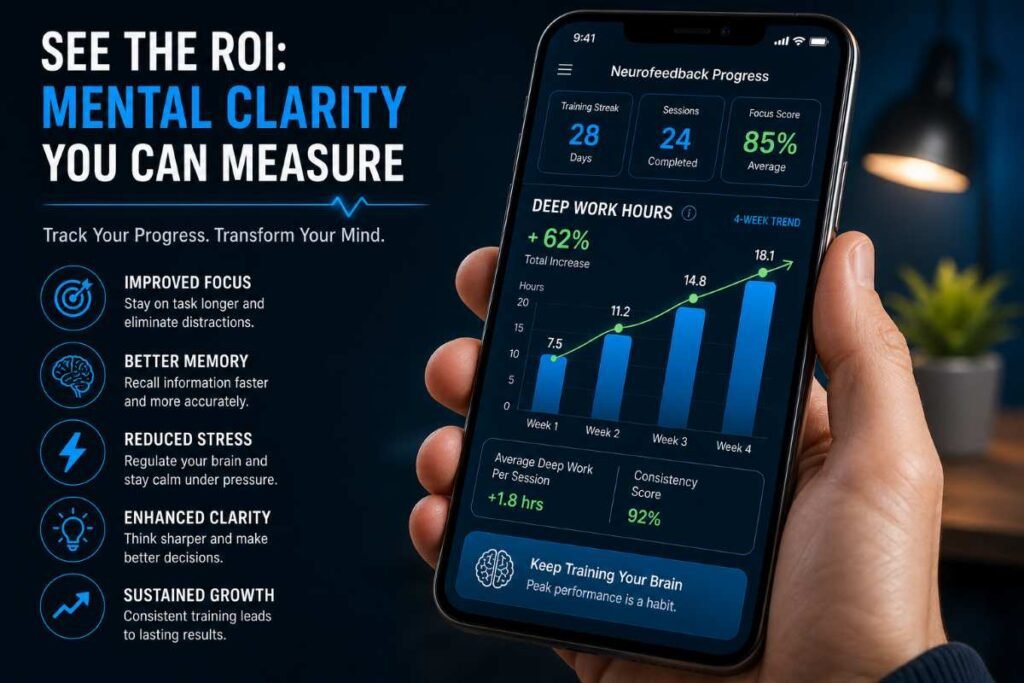
UK and USA professionals are moving away from temporary chemical fixes and toward biological self-regulation. This shift is driven by a desire for sustainable mental performance without the “crash” associated with stimulants. Neurofeedback Training at Home offers a data-driven path to mental clarity, allowing users to track their progress through mobile apps that visualize brain health metrics. This transparency builds trust and encourages long-term adherence to the training protocol.
- Non-Invasive Cognitive Training: Unlike pharmaceuticals, neurofeedback is passive and non-invasive; it reads signals but does not send electrical currents into the brain. It simply acts as a biological mirror.
- Permanent Skill Acquisition: Once the brain learns how to produce focus-waves, it retains that ability, much like learning to ride a bike or a muscle memory from a specific sport.
- HPA-Axis Regulation: By training the brain to enter Alpha states, users can better manage their stress management response, preventing the “burnout” that leads to chronic fatigue.
- Optimizing Sleep Architecture: Training the brain to shut down at night is essential for cognitive longevity. These devices help users reach deep-sleep states faster by lowering high-beta activity before bed.
- Measurable ROI: For high-performers, the ability to increase “Deep Work” hours by even 20% justifies the high-ticket cost. In the corporate world of 2026, cognitive efficiency is the new profit margin.
The "Low and Slow" Protocol: Mastering Your Brain Training
 The "Low and Slow" Protocol: Mastering Your Brain Training
Success with Neurofeedback Training at Home requires a structured titration approach to avoid “neural fatigue” or irritability. Just as you wouldn’t run a marathon on your first day of training, your brain needs time to build stamina for the intense focus states these devices encourage. Consistent, short sessions are significantly more effective than infrequent, long sessions. This “micro-training” approach allows your neural pathways to consolidate gains during rest periods.
- Phase 1: The Foundation (Weeks 1-2): Start with 10-minute sessions, 3 times per week. Your brain needs to get used to the feedback loop and the physical presence of the sensors. Focus on “Relaxed Awareness” rather than forcing concentration.
- Phase 2: The Build (Weeks 3-4): Increase to 15-minute sessions, 5 days per week. This is where you begin to notice the “carry-over effect” into your daily tasks, such as staying focused during long Zoom calls or intensive reading sessions.
- Phase 3: The Mastery (Maintenance): Use 20-minute sessions as a “warm-up” before high-stakes cognitive tasks. This primes your brain for peak performance, ensuring that your prefrontal cortex is firing at the optimal frequency when you need it most.
The "Substrate" Factor: Why Nutrition Supports Neuroplasticity
 The "Substrate" Factor: Why Nutrition Supports Neuroplasticity
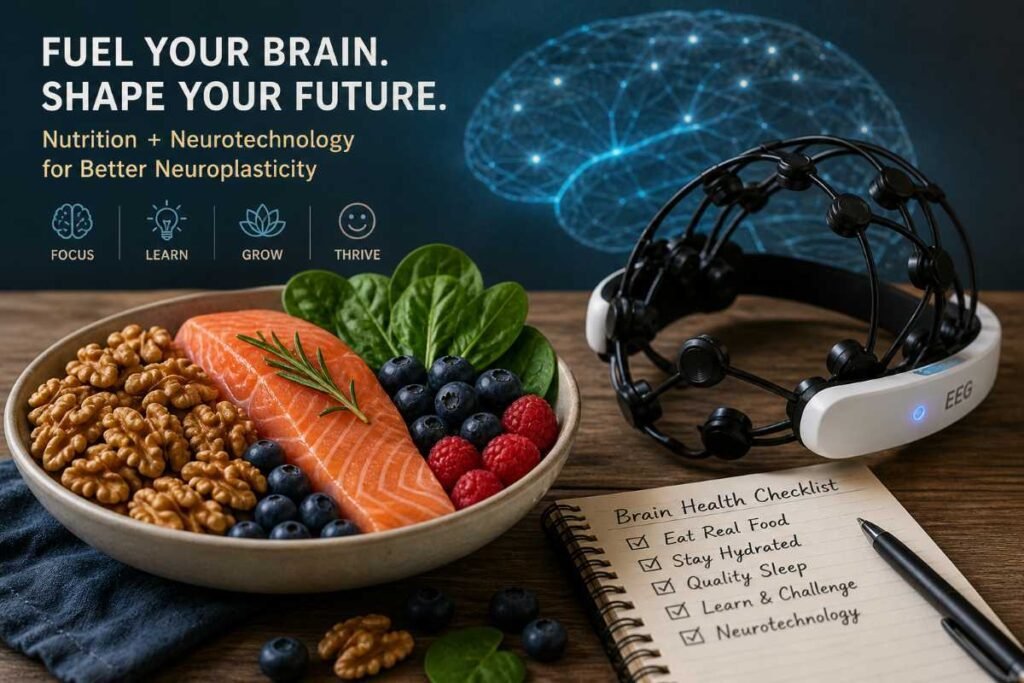
Even the best Neurofeedback Training at Home protocol will fail if the brain lacks the raw materials to build new synaptic connections. This is the “biological soil” of biohacking; without proper nutrients, the brain cannot physically manifest the changes the training demands. Synaptogenesis—the creation of new synapses—is a metabolically expensive process that requires specific building blocks like choline, healthy fats, and targeted amino acids to sustain the rewiring process.
- Dopamine Precursors: Ensure your diet is rich in amino acids like Tyrosine. Without adequate neurotransmitter levels, your brain cannot “hit” the focus rewards the device is looking for, leading to frustration and slow progress.
- Brain-Derived Neurotrophic Factor (BDNF): Nutrients found in a high protein food diet are essential for the synaptogenesis that neurofeedback triggers. BDNF acts as “brain fertilizer,” promoting the growth of new neurons.
- Inflammation Control: Avoid ultra-processed foods that cause systemic inflammation. Inflammation acts as “neural noise,” creating a distorted signal that makes it difficult for EEG sensors to accurately read your brainwaves.
🇬🇧 BCI Adoption: UK vs USA Trends
In 2026, the adoption of BCI tech is skyrocketing across the Atlantic. In the UK, many individuals are using their NHS Right to Choose mindset to seek out private neurological clinics that support remote training. This allows patients to combine home training with expert clinical oversight for the best results. The UK market is particularly focused on devices that offer strong data privacy and clinical-grade sensor accuracy.
In the USA, forward-thinking companies are beginning to offer these high-ticket devices as part of executive wellness packages. These programs aim to reduce employee burnout while maximizing creative output. Pairing this high-tech training with a Mediterranean diet guide provides the healthy Omega-3 fats necessary to insulate the new neural pathways. The synergy between high-tech wearables and ancestral nutrition is becoming the gold standard for American biohackers.
The Pharmacogenetic Link: Why Results Vary
The speed at which you respond to Neurofeedback Training at Home is often dictated by your DNA. Pharmacogenetic differences play a massive role in how the brain regulates its own arousal levels and how quickly it can adapt to the feedback loops. Some users may find that their brain is highly “plastic” and responds within days, while others with different genetic markers may require months of steady training to see a baseline shift.
For example, individuals with specific variations in the COMT gene may clear dopamine faster than others, requiring more frequent “top-up” neurofeedback sessions to maintain the same focus levels. Understanding your unique genetic makeup—which you can explore through genetic testing services—helps you customize your training duration and frequency for maximum efficiency. This personalized approach prevents “one-size-fits-all” frustration and ensures your biohacking efforts are precisely targeted.
NEW: The "Focus Stack" (Metabolic Synergy)
 NEW: The "Focus Stack" (Metabolic Synergy)
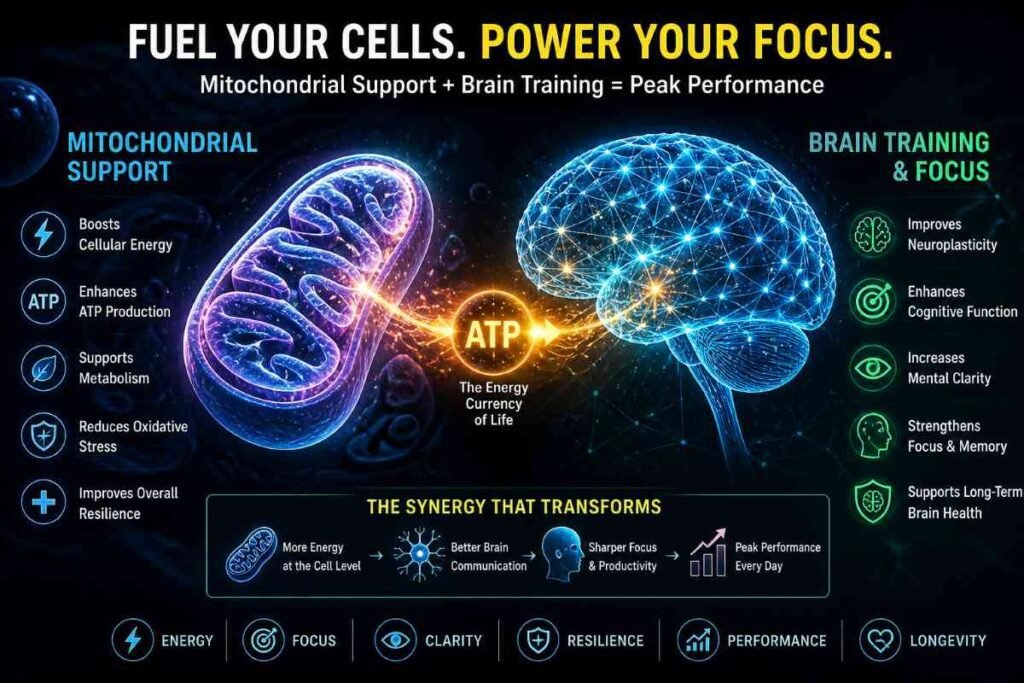
To truly unlock the potential of Neurofeedback Training at Home, you must address the brain’s metabolic demands. Brain training is “energy expensive,” consuming significant amounts of glucose and oxygen. If your metabolic health is compromised, your brain will prioritize survival over the advanced cognitive “rewiring” that neurofeedback aims to achieve. Stacking your training with metabolic enhancers ensures that your neurons have the energy required to fire and wire together efficiently.
- Mitochondrial Support: Pairing your training with cellular energy supports like NMN research ensures your neurons have the ATP required to rewire themselves during deep sleep. Healthy mitochondria are the engines that power neural plasticity.
- Circadian Alignment: Using circadian lighting ensures your brain is in the correct “mode” (Beta in the morning, Alpha in the evening). This environmental signaling primes your brain for the specific brainwave training you are about to perform.
- Vagal Tone: Training is most effective when the body is in a parasympathetic state. Incorporate Vagus Nerve Exercises to lower background anxiety, allowing for a cleaner EEG signal and faster learning.
🏁 Conclusion: Reclaiming Your Cognitive Sovereignty
Neurofeedback Training at Home represents a bridge between traditional neurological therapy and modern biohacking. It is for the individual who is tired of the “brain fog” cycle and ready to invest in their cognitive future. By treating the brain as a dynamic, trainable system rather than a fixed organ, you can reclaim your mental clarity and biological potential. In the fast-moving digital world of 2026, the ability to train your own focus is not just a luxury—it is the ultimate form of self-sovereignty.
❓ FAQ Section
- Is it safe? Yes, these are “read-only” devices. They monitor your brain activity but do not send electrical signals into your scalp or brain tissue.
- How long for results? Most see a noticeable shift in focus and baseline calm within 4 weeks of consistent 15-minute sessions.
- Can I use it with supplements? Yes, many pair it with Omega-3 research to support neural insulation and overall brain health.
Final Tip: If you’re ready to start, I recommend looking for a practitioner who offers remote supervision for these devices to ensure you’re targeting the right brainwave frequencies for your specific goals. Do you want me to find a list of top compounding pharmacies or clinics in the UK that support these gadgets?
✍️👤 About the Author
Dambar R. is a dedicated wellness researcher and the visionary founder of MyHealthyLifeUK. With over a decade of hands-on experience in metabolic science and practical nutrition, he specializes in creating sustainable health transformations for modern lifestyles.
Based on his extensive research, Dambar empowers individuals across the UK and USA to reach their peak fitness goals through science-backed health tips without sacrificing the joy of everyday eating. His mission is to bridge the gap between complex health data and actionable habits that foster long-term vitality and holistic wellness.
⚠️ Medical Disclaimer
The information provided on MyHealthyLifeUK is for educational and informational purposes only. It is not intended to be a substitute for professional medical advice, diagnosis, or treatment.
- Professional Guidance: Always seek the advice of your Physician (GP) or another qualified health provider regarding any medical condition.
- Specialized Advice: For personalized dietary needs, we recommend consulting a Registered Dietitian.
- Safety First: Consult a professional before starting any new fitness or nutrition program.
Never disregard professional medical advice or delay seeking it because of something you have read on this website.