
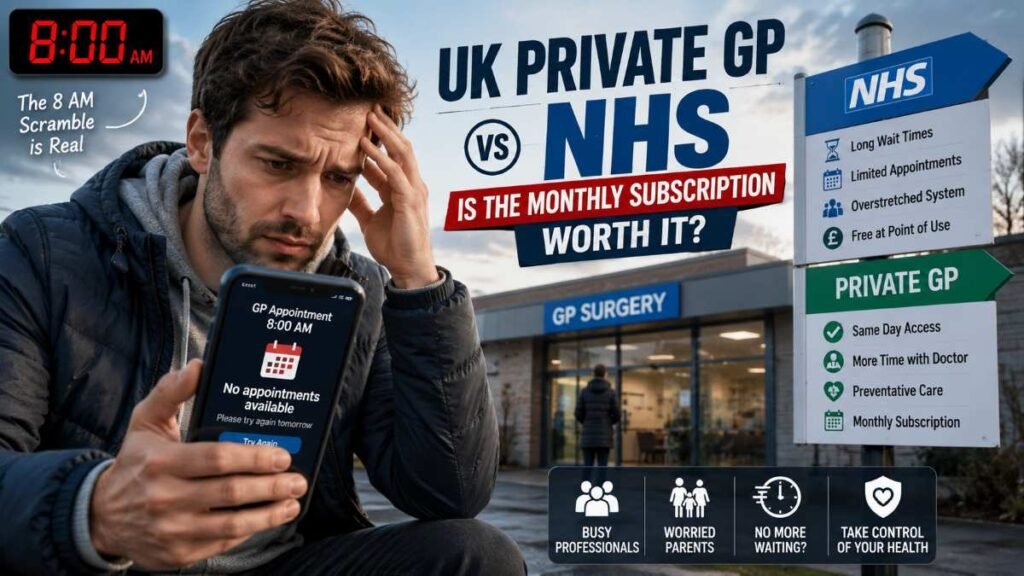
Imagine the stress of staring at your phone at exactly 8:01 AM, only to find the digital queue already closed for the day. In our current climate, the desperate race for a medical appointment has shifted from a minor annoyance to a genuine breaking point for families. While the NHS remains a cornerstone of British life, the debate over UK Private GP vs NHS is no longer about luxury—it’s about reliability. Is the cost of “free” care actually a hidden tax on our mental health?
 The Shift in Care: Why UK Private GP vs NHS is a Growing Debate
 The Shift in Care: Why UK Private GP vs NHS is a Growing Debate
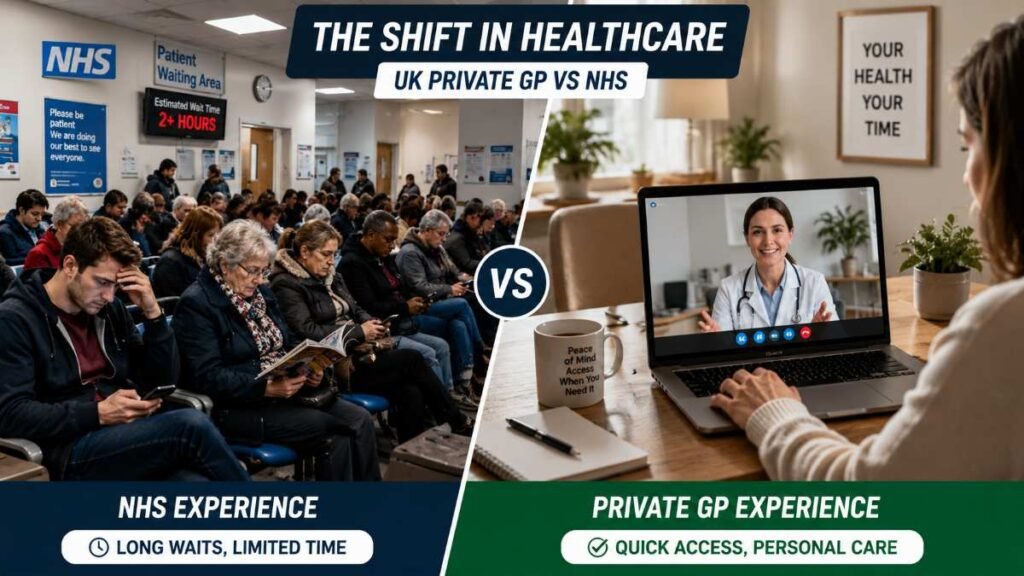
For decades, paying for a GP felt “un-British,” almost a betrayal of our shared social values. However, recent reports from the private sector suggest a noticeable increase in primary care uptake across the country. When we look at the UK Private GP vs NHS dilemma, we aren’t just talking about shorter queues; we are talking about the stress of waiting. Every hour spent on hold with a local surgery is an hour of lost productivity and rising cortisol levels that often go unaddressed. For many households, this is becoming exhausting, and they are looking for a way out of the cycle.
The NHS is currently battling a historic backlog that has made “same-day” access very difficult in urban areas. In response, private subscription services like Maynard Health or Bupa are offering more personal care with clinicians who aren’t rushed. This isn’t just a trend; it’s a response to a need for quicker answers. Today, the patient experience is moving toward a more personal model where you feel heard. People are realizing that while the NHS is an essential safety net, it doesn’t always have to be the only net they rely on for daily health. And honestly, that frustration with the current system is completely understandable.
Key Drivers for This Growing Shift:
- The 8 AM Lottery: Most UK families have experienced the frustration of lottery-style booking systems that feel unfair. It feels more like a game of chance than a medical service.
- Access to Testing: Private GPs can often arrange for an MRI or blood test results within 48 hours, providing peace of mind much faster than traditional routes.
- Workplace Stress: Accessing a mental health sick note UK is often significantly faster via private routes, which is vital for those in high-pressure jobs who need immediate support.
- Better Consistency: In the private sector, you are more likely to see the same doctor twice, building the kind of relationship that an overstretched NHS can rarely offer in the current climate.
Comparison Sheet: UK Private GP vs NHS (The Modern Reality)
 Comparison Sheet: UK Private GP vs NHS (The Modern Reality)
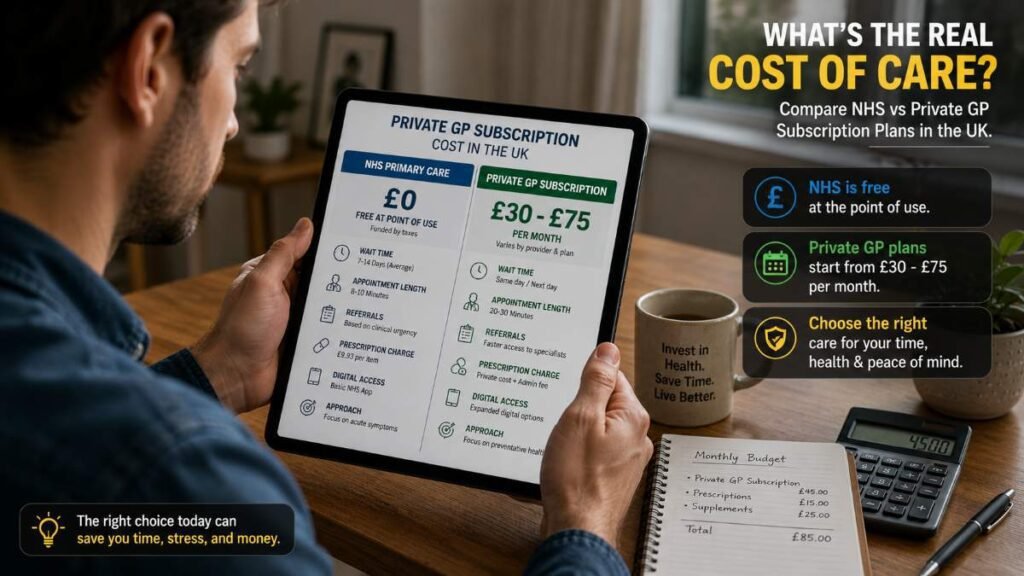
Feature | NHS Primary Care | Private GP Subscription |
Cost | Free at point of use (Tax-funded) | £30 – £75 per month (Varies) |
Wait Time | 7 to 14 Days (Average) | Same day / Next day access |
Appt. Length | 8–10 Minutes (Standard) | 20–30 Minutes (More time) |
Referrals | Based on clinical urgency | Faster access to specialists |
Prescriptions | Standard NHS Charge (£9.93) | Private cost + Admin fee |
Digital Access | Basic App features | Expanded digital options |
Approach | Focus on acute symptoms | Focus on preventative health |
The "Hidden" Costs of Waiting: Is "Free" Always Free?
 The "Hidden" Costs of Waiting: Is "Free" Always Free?
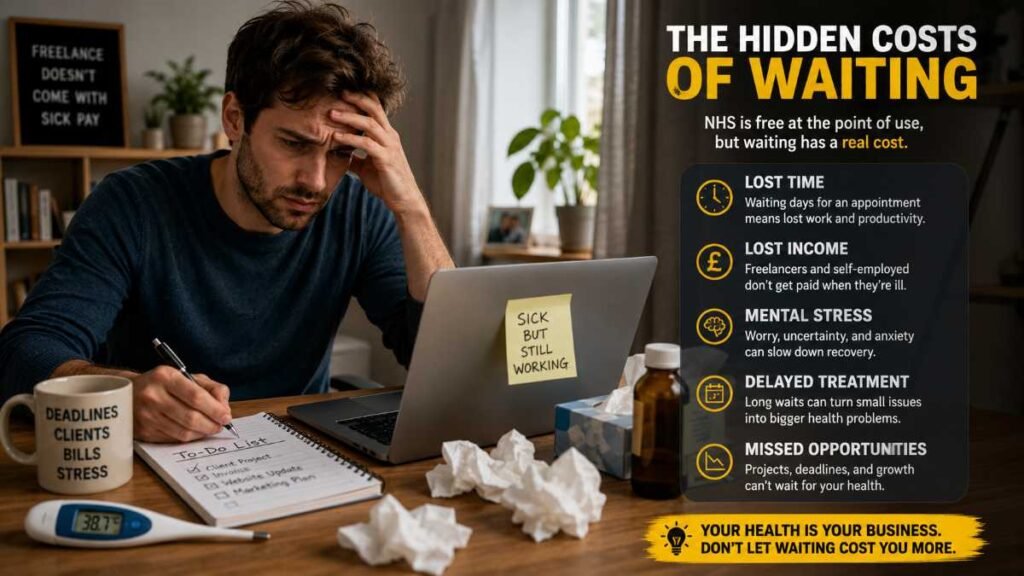
When evaluating UK Private GP vs NHS options, it’s worth considering the “Opportunity Cost.” While the NHS is free at the point of delivery, it isn’t always “free” in terms of your time or peace of mind. For a freelancer or a small business owner, three days of undiagnosed illness or waiting for a specialist can lead to lost revenue and missed deadlines. That delay can feel like a heavy burden when you have responsibilities to meet. For many people, it simply feels like a practical way to stay on top of their health without the logistical headache.
Currently, many UK freelancers are securing private health insurance because their livelihood depends on being physically capable. The “wait-and-see” approach, which the NHS often uses to manage resources, can be difficult for those without a corporate sick-pay cushion. By paying a monthly subscription, you are essentially investing in your own uptime. It is a more flexible way to manage your personal health. For some households, of course, the NHS will still remain the only realistic option financially, but for others, this cost pays for itself in time and productivity saved.
Data and Personalised Care: The Modern Edge
 Data and Personalised Care: The Modern Edge
One area where the UK Private GP vs NHS debate gets more interesting is in how technology is used. Private providers are now moving toward a more data-informed approach to health. Some high-end subscriptions even allow you to share information from devices, such as HRV tracking with Apple Watch, so your GP has a better understanding of your stress levels before you even start the consultation. For most people, it’s simply about having better information to make decisions.
What a Comprehensive Subscription Can Offer:
- Routine Screening: Many tiers include annual health checks, looking at markers that aren’t always part of a standard NHS screen. Taking this early step helps you spot potential health concerns before they escalate
- When it comes to your digestive system, private care often goes much deeper than standard advice. Many people are now using personalized nutrition like ZOE to get a clear picture of their microbiome—a level of forensic detail that the NHS simply doesn’t have the budget to offer right now.
- Hormonal Health: Private routes often provide quicker discussions regarding hormonal weight loss tips or menopause support, which is a significant pain point for many.
- Long-term Planning: Private GPs often use biological age test kits to help patients design a more proactive lifestyle that suits their specific genetic makeup.
Pricing Breakdown: What Does a Subscription Actually Cost?
 Pricing Breakdown: What Does a Subscription Actually Cost?
If you decide the UK Private GP vs NHS balance tips toward private care, it’s important to budget for it as a long-term commitment. This isn’t just a one-off fee; it’s an ongoing part of your healthcare spending. Today, the market has settled into a few main tiers, allowing families to choose what works for their budget. It is worth noting that waiting times and service availability can vary significantly depending on your location in the UK, especially in rural vs urban areas.
- Essential Digital (£25–£35/mo): This focuses on virtual access. It includes video consultations and digital prescriptions. It’s a good fit for those who just need a quick consultation for minor issues without leaving home or taking time off work.
- Family Support (£60–£90/mo): Often covers two adults and children. This is where many parents find real value. Being able to reach a doctor via video on a Saturday night provides immense relief. It means you can avoid a chaotic, hours-long wait in a crowded emergency room when your child is unwell and every minute feels like an eternity.
- Comprehensive/Preventative Tier (£150+/mo): This is for those who want more regular face-to-face time and in-depth screenings. These plans focus on a more comprehensive approach to long-term health and prevention, often including nutritionists and health coaches.
The Verdict: When the NHS Still Wins
 The Verdict: When the NHS Still Wins
Despite the benefits of private care, the UK Private GP vs NHS debate isn’t one-sided. There are very important areas where the NHS remains the best and only logical choice. The public system holds the deep expertise in high-stakes, acute medical intervention that private clinics are simply not designed to handle. And honestly, for many families, that is exactly as it should be; some things are too important to be left to the private market.
The NHS continues to lead in:
- Emergency Medicine: A private GP subscription is not for emergencies. If you have a serious crisis, injury, or chest pain, you must use the emergency services and A&E.
- Complex Chronic Care: For conditions like Type 1 Diabetes or severe respiratory issues, the NHS provides integrated care teams that are highly specialized and follow strict NICE (National Institute for Health and Care Excellence) guidelines.
For serious operations like heart surgery or cancer care, most private GPs will still guide you back to the NHS. Unless you have premium hospital-specific insurance, the state system remains the safest and most practical route for these life-altering procedures.”
A Balanced Approach (The "Hybrid" Strategy)
 A Balanced Approach (The "Hybrid" Strategy)
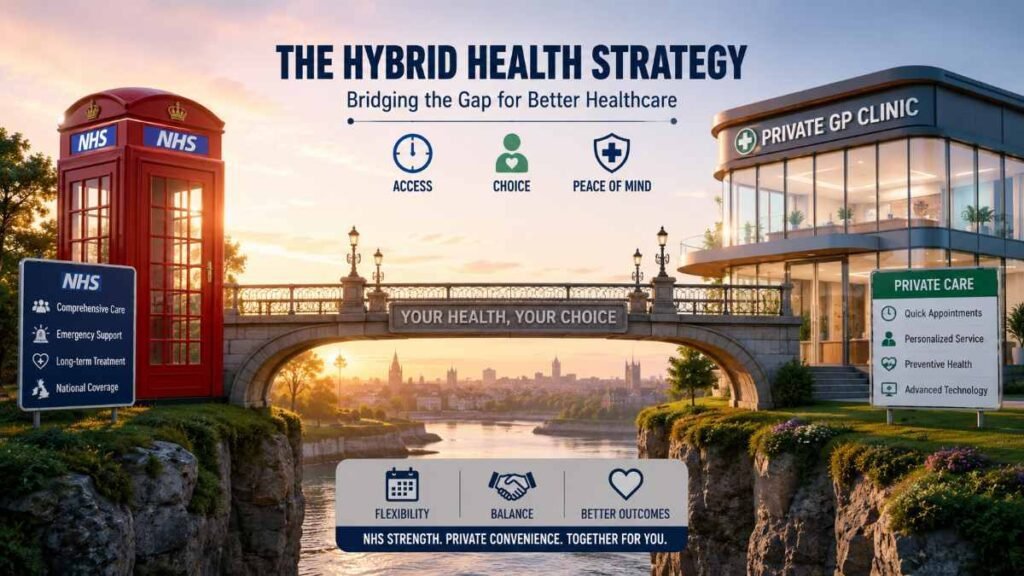
Many people today don’t choose one over the other; they use a “Hybrid” model to get the best results. By viewing UK Private GP vs NHS as a balanced approach, you can manage your health more effectively without overspending. This ensures you have speed for daily issues while keeping the robust safety net of the state for serious health events. It’s about being smart with your resources and your time.
Use your private subscription for:
- Mental Wellbeing: Quick vagus nerve exercises consultations or stress management support when you feel overwhelmed.
- Daily Efficiency: Fast access to sick notes, travel advice, and routine prescriptions that don’t require an urgent clinical visit.
- Use private routes for detailed wellness checks and blood panels that the state system doesn’t typically cover. It’s a great way to stay ahead of the curve and gives you a much clearer sense of where your health actually stands.
Keep your NHS GP for:
- Your Official Record: Ensuring your long-term medical history and vaccinations are centrally managed by the state.
- Emergency Protection: Knowing that the state has the resources for life-threatening issues that require multi-disciplinary teams.
- Long-term Medication: Getting essential drugs at the standard NHS price rather than the full pharmacy cost, which can be high for chronic medications.
Frequently Asked Questions
 Frequently Asked Questions
Will I lose my surgery spot? No. In the UK Private GP vs NHS model, you have a legal right to stay registered with your local NHS surgery while using private care.
Why are private costs higher? Unlike the flat-rate NHS fee, private prescriptions reflect the full market price, a key factor when comparing UK Private GP vs NHS pharmacy costs.
Are hospital stays included? Typically, no. The UK Private GP vs NHS primary care debate focuses on consultations; hospital treatment usually remains with the state or private insurance.
Is it better for mental health? Many choose the UK Private GP vs NHS private route for faster access to sick notes and stress support without the 8 AM wait.
Can I use both systems? Yes! Most people successfully use a hybrid UK Private GP vs NHS strategy for maximum flexibility and medical security.
Conclusion: Taking Control of Your Health
 Conclusion: Taking Control of Your Health
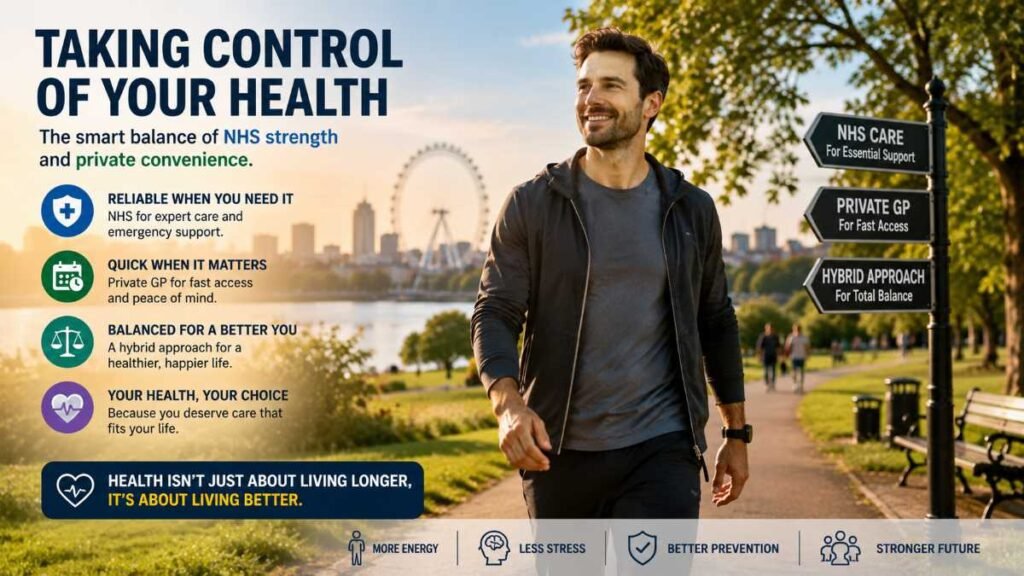
The UK Private GP vs NHS debate ultimately comes down to your personal needs and lifestyle. For many, the stress of trying to secure a simple appointment is becoming a health issue in itself. In an era where we pay for various digital subscriptions, perhaps a monthly investment in our own healthcare is a small price to pay for mental peace and physical longevity.
Of course, not everyone can justify another monthly subscription right now, and for many households, the NHS will remain the core of their care. However, for those looking for more personal care and quicker answers, the private route is a valid and increasingly popular option. For more on navigating the modern healthcare system, check out our guide on Direct Primary Care (DPC) and how it’s changing the game for patients everywhere.
✍️👤 About the Author
Dambar R. is a dedicated wellness researcher and the visionary founder of MyHealthyLifeUK. With over a decade of hands-on experience in metabolic science and practical nutrition, he specializes in creating sustainable health transformations for modern lifestyles.
Based on his extensive research, Dambar empowers individuals across the UK and USA to reach their peak fitness goals through science-backed health tips without sacrificing the joy of everyday eating. His mission is to bridge the gap between complex health data and actionable habits that foster long-term vitality and holistic wellness.
⚠️ Medical Disclaimer
The information provided on MyHealthyLifeUK is for educational and informational purposes only. It is not intended to be a substitute for professional medical advice, diagnosis, or treatment.
- Professional Guidance: Always seek the advice of your Physician (GP) or another qualified health provider regarding any medical condition.
- Specialized Advice: For personalized dietary needs, we recommend consulting a Registered Dietitian.
- Safety First: Consult a professional before starting any new fitness or nutrition program.
Never disregard professional medical advice or delay seeking it because of something you have read on this website.