
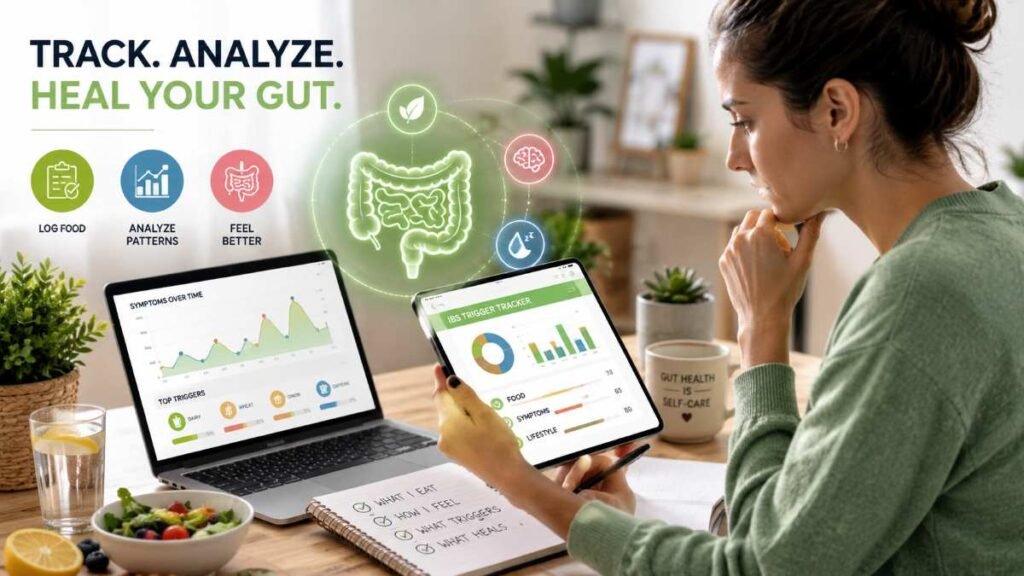
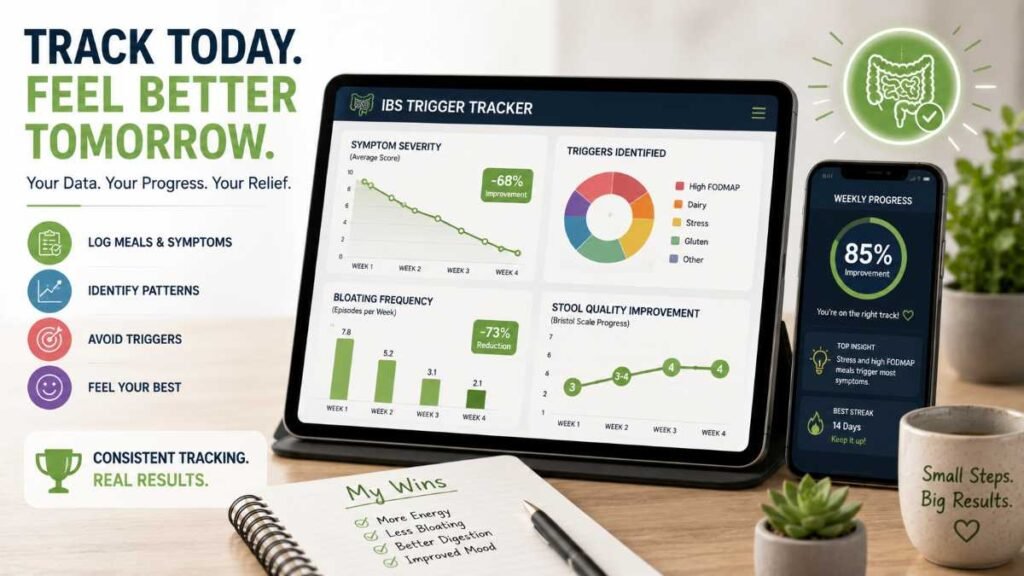
Tired of the daily “food gamble” that leaves you bloated or rushing to the restroom? Living with Irritable Bowel Syndrome (IBS) often feels like a never-ending, unpaid full-time job. Stop living in fear of your next meal and start reclaiming your life by using an IBS trigger tracker to decode exactly what your body is trying to tell you—one data point at a time.
 Why Standard Advice Fails: The Power of Personalization
 Why Standard Advice Fails: The Power of Personalization
Most medical pamphlets hand you a generic list of “avoid these foods” and call it a day. In many clinical settings, this approach misses the entire point of biological individuality. What bloats one person might be a well-tolerated “safe food” for another. Using an IBS trigger tracker isn’t about restriction; it’s about systematic discovery. By logging your intake against your physical response, you transform from a passive observer of your digestion into an active investigator of your own biology.
This is the foundation of personalized gut health. Standardized diets rarely work when you’re unwell, making the process even more difficult. To build a strategy that works, remember these principles:
- Treat your meals as a series of experiments to track results.
- Pattern Recognition: Identify the specific clues your body provides to build a balanced diet and healthy eating guide.
- Dose-Dependency: Acknowledge that symptoms often depend on the “load” of the food.
- Effective Tools: Use an IBS trigger tracker to replace generic lists with your own biological insights.

People Also Ask: Expert Insights
- How do I find out my IBS triggers? The most reliable way is by keeping a detailed food and symptom diary. Record everything you eat, the time, your stress levels, and your physical reactions.
- What is the best IBS tracker app? While apps like MyIBS or Bowelle are helpful, the best IBS trigger tracker is the one you actually use consistently.
- What’s the biggest trigger for IBS? Dietary triggers like high-FODMAP foods and chronic psychological stress are the primary drivers.
- What are the 10 worst foods for IBS? “IBS symptoms are often linked to wheat, dairy, onions, garlic, legumes, apples, sweeteners, fried foods, caffeine, and alcohol.”
Setting Up Your IBS Trigger Tracker: The Pro Method
 Setting Up Your IBS Trigger Tracker: The Pro Method
To get meaningful results, you need a structured data set. Keep it simple and consistent.
- The “Big Three” to Log: Ingredients, time of consumption, and symptom severity (1–10 scale).
- Context is King: Note your stress levels. Read more about stress management to understand its impact on your digestion.
- The “Sleep Sync”: Log your rest quality. Poor sleep modulates pain perception. For deep sleep tips, check our 7-hour sleep rule guide.
Category | What to Record | Why? |
Diet | Ingredients, portion, cooking method | Identify hidden irritants |
Symptoms | Bloating, gas, pain, stool type | Pinpoint severity |
Lifestyle | Sleep hours, workouts, mood | Correlate non-food triggers |
Check the current price and expert reviews here: Best IBS Relief Solution“
Identifying Patterns in Your IBS Trigger Tracker
 Identifying Patterns in Your IBS Trigger Tracker
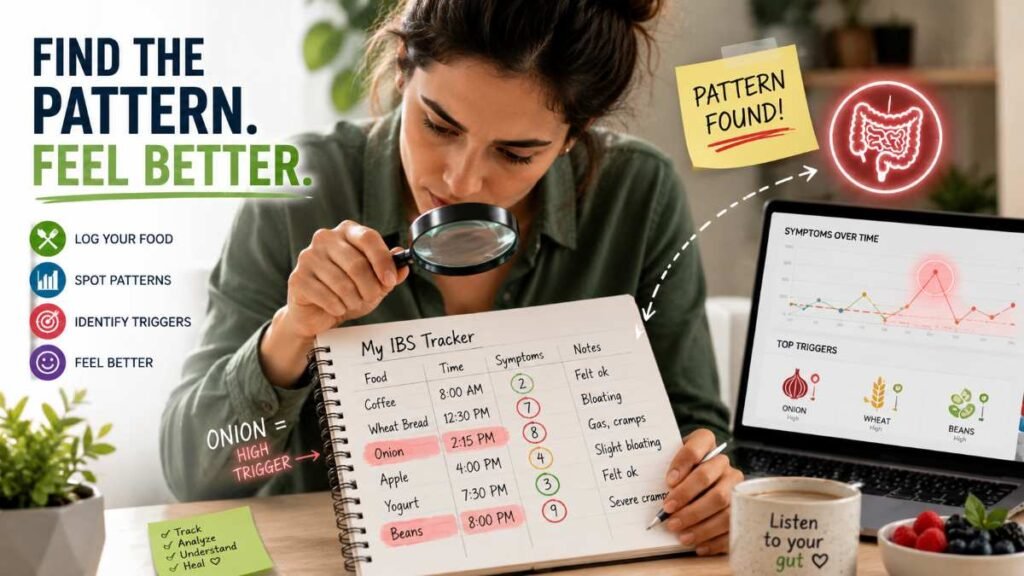
Once you have two weeks of data, look for “common denominators.” Data analysis helps move past assumptions. You might assume bread is the culprit, but your IBS trigger tracker might reveal it’s actually the timing of your meal or the specific stress levels present during consumption. By focusing on these patterns, you can effectively isolate variables.
Track your food combinations over time to fix digestion for the long haul. Understanding that IBS involves visceral hypersensitivity—where the gut is physically more reactive—helps you define your threshold. Documenting exact quantities allows you to find your “safe” portion sizes, turning raw data into a gut health guide for beginners. Consistent data logging helps clarify whether your symptoms are caused by a specific food or perhaps an accumulation of daily stressors that disrupt your microbiome balance.
The Elimination Phase: A Strategic Reset
 The Elimination Phase: A Strategic Reset
Think of this as a “clear the deck” phase. For 2-4 weeks, strictly monitor your input to identify true agitators. This isn’t about punishment—it’s about gaining diagnostic precision. Methodical control over your diet helps you follow a calorie deficit guide without accidentally triggering unwanted flares.
After 21 days, systematically reintroduce one food group at a time. This methodical approach is widely recommended and can help identify personal trigger foods for long-term success. Don’t be afraid to document the “fails”—they are just as important as the wins in your IBS trigger tracker. Using high-fiber meal plans helps ensure you are still getting essential nutrients while you test individual agitators during this temporary reset. Always prioritize nutrient density during this phase to maintain overall metabolic health while your gut heals.
Leveraging Tech: CGM and Advanced Tracking
 Leveraging Tech: CGM and Advanced Tracking
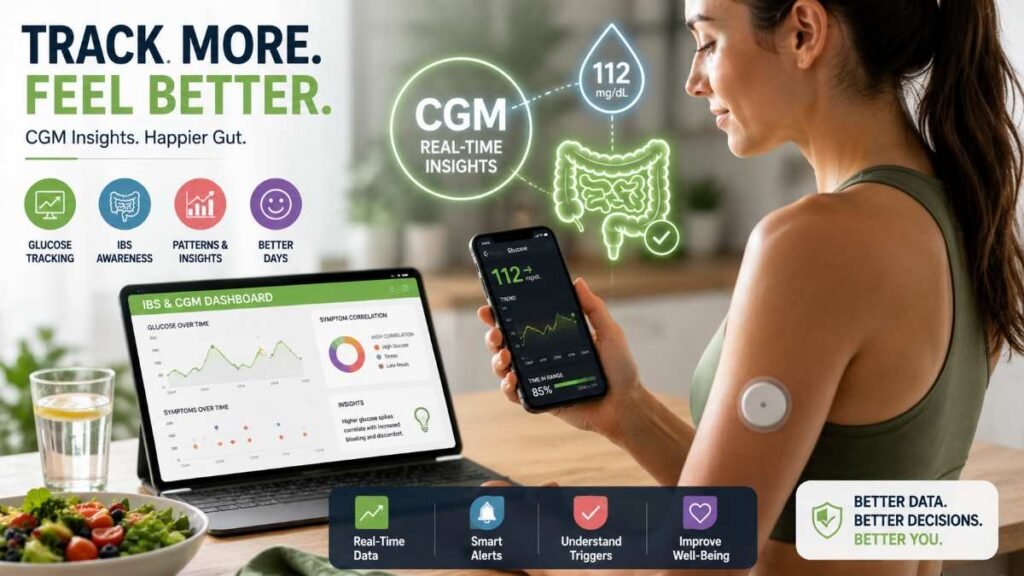
We live in an era of precision. If you are serious, consider using a Continuous Glucose Monitor (CGM) to gain additional insights. When you see a glucose spike alongside digestive discomfort, it provides a window into your systemic response. Some people may notice higher glucose responses after certain meals, although this does not necessarily mean those specific meals are the primary trigger for their IBS symptoms.
Align your meals using nutritional timing for circadian alignment to minimize systemic inflammation. This level of biological transparency takes your IBS trigger tracker from a simple diary to a powerhouse of health optimization. By monitoring blood sugar trends, you can distinguish between true food intolerances and metabolic stress. Modern tech allows us to see how internal variables like insulin sensitivity correlate with gut motility, providing a more comprehensive view of your body’s unique requirements.
The Brain-Gut Connection: Beyond the Plate
 The Brain-Gut Connection: Beyond the Plate
If you’ve optimized your diet but are still struggling, look at your nervous system. Your gut is your “second brain.” Incorporate vagus nerve exercises to shift into a “rest and digest” state. Even the cleanest diet can fail if you are eating in a state of high stress. Practice mindful eating to ensure your gut motility stays balanced.
Calming your nervous system is just as vital as watching what you eat. When the body remains in a chronic “fight-or-flight” state, digestive efficiency decreases significantly. A practical approach is to take five deep, slow breaths before every meal to signal safety to your enteric nervous system. This mindful transition supports the parasympathetic state required for optimal digestion and nutrient absorption, ensuring your gut feels supported during the entire eating process and reducing the likelihood of reactive, stress-induced IBS episodes.
Building Your "Safe Food" Repertoire
 Building Your "Safe Food" Repertoire
Once your IBS trigger tracker identifies the “no-go” foods, shift your focus to your “safe list.” Having 10 go-to meals that never cause issues reduces decision fatigue. When you are busy, you won’t need to guess—you’ll have a pre-planned list of nourishing meals. Use healthy meal prep for weight loss templates as a starting point.
This builds confidence, knowing every bite you take is a step toward comfort, not pain. Tired of staring at the fridge wondering what’s safe? Having a digital list on your phone changes the game. It stops the impulsive snacking that often leads to flares, helping you stick to your goals while keeping your gut happy. A well-organized safe-list is the ultimate tool for maintaining long-term dietary adherence, providing you with a reliable fallback plan even on your busiest days when decision-making becomes difficult.
“Start tracking your triggers today: Click to View on Amazon”
The Long-Term Maintenance Strategy
 The Long-Term Maintenance Strategy
Consistency is the name of the game. Your IBS trigger tracker should be a living document. Spend 15 minutes every three months reviewing your triggers, as sensitivities can evolve. If you suspect deeper systemic issues, consider exploring functional medicine for autoimmune recovery.
By prioritizing non-negotiable self-care and staying vigilant with your data, you move from “managing a condition” to actively thriving. Don’t let a bad week derail your progress; use it as another data point to refine your understanding of your triggers. Remember, the goal is vibrancy and energy, not just the absence of pain. You have the power to master your internal environment—start today and keep your data clean and actionable for the long term. Continuous monitoring ensures you adapt to lifestyle changes, travel, or stress, keeping your digestive health stable and your quality of life at its peak.
Final Verdict
This IBS trigger tracker is an essential tool for transforming digestive health from a guessing game into a data-driven science. By systematically logging diet, lifestyle, and symptoms, you identify your unique thresholds rather than relying on generic, restrictive advice. It is the most effective path to reclaiming long-term gut comfort and vitality.
Frequently Asked Questions
How long should I keep using an IBS trigger tracker?
It is recommended to maintain your log for at least 4-6 weeks to identify consistent patterns. Once you’ve built your “safe food” list, you can move to intermittent tracking to monitor any new sensitivities that may arise.
Can an IBS trigger tracker help with bloating?
By logging ingredients and portion sizes, this method helps pinpoint exactly which foods or eating habits—such as eating too quickly or combining specific high-FODMAP ingredients—are contributing to your symptoms.
Do I need a doctor to analyze my IBS trigger tracker?
While you can identify many patterns yourself, sharing your records with a gastroenterologist or a registered dietitian provides a clinical perspective, ensuring your dietary changes remain nutritionally balanced and safe.
📋 Scientific References for Further Reading
✍️👤 About the Author
Dambar R. is a dedicated wellness researcher and the visionary founder of MyHealthyLifeUK. With over a decade of hands-on experience in metabolic science and practical nutrition, he specializes in creating sustainable health transformations for modern lifestyles.
Based on his extensive research, Dambar empowers individuals across the UK and USA to reach their peak fitness goals through science-backed health tips without sacrificing the joy of everyday eating. His mission is to bridge the gap between complex health data and actionable habits that foster long-term vitality and holistic wellness.
⚠️ Medical Disclaimer
The information provided on MyHealthyLifeUK is for educational and informational purposes only. It is not intended to be a substitute for professional medical advice, diagnosis, or treatment.
- Professional Guidance: Always seek the advice of your Physician (GP) or another qualified health provider regarding any medical condition.
- Specialized Advice: For personalized dietary needs, we recommend consulting a Registered Dietitian.
- Safety First: Consult a professional before starting any new fitness or nutrition program.
Never disregard professional medical advice or delay seeking it because of something you have read on this website.