
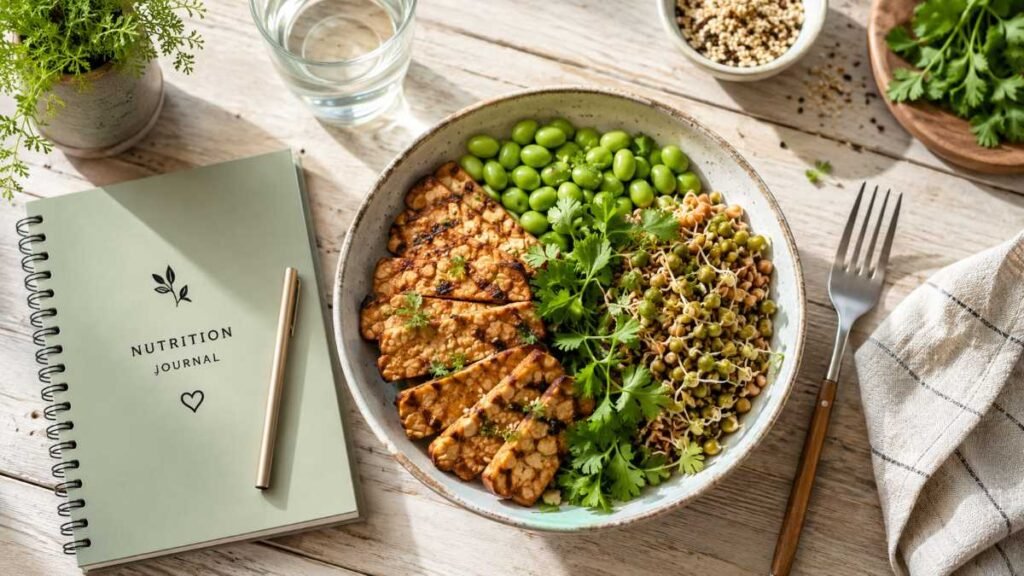
Ever finished a high-protein steak only to feel like a brick is sitting in your stomach for hours? You aren’t alone. While many switch to plant protein for relief, ultra-processed “fake meats” often trigger severe bloating.
In 2026, biohackers are shifting away from heavy animal proteins toward a microbiome-friendly approach. If you want the Best High-Protein Meat Alternatives for Gut Health, the secret lies in whole foods. According to data tracked by the World Health Organization (WHO), diversifying your protein sources is critical—discover how to support elite muscle mass without sacrificing your digestive peace.
 The Gut-Muscle Axis: Why Your Protein Source Matters
 The Gut-Muscle Axis: Why Your Protein Source Matters
The connection between your digestive tract and muscle synthesis is a major focus of modern nutrition. When you prioritize the Best High-Protein Meat Alternatives for Gut Health, you aren’t just avoiding bloating; you are optimizing the potential absorption of amino acids. Animal proteins, while complete, often contain saturated fats and lack fiber, which can lead to “gut sluggishness.” Recent research suggests that chronic consumption of heavy meats without sufficient fiber can alter the microbiome, which is often associated with low-grade systemic inflammation.
Plant-based alternatives, particularly fermented ones, provide a dual benefit: high-quality protein and “prebiotic” fiber. This combination ensures that your nutrition guide for beginners UK promotes a diverse microbiome. A healthy gut is thought to help manage systemic inflammation, potentially making your body more growth-oriented. By switching to cleaner sources, you bypass the digestive fatigue that often ruins a productive afternoon. In the high-performance culture of 2026, biohackers realize that muscle is built in the gym but finalized in a thriving, efficient gut environment.
Top 5 Fermented & Whole-Food Protein Champions
 Top 5 Fermented & Whole-Food Protein Champions
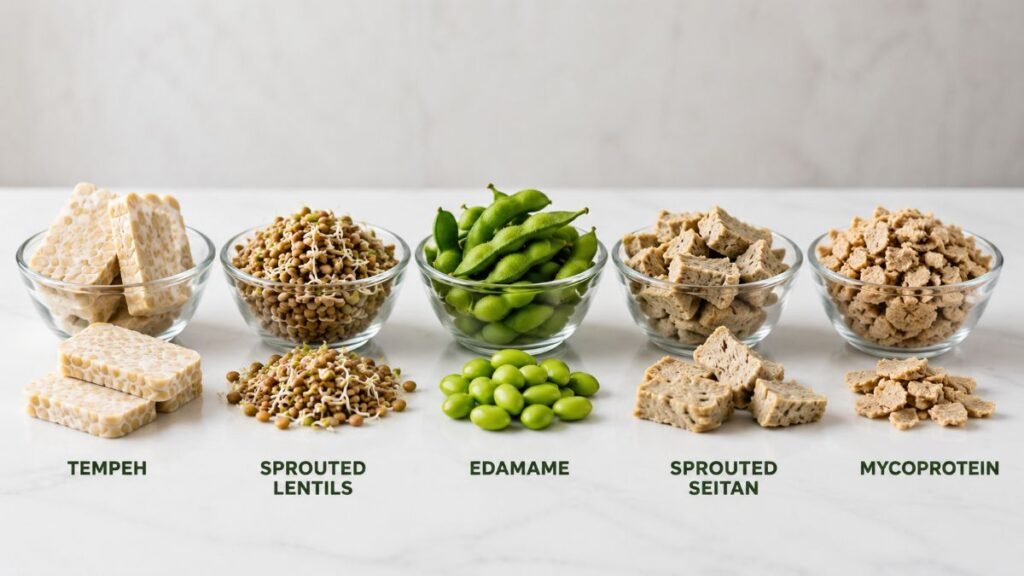
To truly master the Best High-Protein Meat Alternatives for Gut Health, you need to look beyond the “fake meats” found in supermarkets. Many processed vegan burgers are loaded with inflammatory seed oils and stabilizers that may irritate the gut lining. Instead, focus on these five gut-friendly powerhouses:
- Tempeh (The Probiotic Powerhouse): Unlike tofu, tempeh is fermented, making its protein highly bioavailable and packed with probiotics. It contains the entire essential amino acid profile needed for muscle retention.
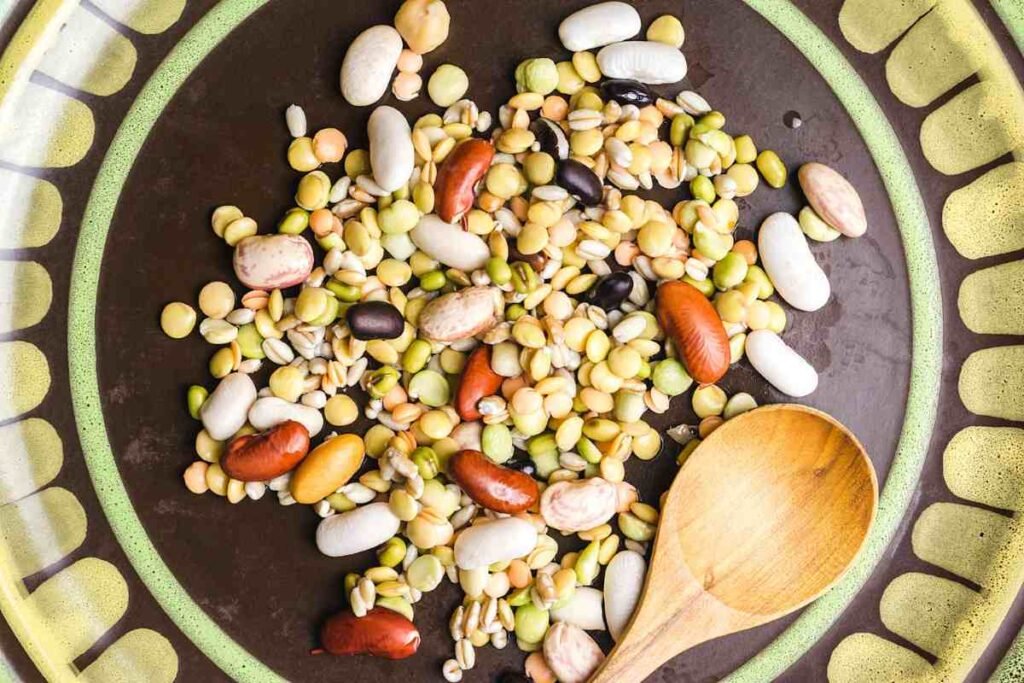
- Lentils & Pulses: These are a staple for any mindful eating and self-care routine because they provide the resistant starch your gut bacteria thrive on.
- Sprouted Seitan: When wheat is sprouted, it becomes significantly easier for many to digest, offering a “meat-like” texture with nearly 75g of protein per 100g.
- Edamame: These young soybeans are a complete protein source and are incredibly gentle on the digestive lining, providing folate and vitamin K.
- Mycoprotein (Fungal Protein): Derived from fungi, this source is exceptionally high in fiber. Emerging 2026 studies suggest it may be associated with improved insulin sensitivity.
Comparison: Meat vs. Plant Alternatives for Digestion
 Comparison: Meat vs. Plant Alternatives for Digestion
Understanding the Best High-Protein Meat Alternatives for Gut Health requires a direct comparison of how different proteins impact your internal environment.
Feature | Red Meat (Beef/Lamb) | Tempeh/Fermented Soy | Mycoprotein (Fungi) |
Digestion Speed | Slow (4-6 hours) | Fast (1-2 hours) | Moderate |
Fiber Content | 0g | High (Prebiotic) | Very High |
Gut Impact | Potential Inflammation | Probiotic Support | Microbiome Diversity |
Bioavailability | ~90% | 85-88% | 80-85% |
Muscle Retention | High | High | High |
While meat provides a strong anabolic drive, the “digestive tax” often outweighs the benefit for those struggling with chronic stress and gut sensitivity. In 2026, the trend is “Efficiency over Volume”—extracting more nutrition with less internal strain.
Biohacking Your Plant-Based Protein Intake
 Biohacking Your Plant-Based Protein Intake
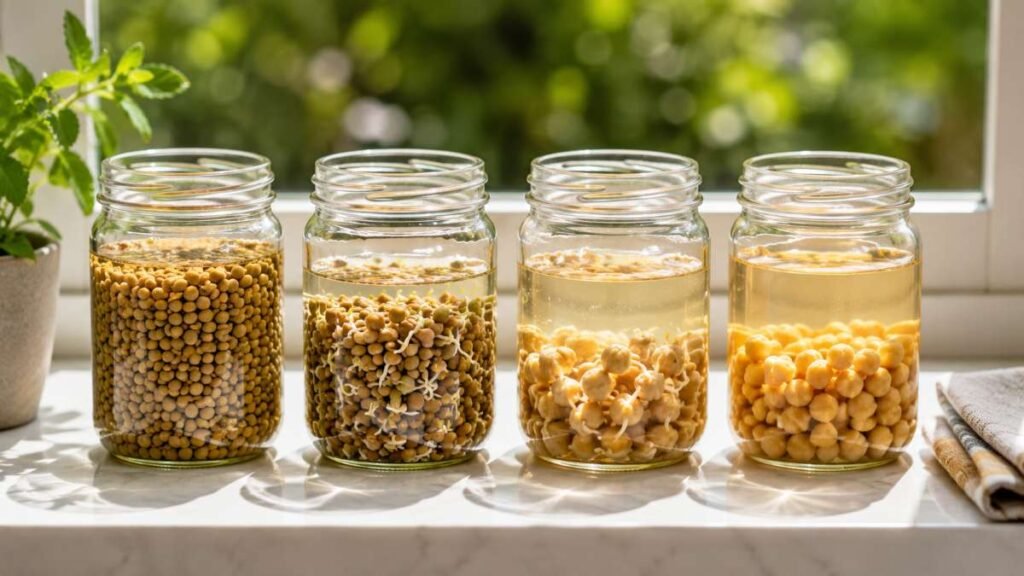
Simply eating beans isn’t always enough. To maximize the Best High-Protein Meat Alternatives for Gut Health, you can utilize “preparation biohacks.” For example, soaking and sprouting legumes helps neutralize “anti-nutrients” like phytic acid, which can cause gas and mineral malabsorption. Pressure cooking is another 2026 favorite for breaking down lectins that typically cause IBS-like symptoms in sensitive individuals.
In 2026, many elite athletes are using a “Protein-Fiber Rotation” to keep their metabolism sharp. This involves pairing your protein with bitter greens or a splash of apple cider vinegar to prime the stomach’s hydrochloric acid. This is a vital step for anyone undergoing a dopamine detox 7-day reset, as gut health is increasingly linked to brain health and mood regulation. When your gut is clear, your focus is sharp, creating a positive feedback loop.
Somatic Nutrition: Listening to Your Gut's Signals
 Somatic Nutrition: Listening to Your Gut's Signals
The Best High-Protein Meat Alternatives for Gut Health work best when you are in a “rest and digest” state. If you eat while stressed, your body diverts blood away from the gut, potentially leading to fermentation and gas—even with the healthiest foods. This physiological response can prevent the proper breakdown of plant cell walls, leading to the common complaint of bloating.
Before eating, you might try vagus nerve exercises to support your parasympathetic nervous system. This helps ensure that the amino acids from your tempeh or lentils are effectively used for muscle repair. Somatic awareness helps you identify which specific plant proteins work for your unique microbiome. This “internal listening” is a key component of somatic exercises for trapped stress trauma, as a calm gut often leads to a calm mind.
The Science of Antinutrients and Clean Absorption
 The Science of Antinutrients and Clean Absorption
Critics of the Best High-Protein Meat Alternatives for Gut Health often point to lectins and oxalates. However, in 2026, we know that these are easily managed. Cooking, fermenting, and pressure-cooking are your best tools to enjoy high-protein plants without the bloat. The myth that plant protein is “incomplete” has also been debunked; by eating a variety of sources throughout the day, your body pools amino acids to create full proteins.
According to clinical updates compiled by the National Institutes of Health (NIH), diversifying protein sources is essential for long-term health and metabolic longevity. By rotating your sources, you ensure a wide array of micronutrients. For those worried about “muscle wasting,” a balanced plant-based diet can be just as effective as a meat-based one, provided you meet your leucine thresholds. This is especially true when paired with a calorie deficit guide for weight loss to ensure you are maintaining lean mass.

The Post-Meal Experience: Feeling Light vs. Feeling Full
 The Post-Meal Experience: Feeling Light vs. Feeling Full
The most noticeable change when switching to the Best High-Protein Meat Alternatives for Gut Health is the absence of the “meat coma.” Because plant proteins come with fiber, they provide a slow, sustained release of energy rather than a heavy insulin spike followed by a crash. This helps stabilize blood sugar levels, preventing the midday brain fog that many office workers accept as “normal.”
This sustained energy is why many London professionals are choosing plant-based lunches before heading out on their silent walking routes in London. When you don’t have to spend all your energy on heavy digestion, you have more cognitive fuel for creativity and problem-solving. This “metabolic lightness” is a hallmark of the 2026 wellness lifestyle, where performance is measured by how you feel after the meal.
The Microbiome Diversity Factor: Beyond Just "Macros"
 The Microbiome Diversity Factor: Beyond Just "Macros"
When biohackers analyze the Best High-Protein Meat Alternatives for Gut Health, they look at the “Diversity Score.” Traditional high-meat diets often result in a monotonous microbiome. However, plant-based proteins like hemp seeds, lupin beans, and fermented soy introduce a wide array of fibers that act as fuel for different strains of beneficial bacteria.
A diverse microbiome is associated with producing Short-Chain Fatty Acids (SCFAs) like butyrate, which is linked to improved gut lining integrity and reduced brain fog. If you are following simple healthy living tips, adding 30 different plant types per week is the gold standard. This approach ensures that you aren’t just fueling your muscles, but you are supporting your immune system and your long-term metabolic health.
Identifying Ultra-Processed "Fake Meats": The 2026 Red Flags
While searching for the Best High-Protein Meat Alternatives for Gut Health, you must learn to navigate marketing traps. Not all “plant-based” labels are healthy. Many 2026 “bleeding” vegan burgers use isolated soy proteins and carrageenan, which can be inflammatory to some gut linings. These products often prioritize the “taste of meat” over the health of the consumer.
To ensure your protein is actually gut-friendly, check the ingredient list for excessive sodium, methylcellulose, and industrial seed oils. Stick to minimally processed options like tempeh, organic tofu, or home-made bean burgers. Reclaiming your digestive health means being the gatekeeper of what enters your system. By choosing “naked” proteins and seasoning them yourself, you avoid the chemical cocktails that turn a healthy plant into a digestive nightmare
Final Verdict: Reclaiming Your Digestive Sovereignty
 Final Verdict: Reclaiming Your Digestive Sovereignty
Choosing the Best High-Protein Meat Alternatives for Gut Health is an act of healthcare independence. You are no longer reliant on the “heavy” foods that keep you sluggish and dependent on stimulants to get through the day. By prioritizing your microbiome, you are building a body that is resilient, lean, and mentally clear.
The shift to gut-friendly protein is a return to a more intuitive way of eating. Whether you are a dedicated vegan or a “flexitarian” looking to improve your overall health, the ocean of plant-based nutrition is vast and ready for you. Start small, soak your grains, choose fermented options, and listen to your body.
Frequently Asked Questions
 Frequently Asked Questions
Q: Can plant sources build muscle as effectively as meat? A: Absolutely. Utilizing whole-food High-Protein Meat Alternatives for Gut Health like tempeh, edamame, and mycoprotein provides all essential amino acids to sustain lean muscle growth without any digestive heavy tax.
Q: How can I cook legumes to completely eliminate bloating? A: Soak raw lentils for 12–24 hours, discard the water, and rinse thoroughly. Pressure cooking then shatters tough lectins, transforming these High-Protein Meat Alternatives for Gut Health into stomach-friendly fuel.
Q: Why are supermarket “fake meats” bad for my microbiome? A: High-street vegan burgers are ultra-processed and loaded with carrageenan and seed oils that irritate the stomach. Switch to clean High-Protein Meat Alternatives for Gut Health like organic tofu or sprouted seitan.
Q: What is the most bioavailable plant protein for digestion? A: Tempeh. Because it is fermented, its active probiotics directly support the gut lining, making it the most bioavailable High-Protein Meat Alternatives for Gut Health for fast amino acid absorption.
Q: How do I choose the best clean protein at the store? A: Scan labels for “naked” or minimally processed ingredients. Avoid methylcellulose and excessive sodium; the safest High-Protein Meat Alternatives for Gut Health are always whole, organic options you season yourself.
✍️👤 About the Author
Dambar R. is a dedicated wellness researcher and the visionary founder of MyHealthyLifeUK. With over a decade of hands-on experience in metabolic science and practical nutrition, he specializes in creating sustainable health transformations for modern lifestyles.
Based on his extensive research, Dambar empowers individuals across the UK and USA to reach their peak fitness goals through science-backed health tips without sacrificing the joy of everyday eating. His mission is to bridge the gap between complex health data and actionable habits that foster long-term vitality and holistic wellness.
⚠️ Medical Disclaimer
The information provided on MyHealthyLifeUK is for educational and informational purposes only. It is not intended to be a substitute for professional medical advice, diagnosis, or treatment.
- Professional Guidance: Always seek the advice of your Physician (GP) or another qualified health provider regarding any medical condition.
- Specialized Advice: For personalized dietary needs, we recommend consulting a Registered Dietitian.
- Safety First: Consult a professional before starting any new fitness or nutrition program.
Never disregard professional medical advice or delay seeking it because of something you have read on this website.