
Separating Cold Shower Facts from Myths
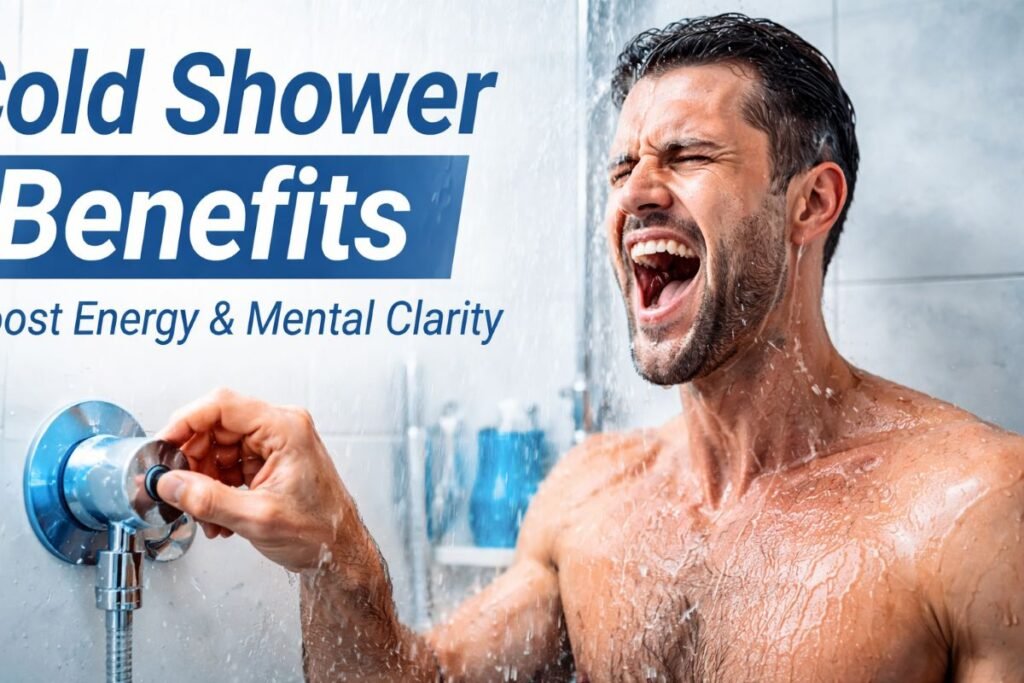
What if the secret to elite-level energy and mental clarity wasn’t found in a bottle of supplements, but in the handle of your shower? In 2026, the USA is witnessing a cold-water revolution. From Silicon Valley CEOs to professional athletes in the NFL, thousands are intentionally turning the dial to blue. But beyond the viral “Cold Plunge” social media videos, does standing under a freezing stream actually change your body? Cold Shower Benefits are often touted as a miracle cure for everything from fat loss to chronic stress. This guide dives deep into the clinical reality, separating the “TikTok hype” from the science-backed truths supported by the Mayo Clinic and UCLA Health
The "Cold Shock" Response: What Happens to Your Brain in 30 Seconds?
To understand the true Cold Shower Benefits, we must first look at the immediate neurobiological reaction. The moment freezing water hits your skin, your body enters a state of “Acute Thermal Stress”—which is basically a fancy scientific way of saying your system gets a sudden, sharp temperature jolt. This triggers an instant surge in noradrenaline—a neurotransmitter and hormone that increases focus and alertness. Research typically suggests that this “Cold Shock” response causes a 200–300% increase in norepinephrine, providing a level of mental clarity that even the strongest cup of American coffee cannot match.
I’ll be honest: for most people, the first 30 seconds are the absolute hardest. Your heart rate spikes, your breath hitches, and every muscle wants to scream “get out!” However, by staying in the cold, you are essentially training your brain to handle stress. This is known as “Hormetic Stress”—or the “what doesn’t kill you makes you stronger” principle. It’s a small, controlled dose of discomfort that makes your nervous system more resilient over time. It’s not just about the water; it’s about proving to your brain that you can stay calm in the middle of a biological storm.
Metabolic Fire: Can Cold Water Really Burn Stubborn Fat?
One of the most debated Cold Shower Benefits is the claim of rapid weight loss. While standing in cold water won’t replace a solid workout at the gym (I wish it were that easy!), it does play a fascinating role in metabolic health. The cold activates “Brown Adipose Tissue” (BAT), or brown fat. Unlike white fat, which stores energy, brown fat is like your body’s internal furnace; it burns energy to generate heat through a process called thermogenesis.
By exposing your body to cold temperatures, you are essentially forcing your internal engine to rev up just to keep your lights on. Some clinical studies suggest that regular cold exposure can increase your basal metabolic rate by 3-5% over time. However, it is important to be realistic: while cold showers are an excellent metabolic aid, they work best when combined with a balanced diet and consistent movement. They are the “secret ingredient” to a fat-loss journey, not the entire recipe.
The Immunity Myth vs. Reality: Does It Prevent the Common Cold?
In the USA, where productivity is king, the promise of fewer sick days makes Cold Shower Benefits highly attractive. I remember hearing about a famous Dutch study—often cited by American health experts—that tracked over 3,000 participants and found that those who ended their showers with 30-90 seconds of cold water had a 29% reduction in sickness-related absences from work.
The theory is that the cold shock stimulates the production of leucocytes (white blood cells), which are your body’s primary soldiers against infection. While the cold may not “kill” a virus on contact, it appears to prime the immune system to respond more aggressively when a threat is detected. For the average American professional, this means that while you might still catch a bug, your body is typically better equipped to bounce back faster, keeping your vitality high throughout the year.
Mental Health & Resilience: The Dopamine Spike You Can’t Buy
Perhaps the most profound of all Cold Shower Benefits is the impact on mood and depression. When you immerse yourself in cold water, your brain releases a massive wave of dopamine—the “feel-good” hormone. Unlike the quick dopamine spikes from social media or sugar that leave you crashing, the dopamine increase from cold exposure is sustained, often lasting for several hours after you’ve dried off.
Researchers have explored cold showers as a potential supplementary treatment for depression. Think about it: the high density of cold receptors in the skin means that a cold shower sends an overwhelming amount of electrical impulses to the brain, which may result in a powerful anti-depressive effect. It’s a natural, “zero-cost” biohack that helps Americans manage the daily grind with a more optimistic and resilient mindset. It’s the kind of mental toughness you simply can’t buy in a pharmacy.
Post-Workout Recovery: Why Professional Athletes are Turning the Dial
If you walk into any high-end gym in New York or Los Angeles, you’ll hear talk about the recovery-based Cold Shower Benefits. Professional athletes have used ice baths for decades, but a 3-minute freezing shower can offer similar physiological advantages. The cold causes vasoconstriction—which is just the medical term for your blood vessels shrinking—which helps flush out metabolic waste like lactic acid and reduces inflammation in the muscles.
However, there is a nuance that many people miss: timing. If your goal is maximum muscle growth (hypertrophy), some research suggests waiting a few hours after your workout before taking a cold shower. This is because the initial inflammation from lifting weights is actually what triggers muscle repair. But for those focused on endurance, fat loss, or simply reducing soreness (DOMS), the cold dial is your best friend for a faster recovery. I’ve found it especially helpful after those long runs where your legs feel like lead.
Skin and Hair Aesthetics: The Natural Glow Secret
Hot showers are a staple of American life, but let’s be real—they often strip the skin and hair of essential oils, leaving you feeling like a dried-out raisin. This is where the aesthetic Cold Shower Benefits come into play. Hot water can leave your skin dry, itchy, and prone to irritation. Cold water, on the other hand, helps to constrict the pores and tighten the skin, giving it a firmer and more youthful appearance.
For hair health, cold water is a total game-changer. It flattens the hair cuticle, allowing it to reflect more light and look significantly shinier. It also prevents the scalp from becoming overly dry, which can reduce dandruff. Many dermatologists in the USA now recommend a “Cold Finish” to every shower—not just for the internal health benefits, but to maintain the integrity of your hair and skin’s natural moisture barrier. It’s the cheapest beauty treatment you’ll ever find.

Cardiovascular Health: Strengthening the "Vascular Gym"
Your circulatory system is like a massive network of pipes, and Cold Shower Benefits include giving these pipes a rigorous workout. When you hit the cold water, your blood rushes inward to protect your vital organs. When you step out and warm up, the blood rushes back to the surface. This “pumping” action is essentially a workout for your circulatory system.
Over time, this can improve overall circulation and may help lower blood pressure in some individuals by making the blood vessels more elastic. It’s like taking your heart and veins to the gym for a weightlifting session. Improved circulation means more oxygen is being delivered to your tissues and toxins are being removed more efficiently. However, if you have a history of heart conditions, it is vital to consult a doctor before starting this practice, as that initial shock can be quite intense.
Circadian Rhythm & Sleep: The Paradox of the Cold Shower
It seems counterintuitive—how can a freezing shock help you sleep? Yet, the link between Cold Shower Benefits and sleep quality is backed by “Thermoregulation,” or the way our body manages its internal heat. Your body’s core temperature needs to drop by about one or two degrees to initiate deep sleep. This is why we almost always sleep better in a cool room.
By taking a cold shower 1-2 hours before bed, you trigger a rapid cooling response. Once you step out, your body works hard to stabilize its temperature, often leading to a deeper “drop” that signals to the brain that it’s time for rest. When combined with the reduction in cortisol (after the initial spike), many Americans find that they fall asleep faster and stay in the restorative “Deep Sleep” phase longer after a cold exposure protocol.
The 30-Day Protocol: How to Start Without Quitting
To truly reap the Cold Shower Benefits, you cannot just jump into a 5-minute freezing soak on day one. Most people quit in week 1 because they go too cold, too fast. In the USA, the most successful practitioners use a “Gradient Method” to build up tolerance slowly:
- Week 1: Take your normal hot shower, but end with 15 seconds of pure cold. Focus on your breath.
- Week 2: Increase the cold finish to 30 seconds. Try to let the water hit your chest and back equally.
- Week 3: Move to 60 seconds. At this point, the initial “gasp” response should start to diminish.
- Week 4: The 2-minute mark. This is where the dopamine and metabolic benefits truly begin to peak.
The goal is consistency over intensity. It is far better to do 30 seconds every single day than 5 minutes once a week. It’s about building a habit, not testing your ego.
Biohacking 2026: Combining Cold Stress with Mindfulness
As we move further into 2026, the trend of “Integrated Wellness” is connecting Cold Shower Benefits with breathwork and meditation. Many Americans are now pairing their cold showers with the Wim Hof Method or box breathing. This synergy allows you to use the cold as a mirror for your life’s stresses.
If you can control your breath while freezing water is hitting your skin, you can control your reaction when a stressful email hits your inbox or when you’re stuck in Los Angeles traffic. Cold showers are the ultimate “Stoic” practice—they remind us every morning that we have the power to choose our response to discomfort. By mastering the cold, you are mastering your own mind.
Cold Shower Reality Check: Claims vs. Science
Benefit Claim | Level of Scientific Support | The Verdict |
Instant Energy Boost | Very High | Proven: Massive Adrenaline Spike. |
Rapid Fat Loss | Low to Moderate | Exaggerated: It helps, but diet is key. |
Muscle Recovery | High | Proven: Great for inflammation/soreness. |
Immune System Boost | Moderate | Proven: Reduces frequency of sick days. |
Clearer Skin/Hair | High | Proven: Seals cuticles and pores. |
[Timing Chart] The Perfect 3-Minute Cold Protocol
- 0:00 – 0:30 (The Shock Zone): Focus on long, slow exhales. Do not hold your breath, no matter how much you want to.
- 0:30 – 1:30 (The Adaptation): Move your body slightly under the stream. Your heart rate will begin to slow down naturally.
- 1:30 – 2:30 (The Benefit Zone): This is where brown fat activation and dopamine release are at their highest.
- 2:30 – 3:00 (The Recovery): Step out, pat dry (don’t rub aggressively), and enjoy that natural, post-cold “high.”
Frequently Asked Questions
Q: How cold does the water actually need to be?
A: For most therapeutic Cold Shower Benefits, the water should be below 60°F (15°C). Most American household showers can reach about 50-55°F, which is perfect for a beginner-to-intermediate protocol.
Q: Can I take a cold shower if I have a cold?
A: Generally, no. If your body is already fighting an active infection or fever, adding the stress of cold water can be counterproductive. Wait until you are healthy to use the cold as a preventative tool.
Q: Should I do it in the morning or at night?
A: Morning is best for the dopamine spike and energy. However, as mentioned in the guide, a cold shower 1-2 hours before bed can assist with the core temperature drop needed for sleep. Try both and see what your body prefers.
Q: Is it safe for everyone?
A: While generally safe, individuals with heart conditions, high blood pressure, or Raynaud’s disease should consult a physician first. The sudden vasoconstriction (blood vessel shrinking) can put a temporary strain on the cardiovascular system.
The Cold Truth for a Better Life
In a world obsessed with comfort, choosing the cold is a quiet act of rebellion. Cold Shower Benefits are not just about physical health; they are about building a “Mental Armor” that stays with you throughout the day. While the science clearly supports the energy, mood, and recovery gains, the true value lies in the discipline. By turning the dial to blue every morning, you are telling yourself that you can handle anything the world throws at you. Start with 15 seconds, breathe through the shock, and reclaim your vitality—one cold splash at a time.

Expert Tip: Never jump into a cold shower while holding your breath. The secret to mastering the cold is the “vocalized exhale.” Making a low humming sound or a long “whoosh” breath helps signal to your nervous system that you are in control, preventing the panic response.
✍️ About the Author
Dambar R. is a dedicated wellness researcher and the visionary founder of MyHealthyLifeUK. With over a decade of hands-on experience in metabolic science and practical nutrition, he specializes in creating sustainable health transformations for modern lifestyles.
Based on his extensive research, Dambar empowers individuals across the UK and USA to reach their peak fitness goals through science-backed health tips without sacrificing the joy of everyday eating. His mission is to bridge the gap between complex health data and actionable habits that foster long-term vitality and holistic wellness.
⚠️ Medical Disclaimer
The information provided on MyHealthyLifeUK is for educational and informational purposes only. It is not intended to be a substitute for professional medical advice, diagnosis, or treatment.
- Professional Guidance: Always seek the advice of your Physician (GP) or another qualified health provider regarding any medical condition.
- Specialized Advice: For personalized dietary needs, we recommend consulting a Registered Dietitian.
- Safety First: Consult a professional before starting any new fitness or nutrition program.
Never disregard professional medical advice or delay seeking it because of something you have read on this website.