

Are you feeling a persistent lack of energy, reduced muscle mass, or a dip in your overall drive? You aren’t alone. Millions of men are exploring TRT clinic near me options to reclaim their vitality. However, navigating the maze of hormone replacement costs and insurance coverage can feel like a full-time job. Before you commit to a treatment plan, you need to understand the true financial landscape to ensure you receive safe, effective, and budget-conscious care.
 Understanding the True Cost of TRT in the USA
 Understanding the True Cost of TRT in the USA
The investment in your health varies significantly based on your chosen treatment method and provider. It is vital to look beyond the initial consultation fee to understand your long-term commitment. Many patients overlook the hidden expenses of recurring blood panels and medication adjustments, which are essential for safety.
Treatment Modality | Monthly Out-of-Pocket Range | Monitoring/Lab Frequency |
Injections | $100 – $400 | Monthly/Quarterly |
Gels & Creams | $150 – $500 | Quarterly |
Pellet Implants | $500 – $1,000 | Bi-annually |
Oral Capsules | $1,000+ | Monthly |
Financial Variables Affecting Your Bottom Line:
- Clinic Model: Specialized clinics often provide bundled care, whereas general practice physicians may bill for every office visit and lab draw separately.
- Laboratory Panels: Comprehensive blood work (Total T, Free T, E2, PSA, CBC) is a non-negotiable, recurring expense that ensures your therapy remains safe.
- Regional Overhead: Costs in high-density urban centers often fluctuate compared to rural providers due to operational overhead variances.
Navigating Insurance Coverage for Testosterone Therapy
 Navigating Insurance Coverage for Testosterone Therapy
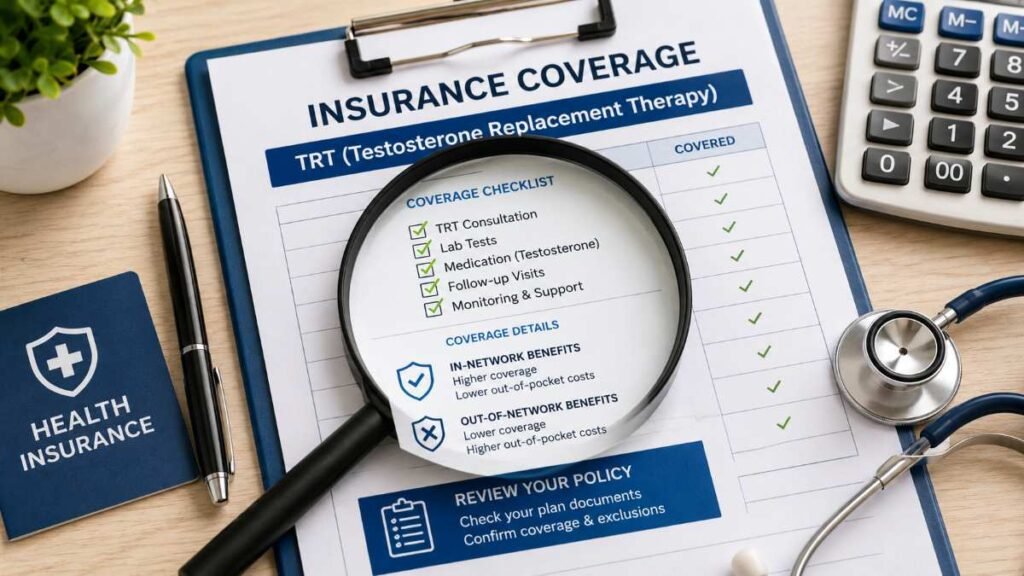
Does insurance cover TRT clinic near me services? The answer is generally yes, but it is rarely straightforward. Most insurance providers require rigid proof of “medical necessity.”
The “Medical Necessity” Checklist:
- Clinical Diagnosis: You must have a verified diagnosis of hypogonadism, not just “low energy.”
- Diagnostic Testing: Plans mandate two separate, early-morning blood tests confirming low levels.
- Prior Authorization: Your doctor must submit detailed documentation before coverage kicks in.
- Formulary Restrictions: Insurers often dictate the specific delivery method they will cover.
Pro Tip: Call your provider’s member services line. Ask: “Is testosterone replacement therapy covered for hypogonadism, and what are the specific clinical requirements for prior authorization?”
How to Find a Reputable TRT Clinic Near Me
 How to Find a Reputable TRT Clinic Near Me
Not all clinics are created equal. When researching a TRT clinic near me, prioritize safety and transparency over convenience alone. Beyond standard credentials, look for clinics that offer a concierge-style approach to your health. A high-quality facility will dedicate time to explaining your specific hormone pathway and potential lifestyle impacts. Avoid centers that pressure you into expensive “add-on” supplements that lack clinical backing. Instead, focus on providers who demonstrate a commitment to your long-term endocrine health.
- Verify Credentials: Ensure the clinic is staffed by board-certified physicians, specifically urologists or endocrinologists.
- Pricing Transparency: A reputable clinic will provide a clear breakdown of costs before your first treatment.
- Comprehensive Monitoring: Avoid clinics that prescribe testosterone without consistent follow-up blood panels.
- Holistic Integration: Premium clinics suggest pairing treatment with healthy meal prep for weight loss to maximize your physiological results.
The Benefits vs. Risks: Making an Informed Decision
 The Benefits vs. Risks: Making an Informed Decision
Before starting your TRT clinic near me journey, understand the clinical reality. Hormone replacement can significantly enhance your quality of life, but it is not a decision to take lightly. It is crucial to engage in an open, honest conversation with your endocrinologist about your family medical history and personal health goals. Weighing the potential for increased vigor against the necessity of lifelong management is a standard part of the patient onboarding process at top-tier clinics. Ensure you are mentally and physically prepared for the commitment.
Potential Benefits:
- Enhanced Energy: Significant reduction in chronic fatigue and improvement in daily motivation.
- Body Composition: Improved maintenance of muscle mass and bone density, often synergistic with best exercises to lose belly fat naturally.
- Sexual Health: Normalized libido in those with clinically low levels.
- Mood Stability: Reduced irritability associated with hormonal imbalance.
Important Risks & Considerations:
- Fertility Impact: TRT can suppress natural sperm production.
- Cardiovascular Health: Proper monitoring is required to manage hematocrit levels.
- Dependence: Testosterone is a controlled substance requiring strict, lifetime supervision.
Strategic Tips for Managing Your Healthcare Budget
 Strategic Tips for Managing Your Healthcare Budget
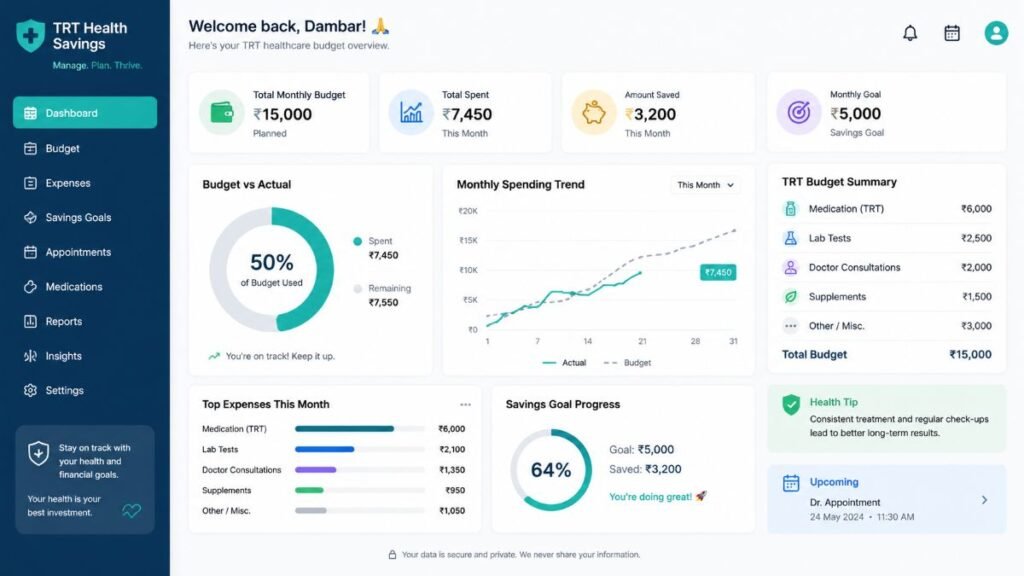
If you find that your TRT clinic near me options are too expensive, consider these strategies to protect your finances. First, check your insurance policy to see if out-of-network benefits cover specialized hormone care. Additionally, negotiate transparent self-pay rates if the clinic does not accept your specific insurance plan. Many providers are willing to offer a discount for annual upfront payments or bundled quarterly testing fees. Always keep a digital record of all health-related expenses, as these may be tax-deductible depending on your total annual medical out-of-pocket costs and federal filing status.
- Use Health Savings Accounts (HSA/FSA): Use pre-tax dollars to cover your out-of-pocket costs and copays.
- Generic Options: Inquire about generic testosterone cypionate; it is often significantly more cost-effective than branded gels.
- Telemedicine Alternatives: Research reputable online clinics that offer competitive pricing models.
- Lifestyle Synergy: Combine your therapy with best fat burning foods for weight loss to optimize your body’s metabolic response to therapy.
The Science of Hormone Optimization
 The Science of Hormone Optimization
Hormone replacement is not a magic bullet; it is a tool for physiological optimization. When your hormones are balanced, your body becomes more receptive to other health interventions. Think of this as the “hardware upgrade” for your metabolism, which works best when paired with the “software”—your diet and exercise habits. Ensuring your baseline health is strong through healthy high protein foods for fat loss can help your physician determine if TRT is the right medical pathway or if lifestyle changes could achieve similar results. True optimization requires a delicate balance of managing estrogen, testosterone, and SHBG to ensure your body functions at its peak without over-saturation.
Beyond mere numbers, hormone optimization influences systemic inflammation, insulin sensitivity, and neurological function. When your endocrine system is calibrated correctly, you may notice enhanced cognitive clarity and better stress resilience, which effectively creates a feedback loop that makes adherence to your healthy meal prep for weight loss far easier. By focusing on the synergy between exogenous support and internal metabolic health, you ensure that your body is not just receiving testosterone, but is actually utilizing it efficiently at the cellular level to promote long-term vitality.
Biohacking and Longitudinal Monitoring
 Biohacking and Longitudinal Monitoring
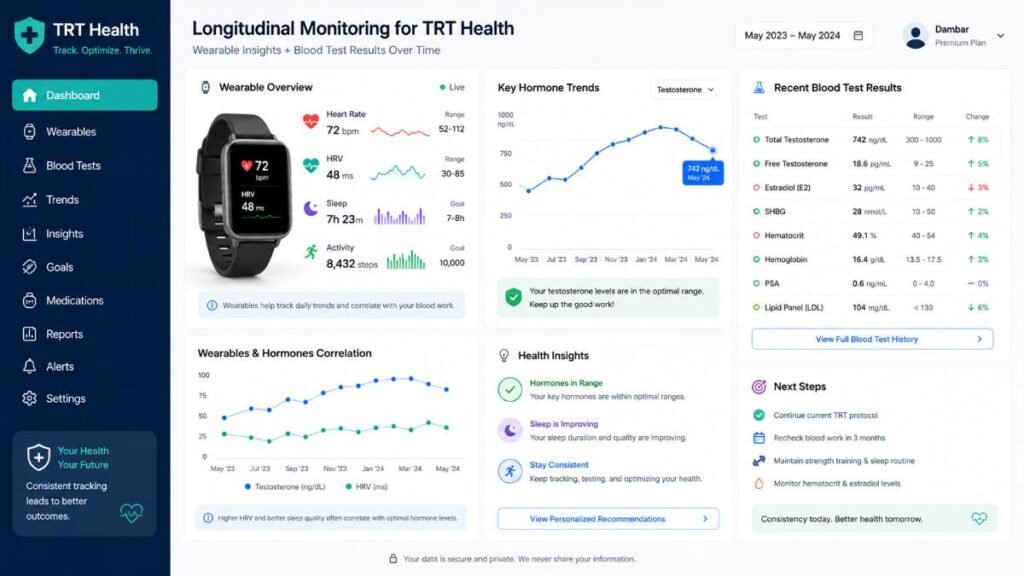
In 2026, the best patient outcomes come from longitudinal data. Your clinic should be tracking more than just total testosterone; they should be looking at free testosterone, SHBG, estrogen, and PSA levels. If you are interested in broader longevity, you might also consider tracking your biological age test kits reviews to see how your hormone optimization impacts your cellular aging markers over time. By utilizing continuous monitoring, your physician can make micro-adjustments to your dosage, preventing the “rollercoaster” effect often seen in poorly managed hormone therapy. Consistency is the primary driver of success in modern biohacking circles.
Advanced biohackers recognize that hormonal health is not static; it fluctuates based on your sleep quality, daily stress management, and physical exertion levels. Utilizing wearable technology to track your heart rate variability (HRV) alongside regular blood work allows for a comprehensive view of how your body reacts to therapy. This data-driven approach shifts the focus from simply chasing a specific blood serum number to achieving a state of “metabolic flexibility,” where your body remains resilient, efficient, and capable of maintaining peak performance through varying environmental and physical demands.
Monitoring Metric | Why It Matters for Safety |
Hematocrit | Monitors blood thickness/cardiovascular risk. |
PSA Levels | Essential for prostate health screening. |
Estradiol (E2) | Prevents side effects of hormone conversion. |
SHBG | Indicates how much testosterone is “bioavailable.” |
Avoiding the "Quick Fix" Trap
 Avoiding the "Quick Fix" Trap
It is tempting to look for clinics that promise instant results with minimal testing, but these are often the most dangerous. Real hormonal health is a journey of fine-tuning. If a clinic offers high-dose cycles without blood work or consultation, it is a significant red flag. True health optimization is a long game—much like mastering mindful eating and self-care routines—it requires patience, consistency, and expert oversight to ensure you are truly reclaiming your health safely. Beware of “wellness centers” that act more like gyms than medical facilities; your hormone health is a delicate system that should only be managed by licensed, experienced practitioners.
A clinic that prioritizes safety over speed will always require multiple consultations, detailed medical history reviews, and consistent follow-ups. If a provider avoids these steps in favor of a “one-size-fits-all” protocol, they are likely ignoring potential risks such as polycythemia or cardiovascular strain. Protecting your future health means demanding a transparent, medically rigorous protocol that monitors your vitals just as closely as your testosterone levels. Remember, the goal of simple healthy living tips is to enhance your life, not to introduce unnecessary medical risks through reckless or unregulated prescription practices.
❓Frequently Asked Questions
1. Can I use a TRT clinic near me while planning a family?
Generally, no. Standard therapy suppresses sperm production. If choosing a TRT clinic near me while planning a family, you must discuss fertility preservation options (like HCG) with a specialist beforehand.
2. How often will a TRT clinic near me require blood work?
Initially, a reputable TRT clinic near me requires blood tests every 4–8 weeks. According to guidelines on NIH PubMed, once levels stabilize safely, routine tracking shifts to every 3–6 months to monitor hematocrit and PSA.
3. Are online options safe for a TRT clinic near me?
Yes, telehealth is legitimate if the online TRT clinic near me uses board-certified doctors and certified labs. Avoid any platforms offering “cookie-cutter” prescriptions without a thorough medical history review.
🌿Final Thoughts for Your Wellness Journey
Finding the right TRT clinic near me is a significant step toward improving your quality of life. By focusing on clinics that prioritize medical safety, transparent pricing, and rigorous follow-up, you protect both your health and your finances. Always remember that your health is an investment—make sure you are putting your trust in qualified professionals who view your treatment as a long-term partnership rather than a transaction.

✍️👤 About the Author
Dambar R. is a dedicated wellness researcher and the visionary founder of MyHealthyLifeUK. With over a decade of hands-on experience in metabolic science and practical nutrition, he specializes in creating sustainable health transformations for modern lifestyles.
Based on his extensive research, Dambar empowers individuals across the UK and USA to reach their peak fitness goals through science-backed health tips without sacrificing the joy of everyday eating. His mission is to bridge the gap between complex health data and actionable habits that foster long-term vitality and holistic wellness.
⚠️ Medical Disclaimer
The information provided on MyHealthyLifeUK is for educational and informational purposes only. It is not intended to be a substitute for professional medical advice, diagnosis, or treatment.
- Professional Guidance: Always seek the advice of your Physician (GP) or another qualified health provider regarding any medical condition.
- Specialized Advice: For personalized dietary needs, we recommend consulting a Registered Dietitian.
- Safety First: Consult a professional before starting any new fitness or nutrition program.
Never disregard professional medical advice or delay seeking it because of something you have read on this website.