
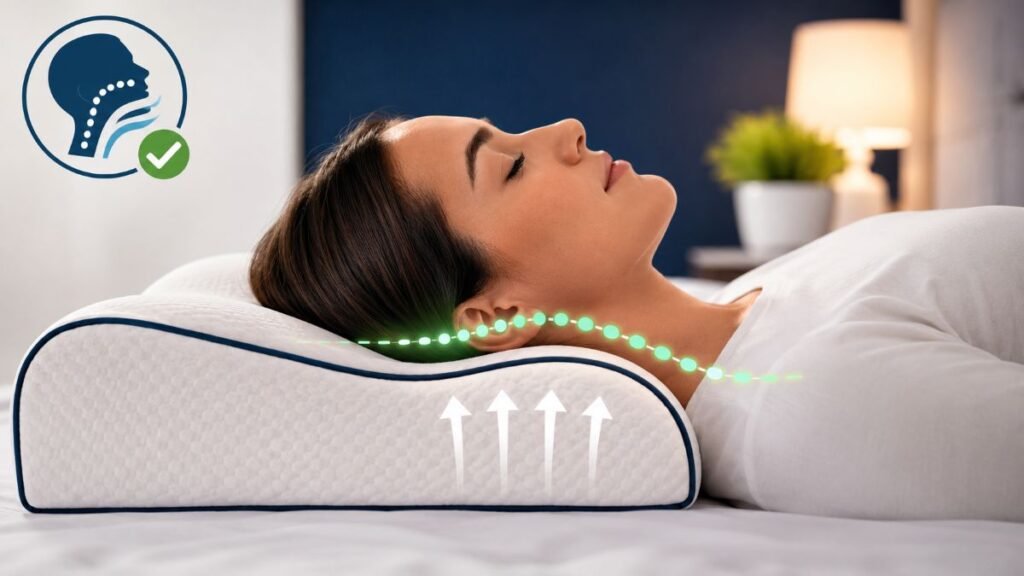
“Do you wake up feeling exhausted despite eight hours of sleep? That morning ‘brain fog’ is often a sign of nighttime oxygen deprivation. While many obsess over CPAP settings, they ignore the biggest mechanical trigger: poor sleep posture. If you’re tired of gasping for air, discovering the best pillow for sleep apnea is the missing link to reclaiming your energy. In this clinical guide, we reveal how proper cervical alignment clears your airway, helping you finally achieve truly restorative rest.”
 Why Your Pillow Choice Directly Impacts Your Airway
 Why Your Pillow Choice Directly Impacts Your Airway
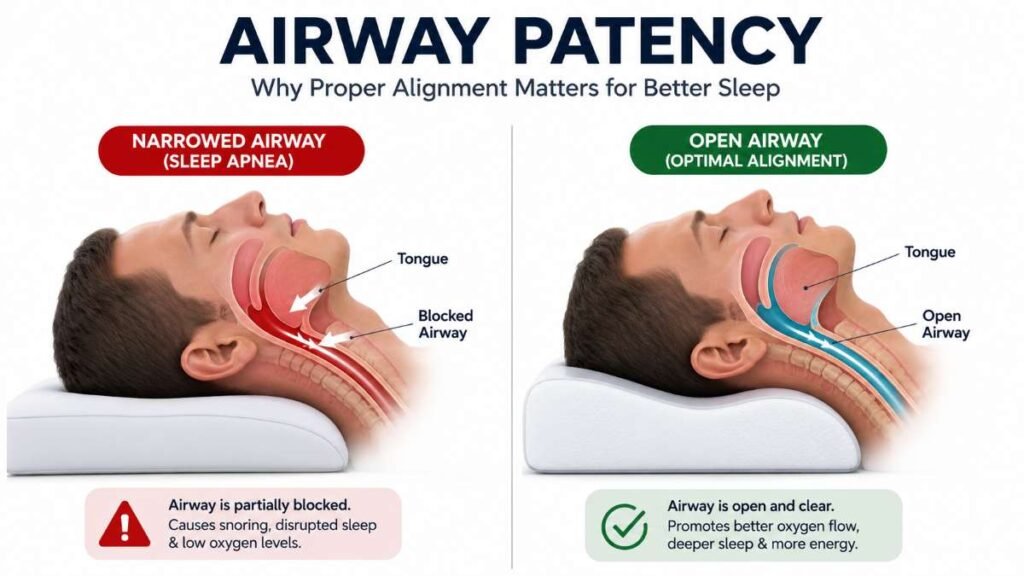
Clinical observation confirms that the positioning of the head and neck is a critical factor in airway patency. When a sleeper uses a pillow that is too soft or overly voluminous, the cervical spine loses its neutral alignment, often causing the chin to tuck toward the chest. This posture can narrow the pharyngeal space, making it significantly harder for air to flow freely. Sleep specialists often highlight that maintaining a neutral cervical spine is the first step toward reducing airway resistance, especially for those navigating obstructive sleep apnea symptoms. When you search for the best pillow for sleep apnea, you must look for structural support that maintains this neutrality.
- Mechanical Airway Obstruction: When the neck flexes, the soft tissues of the throat are compressed, increasing the likelihood of an apnea event.
- Structural Support: A pillow lacking in density fails to support the heavy weight of the cranium, leading to “kinking” of the airway.
- Neutral Alignment: Keeping the spine in a straight line ensures the throat remains as open as possible throughout the night.
Let’s be real—the standard “fluffy” pillow found in most bedrooms is frequently detrimental to respiratory health. While they feel comfortable for lounging, they offer zero structural resistance, meaning they collapse under the weight of your skull. When your airway is compromised by poor posture, you are essentially fighting a physical battle all night long. If you are also managing chronic fatigue or hormonal weight loss tips that actually work, optimizing your sleep posture is a non-negotiable step that should be addressed long before you spend money on expensive lifestyle gadgets. Identifying the right supportive gear is part of a larger balanced diet and healthy eating guide approach to overall wellness.
The Science of Support: Wedge vs. Contour Pillows
 The Science of Support: Wedge vs. Contour Pillows
The debate between wedge and contour designs is a staple in sleep medicine. Choosing the best pillow for sleep apnea often comes down to your primary sleep position. A wedge pillow provides a gradual incline, which uses gravity to prevent the tongue and soft tissues from collapsing backward into the throat—a primary cause of nighttime breathing interruptions. Clinical data suggests these are particularly beneficial for back sleepers who struggle with gravity-induced airway obstruction.
- Wedge Benefits: Utilizes gravitational force to keep the airway forward-facing and open.
- Contour Benefits: Engineered to fill the natural curve of the neck, providing consistent support.
- Targeted Relief: Both types aim to reduce the mechanical effort required to keep the airway patent during the various stages of sleep.
Alternatively, contour pillows are engineered with a specific depression to cradle the neck and support the head, which is essential for side sleepers. By keeping the spine in a straight line, these pillows ensure that the airway remains unobstructed by neck flexion or lateral rotation. If you are feeling chronically sluggish, checking your 7-hour sleep rule deep sleep guide is vital. Understanding the physics of your pillow is the first step in creating a clinical sleep environment. Choosing the right structural support is essential, much like following a calorie deficit guide for weight loss to manage metabolic health effectively.
Comparison of Support Structures:
Pillow Type | Best For | Clinical Benefit | Pros | Cons |
Wedge Pillow | Back Sleepers | Gravity tissue support | Excellent for reflux/apnea | Can be bulky |
Contour Pillow | Side Sleepers | Neutral spine alignment | Better for neck pain | Requires adjustment |
Orthopedic Foam | Chronic Pain/OSA | Consistent structural support | High durability | May retain heat |
The Positional "Pillow Trick" Explained
 The Positional "Pillow Trick" Explained
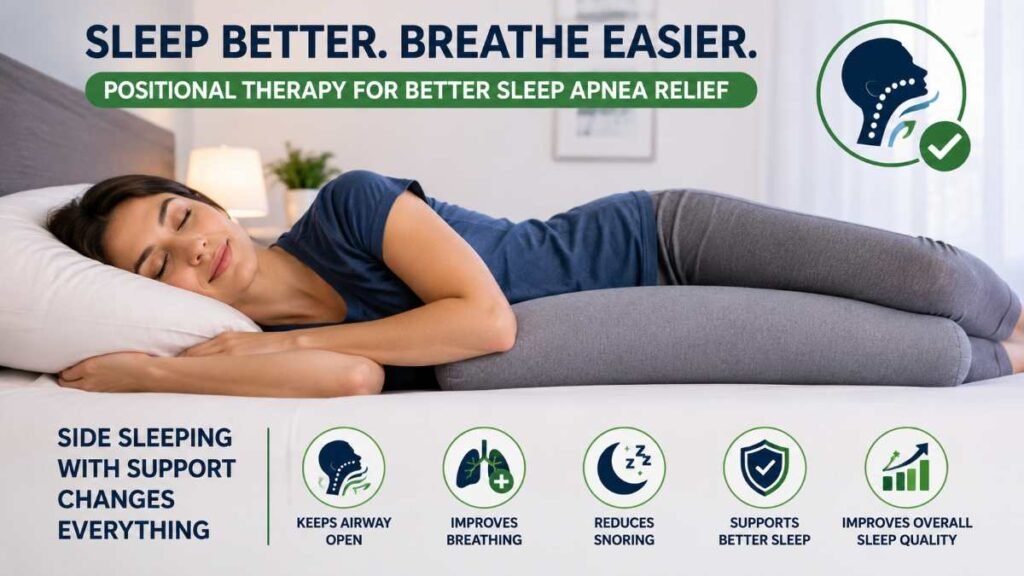
Some clinicians recommend “positional therapy” to prevent sleepers from moving into positions that trigger apnea events. The “Pillow Positioning Trick” involves using a primary contour pillow for the head, supported by a firm, cylindrical bolster or body pillow placed behind the back. This effectively “locks” the sleeper in a lateral position, preventing the rollover into a supine position, which often worsens airway collapse. Using this technique with the best pillow for sleep apnea can significantly improve outcomes.
- Lateral Stability: Prevents the involuntary transition to back-sleeping.
- Snoring Mitigation: Maintains a stable airway profile throughout the night.
- Adjustability: Allows users to modify their setup based on comfort and clinical needs.
Many patients find that once they implement this positioning, their snoring frequency decreases significantly. While it may feel awkward during the first few nights, the physiological benefit of preventing supine sleeping can be profound for those dealing with positional sleep apnea. If you find your sleep quality remains poor, it may be time to consult with your GP about a formal sleep study. Integrating this with mindful eating and self-care routine can further enhance your body’s ability to recover from chronic stress.
Smart Pillows: What Does Current Evidence Say?
 Smart Pillows: What Does Current Evidence Say?
The medical device market is currently flooded with “smart” pillows that utilize internal sensors to track movement or adjust elevation. While these innovations are impressive, it is important to maintain a realistic perspective. Clinical evidence supporting these devices as standalone treatments is still emerging, and they are generally not considered a substitute for gold-standard CPAP or oral appliance therapy. When researching the best pillow for sleep apnea, treat these as adjunctive tools.
- Sensor Integration: Tracks movement to provide data on sleep quality.
- Dynamic Adjustment: Some models inflate or deflate to change neck height.
- Clinical Standing: Currently viewed as adjunctive, not curative, for obstructive sleep apnea.
If you are a tech-focused user asking about specialized gear, a smart pillow might offer data insights, but be cautious of marketing hype. Always prioritize equipment that is backed by peer-reviewed research. For many, investing in a high-quality, fixed-structure orthopedic pillow is a more reliable and cost-effective strategy than chasing the latest digital trends. Remember, your priority is airway patency, which is best achieved through consistent, proven support structures rather than overly complex digital interfaces. You can learn more about longevity-focused technologies in our wellness trends for future health and longevity analysis.
Material Science: Why Density Matters
 Material Science: Why Density Matters
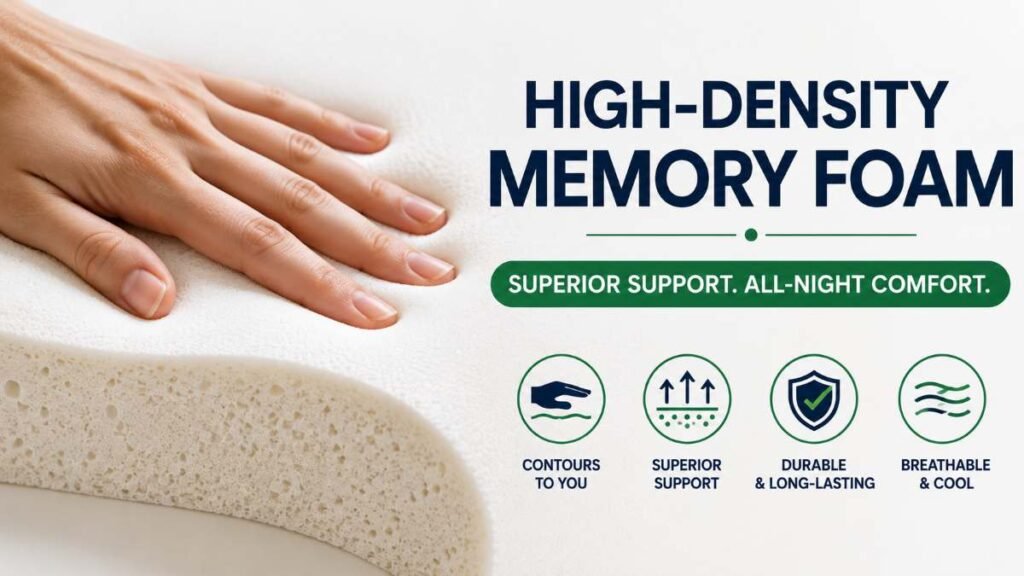
The materials inside your pillow are not just about comfort; they determine how well your airway is supported throughout the night. Memory foam is a popular choice because it conforms to the anatomy of the neck, providing a personalized fit. However, if the density is too low, the foam will lose its shape, leading to “bottoming out” and poor neck support. To find the best pillow for sleep apnea, you must ensure the material offers high-density support.
- Density Requirements: High-density foam prevents neck flexion by maintaining a consistent loft.
- Thermoregulation: Latex or gel-infused options help prevent heat-related restlessness.
- Structural Longevity: Quality materials retain their shape, ensuring long-term support for your cervical spine.
Latex is often favored by sleep specialists because it offers a higher degree of responsiveness and durability. Unlike memory foam, latex is naturally firmer and does not trap heat as intensely, which can prevent the restlessness that often disrupts deep sleep cycles. Regardless of the material, keeping your sleep environment clean is essential. If you are concerned about your skin health as well, be sure to balance your pillow hygiene with an appropriate post-workout skincare for 40 routine.
The YMYL Reality: Prioritizing Your Medical Needs
 The YMYL Reality: Prioritizing Your Medical Needs
Because sleep apnea is a serious health condition, this is a “Your Money, Your Life” (YMYL) issue. Cheap “anti-snore” pillows sold via social media ads often lack the clinical validation required for medical efficacy. When evaluating your options for the best pillow for sleep apnea, prioritize products that offer clear specifications regarding foam density and cervical support.
- Medical Validation: Look for manufacturers that provide clinical studies or expert endorsements.
- Risk Management: Never rely on a consumer-grade pillow to fix severe breathing issues without medical oversight.
- Expert Consultation: Always discuss equipment choices with a qualified sleep specialist during your routine appointments.
Never use a pillow as a substitute for professional medical treatment if you have been diagnosed with apnea. If you suspect you have breathing issues, seeking advice from a specialist is the only way to ensure your health is protected. A pillow is an adjunctive tool, not a cure-all. For comprehensive health checks, check our guide on the NHS health check over 40 guide. Always reference official guidelines from the American Academy of Sleep Medicine (AASM)
Expert Criteria for Selecting the Right Pillow
 Expert Criteria for Selecting the Right Pillow
To effectively choose the best pillow for sleep apnea, look for these three key clinical markers:
- Structural Integrity: The pillow must maintain its loft under pressure. If the head sinks too deeply, the neck flexion will increase airway resistance.
- Ergonomic Design: Ensure the pillow is designed for your preferred sleep position. A side sleeper needs a different loft than a back sleeper.
- Material Breathability: Avoid pillows that cause overheating, as temperature regulation is crucial for uninterrupted sleep cycles.
For those tracking their recovery, comparing your snoring intensity before and after changing pillows can be a helpful metric. Do not be afraid to trial a pillow for at least 14 days, as your neck muscles need time to adjust to a new alignment. Proper selection is the difference between a restless night and a productive day.
🏁 Final Thoughts: Investing in Your Sleep Hygiene
Finding the best pillow for sleep apnea is a personal journey, not a one-size-fits-all fix. Prioritize cervical alignment to keep your airway open and consult your medical team for persistent symptoms. Invest in supportive gear tailored to your anatomy—better, more restorative breathing starts tonight.

Frequently Asked Questions
1. What pillows do doctors recommend for sleep apnea? Doctors recommend orthopedic pillows that maintain neutral cervical alignment. Finding the best pillow for sleep apnea is essential to prevent airway collapse and keep your neck supported all night.
2. What is the 4% rule for sleep apnea? This metric tracks oxygen desaturation; if levels drop by 4%, it signals an apnea event. Using the best pillow for sleep apnea helps keep your airway patent.
3. How to get restful sleep? Consistent sleep hygiene, lateral positioning, and using the best pillow for sleep apnea are vital for restorative rest.
4. Do they really work? Yes, they are effective adjunctive tools for posture and snoring, though not a substitute for CPAP therapy.
References
✍️👤 About the Author
Dambar R. is a dedicated wellness researcher and the visionary founder of MyHealthyLifeUK. With over a decade of hands-on experience in metabolic science and practical nutrition, he specializes in creating sustainable health transformations for modern lifestyles.
Based on his extensive research, Dambar empowers individuals across the UK and USA to reach their peak fitness goals through science-backed health tips without sacrificing the joy of everyday eating. His mission is to bridge the gap between complex health data and actionable habits that foster long-term vitality and holistic wellness.
⚠️ Medical Disclaimer
The information provided on MyHealthyLifeUK is for educational and informational purposes only. It is not intended to be a substitute for professional medical advice, diagnosis, or treatment.
- Professional Guidance: Always seek the advice of your Physician (GP) or another qualified health provider regarding any medical condition.
- Specialized Advice: For personalized dietary needs, we recommend consulting a Registered Dietitian.
- Safety First: Consult a professional before starting any new fitness or nutrition program.
Never disregard professional medical advice or delay seeking it because of something you have read on this website.