
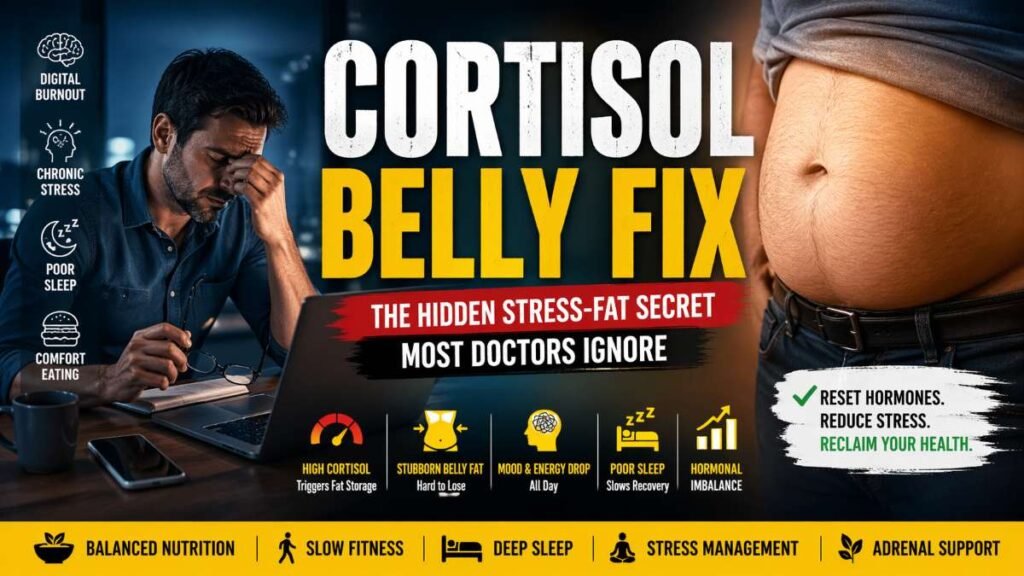
“In 2026, grinding at the gym isn’t enough to get a flat stomach. For millions of Americans, the real enemy isn’t calories—it’s a survival hormone triggered by digital burnout and modern stress. If you’re eating clean but still struggling with stubborn midsection weight, you are likely dealing with a Cortisol Belly. This biological response ignores traditional diets, storing fat to protect your organs. To fix it, you don’t need more crunches; you need a strategic hormonal reset to reclaim your health and confidence.”👉
“If you feel like you’re doing everything right but your belly fat won’t budge, you’re not alone.”
🧪The Science of the Cortisol Belly Connection
The human body is an ancient biological machine trying to navigate a high-speed, modern world. When cortisol remains chronically elevated due to lifestyle stressors, it may trigger a process known as visceral adiposity. In this state, the body effectively prioritizes fat storage in the abdomen as a survival mechanism against perceived “danger” or scarcity.
To achieve a meaningful Cortisol Belly fix, we must understand how this hormonal state is linked to our metabolic health:
- 📉 Insulin Dynamics: Elevated cortisol is often associated with temporary blood sugar spikes. Over time, this can lead to insulin resistance, making it much easier for the body to store fat rather than burn it for fuel.
- 🧠 The Neuro-Hunger Switch: Chronic stress can suppress “fullness” signals like leptin, while increasing ghrelin. This often leads to intense cravings for high-sugar “comfort foods” that provide a temporary emotional dopamine hit.
- 💪 Selective Muscle Breakdown: In a state of high stress, the body may prioritize breaking down muscle tissue in the limbs to provide quick glucose, while simultaneously depositing fat in the gut.
- 🐢 Metabolic Adaptation: Constant survival-mode signaling tells your thyroid to conserve energy, potentially leading to a slower resting metabolic rate. Understanding how to boost metabolism is a key step in reversing this trend.
⚠️ Strategic Nutrition Hacks for Hormonal Balance
You cannot simply “out-train” a disrupted hormonal profile. The goal here isn’t a restrictive “starvation diet,” but an anti-inflammatory approach that signals to your nervous system that the “threat” is over. Modern research suggests that eating for blood sugar stability is the most effective way to manage a Cortisol Belly.
The Cortisol Recovery Shopping List:
- 🫐 Antioxidant Superfoods – Wild blueberries and dark leafy greens are essential for lowering oxidative stress in the body.
- 🐟 Omega-3 Powerhouses – Wild-caught salmon and walnuts provide healthy fats that may help support brain health and reduce systemic inflammation.
- 🥑 Healthy Fats for Satiety – Avocados and olive oil help stabilize energy levels, preventing the “stress-eating” cycles.
- 🍠 Fiber-Rich Carbs – Sweet potatoes and quinoa are excellent for maintaining steady glucose levels, avoiding the crashes that trigger cortisol release.
- 🍵 Adaptogenic Herbs – Ingredients like Ashwagandha and Holy Basil (Tulsi) are gaining massive popularity in 2026 for their potential to help the body adapt to daily stressors.
The Stress-Reducing Meal Blueprint
Meal Type | Optimized Selection | Physiological Benefit |
Morning Fuel | High-protein (Eggs/Smoked Salmon) + Fiber | Prevents the mid-morning insulin-cortisol spike. |
Lunch Reset | Large Salad + Lean Turkey + Fermented Veggies | Supports the gut health guide and aids digestion. |
3 PM Snack | Pumpkin Seeds + 85% Dark Chocolate | High magnesium content to help calm the nervous system. |
Dinner Calm | Baked Cod + Steamed Broccoli + Complex Carbs | Easy to digest and supports natural melatonin production. |
🧬Movement Over Punishment: The "Slow Fitness" Revolution
One of the biggest mistakes people make when trying to fix a Cortisol Belly is overdoing high-intensity interval training (HIIT). While HIIT is great for some, for a chronically stressed individual, it can actually increase cortisol levels further. In 2026, the “Slow Fitness” movement has become the preferred method for sustainable fat loss.
- 🥾 Nature Rucking – This involves walking with a lightly weighted vest. It provides a steady “Zone 2” cardio benefit while the outdoor setting helps lower physiological stress markers.
- 🏋️ Focused Resistance Training – Slow, controlled weight lifting builds muscle, which is your most metabolically active tissue. This is a far more effective home workout for fat loss than endless cardio.
- 🧘 Vagus Nerve Activation – Techniques like deep diaphragmatic breathing or restorative yoga help “flip the switch” from the sympathetic (stress) to the parasympathetic (rest) nervous system.
- 🚶 Post-Meal Strolls – A simple 10-minute walk after lunch or dinner can significantly help manage blood sugar spikes, a major contributor to stress-related fat.
- 🎾 Social Sports – Engaging in activities like Padel Tennis for Fat Loss adds a social, fun element that reduces the “work” feeling of exercise.

🔍Biohacking Your Sleep for Midsection Recovery
Sleep is the only time your body truly “cleans” its hormonal slate. If you aren’t achieving deep, restorative rest, the Cortisol Belly will likely remain, regardless of your diet. In the USA, we often wear sleep deprivation as a badge of honor, but in 2026, we know that recovery is the ultimate competitive advantage.
- 🕶️ Melatonin Protection – Reducing blue light exposure 90 minutes before bed is crucial. Using blackout curtains creates a “cave” environment that signals the brain to lower cortisol.
- 🌡️ Therapeutic Cooling – Keeping your bedroom around 65°F (18°C) may help lower your core body temperature, which is essential for entering deep sleep cycles.
- 📵 The Digital Sunset – Disconnecting from work emails and social media helps the brain transition out of “problem-solving” mode.
- 🕯️ Relaxation Rituals – Incorporating magnesium baths or box breathing (a slow 4-count inhale/exhale) can help lower heart rate variability (HRV) for better rest.
- 💤 Consistent Windows – Aiming for 7-9 hours of sleep as outlined in the 7-hour sleep rule ensures your body has time to repair cellular damage.
🏃Adrenal Support: A Balanced Supplement Strategy
Disclaimer: Always consult a healthcare professional before starting any new supplement regimen.
In 2026, the focus has shifted from “fat burners” to adrenal support. When the body feels nutritionally supported, it is less likely to cling to a Cortisol Belly.
- 💊 Phosphatidylserine – This phospholipid has been studied for its ability to potentially blunt the cortisol response following physical or mental exertion.
- 🌿 Rhodiola Rosea – An adaptogen that may help improve mental clarity and reduce the feeling of fatigue during high-pressure weeks.
- 🍊 Vitamin C Support – Your adrenal glands have one of the highest concentrations of Vitamin C in the body; ensuring adequate intake helps support their function.
- 🌊 Marine Mineralization – Using whole-food sources like Sea Moss provides 92 essential minerals that act as co-factors for metabolic enzymes.
- ☕ The L-Theanine Balance – If you enjoy coffee, pairing it with L-Theanine may help reduce the “jitters” and the subsequent stress hormone spike.
The Daily Adrenal Checklist:
- 💪 Protein Pacing: Consume 25-30g of protein at breakfast to keep blood sugar stable.
- 🌞 Morning Light: View natural sunlight within 30 minutes of waking to set your circadian rhythm.
- 🧂 Mineral Hydration: Adding a pinch of high-quality sea salt to your water can support adrenal mineral balance.
- 😊 Micro-Joy Moments: Engaging in a hobby for just 15 minutes can lower cortisol more effectively than many clinical interventions.

The 2026 Lifestyle: Living Stress-Resilient
Fixing your Cortisol Belly is not about a 30-day “shred”; it is about a permanent lifestyle evolution. It requires setting firm boundaries—with your technology, your professional life, and your own expectations of perfection.
If you find that physical activity is causing persistent pain or unusual discomfort, it is vital to listen to your body. Issues such as chronic back pain should be monitored carefully; refer to our guide on spinal tumor warning signs for more information.
Ultimately, a lean, healthy body is a byproduct of a regulated nervous system. When you stop fighting against your biology and start providing the safety, nutrition, and rest it requires, your body will naturally begin to let go of the excess weight. Start today with one deep breath and a commitment to your long-term recovery.
The Tech-Wellness Connection: Tracking Your Stress Recovery
In 2026, we are no longer guessing how our body feels; we are using data to manage the Cortisol Belly. Wearable technology has advanced beyond simple step counting to monitoring Heart Rate Variability (HRV), which is a direct window into your autonomic nervous system. A low HRV score often signals that your body is stuck in “fight or flight” mode, meaning your cortisol is likely elevated even if you feel mentally calm.
- ⌚ HRV Monitoring: Use your smartwatch data to see if your body is recovered enough for a workout or if you need a rest day.
- 📈 Stress-Level Alerts: Modern wearables now provide real-time alerts, reminding you to take a two-minute breathing break before your cortisol spikes.
- 🧬 Bio-Feedback Loops: By syncing your sleep data with your daily activity, you can identify which specific habits—like late-night scrolling—are keeping your stress hormones high.
- 🛑 Data-Driven Rest: If your recovery score is low, skip the gym. Pushing through exhaustion is a primary reason why stress-induced fat becomes permanent.
Environmental Biohacking: Designing a Low-Cortisol Home
Fixing a Cortisol Belly extends beyond the kitchen and the gym; it involves your physical environment. In the USA, our homes are often filled with “invisible stressors” like artificial blue light and chaotic noise that keep our adrenals on high alert. Creating a “recovery sanctuary” at home is a powerful, passive way to lower systemic stress and support your weight loss goals.
- 💡 Circadian Lighting: Use lighting that mimics the natural sunset in the evening, helping your brain transition into a low-cortisol state before bed.
- 🌿 Oxygen-Rich Spaces: High-CO2 environments can trigger a mild stress response. Adding air-purifying plants like Snake Plants can improve respiratory ease and lower anxiety.
- 🔇 Acoustic Shielding: Use white noise machines or soundproofing to block urban noise pollution, which is a significant “silent” trigger for cortisol release.
- 🌡️ The Cold Reset: Incorporating a quick cold rinse into your morning routine can train your nervous system to handle stress better, ultimately lowering your baseline cortisol levels throughout the day.

External Resources for Further Reading:
- Understanding Cortisol and Metabolism – Healthline
- Stress Management and Weight – Mayo Clinic
Key Takeaways for Your Health Journey:
- Focus on Hormones: Realize that stubborn belly fat is often a hormonal signal, not just a calorie problem.
- Prioritize Recovery: High-quality sleep and “Slow Fitness” are often more effective than over-training.
- Eat for Stability: Focus on high-protein, high-fiber meals to keep insulin and cortisol in check.
- Supplement Wisely: Use minerals and adaptogens to support your adrenal glands under pressure.
- Manage Your Environment: Use light, temperature, and digital boundaries to protect your biological clock.
✍️ About the Author
Dambar R. is a dedicated wellness researcher and the visionary founder of MyHealthyLifeUK. With over a decade of hands-on experience in metabolic science and practical nutrition, he specializes in creating sustainable health transformations for modern lifestyles.
Based on his extensive research, Dambar empowers individuals across the UK and USA to reach their peak fitness goals through science-backed health tips without sacrificing the joy of everyday eating. His mission is to bridge the gap between complex health data and actionable habits that foster long-term vitality and holistic wellness.
⚠️ Medical Disclaimer
The information provided on MyHealthyLifeUK is for educational and informational purposes only. It is not intended to be a substitute for professional medical advice, diagnosis, or treatment.
- Professional Guidance: Always seek the advice of your Physician (GP) or another qualified health provider regarding any medical condition.
- Specialized Advice: For personalized dietary needs, we recommend consulting a Registered Dietitian.
- Safety First: Consult a professional before starting any new fitness or nutrition program.
Never disregard professional medical advice or delay seeking it because of something you have read on this website.