
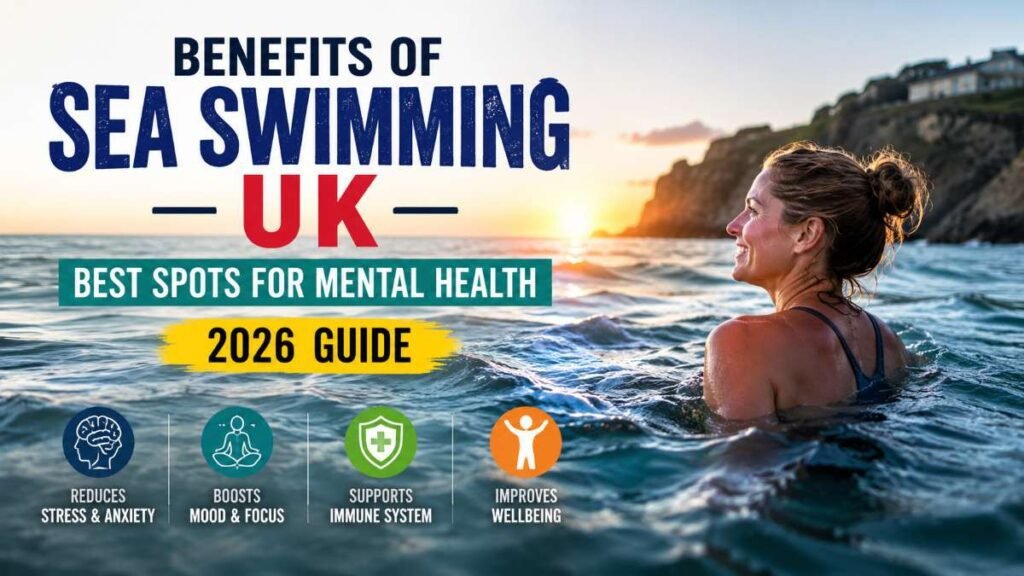
Could the freezing UK tides be the ultimate cure for digital burnout? In 2026, thousands are swapping luxury spas for the raw North Sea to trigger a “Neural Reboot.” Understanding the Benefits of Sea Swimming UK is no longer just for athletes—it’s a survival tactic for the modern mind. As highlighted in this University of Portsmouth study on cold water swimming, the immediate “Cold Shock” forces a massive dopamine release that flushes out chronic stress. Are you ready to dive into the science of the wild?
 The Neurobiology of the Blue Mind: How the Ocean Heals
 The Neurobiology of the Blue Mind: How the Ocean Heals
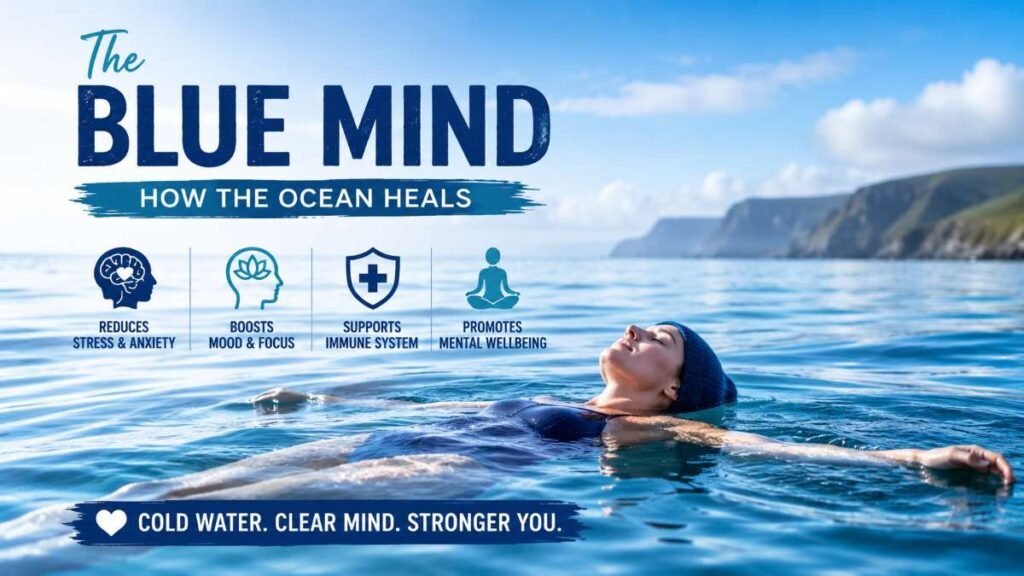
The science behind the Benefits of Sea Swimming UK is rooted in the “Blue Mind” theory—a meditative state triggered by water. When you plunge into the UK’s bracing tides, your body hit’s a “Cold Shock Response.” Far from being just a chill, this controlled stress acts as a natural anti-inflammatory for your brain. It sparks an immediate flood of dopamine and norepinephrine, the chemicals responsible for razor-sharp focus and mood stability. This is what many call the “swimmer’s high”—a post-dip clarity that can last for hours.
But the magic isn’t just chemical. The rhythmic roar of the waves helps synchronize your heart rate, crushing cortisol levels more effectively than any meditation app. Beyond mental health, the mineral-rich saltwater even aids physical toning by stimulating the lymphatic system. By engaging all five senses—from the salt’s sting to the horizon’s vastness—you build a biological firewall against digital burnout. It’s a rare moment where your neural pathways can finally rest, recover, and reset in real-time.
The 7 Best UK Coastal Spots for a Mental Health Reset
 The 7 Best UK Coastal Spots for a Mental Health Reset
To truly reap the Benefits of Sea Swimming UK: Best Spots for Mental Health, you need an environment that speaks to your soul. Each of these locations offers a unique atmospheric profile designed to trigger different emotional responses:
- Brighton & Hove (East Sussex): The heart of the UK’s community-led swimming. Home to the famous “Salty Seabirds,” this pebble beach offers a vibrant social network that tackles stress management through communal plunges. The shared experience here acts as a powerful buffer against urban loneliness.
- Kynance Cove (Cornwall): With its turquoise waters and serpentine rock formations, it provides a visual feast that is associated with cognitive recovery. It feels more like a Mediterranean escape than a British beach, helping to break the mental cycle of grey city living.
- Seaham (County Durham): A rugged gem famous for sea glass. It hosts dedicated “Mental Health Swims” groups that focus on peer support and emotional resilience, proving that the North Sea’s bite is as healing as it is cold.
- Barafundle Bay (Pembrokeshire): A secluded paradise in Wales that requires a hike through pine trees to reach, combining the benefits of walking with deep-water therapy for a “double dose” of nature.
- Portobello Beach (Edinburgh): The epicentre for Scottish “wild” swimmers, offering a bracing morning plunge with a view of the Firth of Forth that instantly clears any mental fog.
- Saunton Sands (Devon): Miles of shallow, golden water—perfect for those who are just starting their mindfulness guide for beginners uk journey and want a safe, gentle entry into the surf.
- Whitby (North Yorkshire): Combining the sting of the North Sea with a rich historical backdrop, this spot is ideal for total mental immersion and “perspective shifting” away from modern anxieties.
Comparison Table: Sea Swimming vs. Traditional Wellness
 Comparison Table: Sea Swimming vs. Traditional Wellness
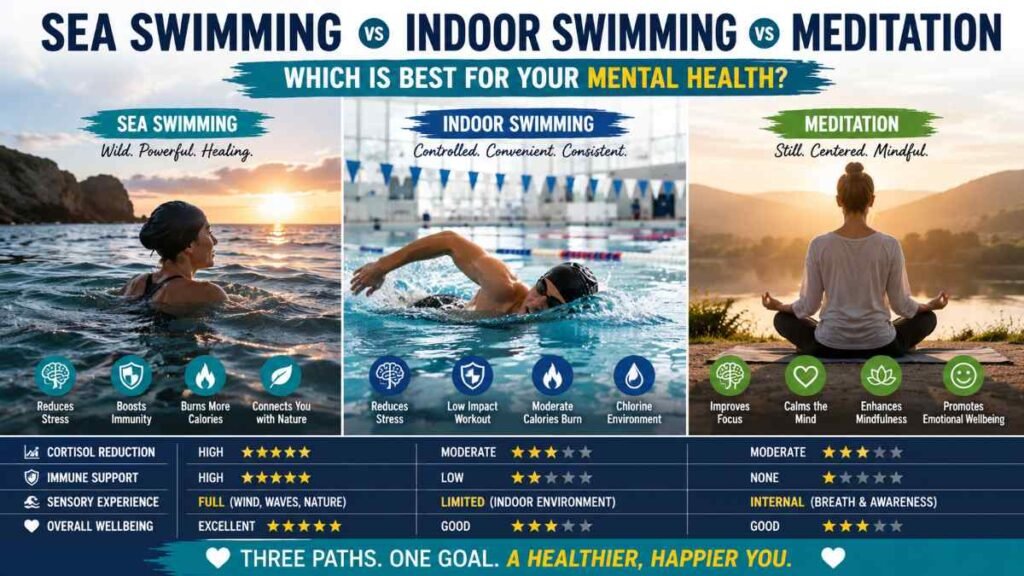
Understanding the Benefits of Sea Swimming UK: Best Spots for Mental Health requires a look at how it matches up against other popular wellness trends in terms of sensory and biological impact.
Feature | Sea Swimming (Wild) | Indoor Swimming | Traditional Meditation |
Cortisol Impact | Potential Rapid Reduction | Moderate | Gradual |
Immune System Support | High (Cold Adaptation) | Low | None |
Calorie Burn | Potentially Higher | Standard | Low |
Sensory Engagement | Full Body (Wind, Salt, Cold) | Limited (Chlorine) | Internal Only |
Connection to Nature | 10/10 | 1/10 | Variable |
While a local leisure centre offers convenience, it cannot replicate the “hormetic stress” provided by the wild ocean. Hormetic stress is the “good stress” that makes your cells stronger. In the sea, your body isn’t just floating; it is actively adapting to the environment, which builds a level of grit and psychological resilience that an indoor pool simply cannot provide.
Mastering the Cold: Safety and Thermal Resilience
 Mastering the Cold: Safety and Thermal Resilience
To safely enjoy the Benefits of Sea Swimming UK: Best Spots for Mental Health, you must understand “Cold Water Habituation.” Your body needs time to adjust to UK water temperatures, which rarely exceed 18°C even in summer. This resilience-building is very similar to the mental discipline required for a dopamine detox 7-day reset, as it teaches your brain that it can handle temporary discomfort for long-term psychological reward. Over time, your body learns to stop gasping upon entry, transitioning instead into a state of “cold-water zen.”
Safety is paramount; always check the Surfers Against Sewage (SAS) water quality map before heading out, especially after heavy rainfall when runoff can affect the coast. Essential safety gear includes a bright tow-float for visibility and a neoprene bobble hat to preserve core heat. It is critical to understand “After-Drop”—a phenomenon where your core temperature continues to fall even after you’ve left the water as cold blood from your limbs returns to your heart. To stay safe, huddle into a dry robe immediately, change quickly into warm layers, and sip a hot drink, ensuring your simple healthy living tips routine remains a source of joy rather than a health risk.
The Spiritual Connection: Sea Swimming as Somatic Healing
 The Spiritual Connection: Sea Swimming as Somatic Healing
The Benefits of Sea Swimming UK: Best Spots for Mental Health extend far beyond the physical into the realm of somatic healing. Many UK therapists now suggest sea swimming for those dealing with “trapped stress” or emotional fatigue. The sheer intensity of the cold is thought to encourage the body to release physical tension held in the fascia (connective tissue). This “re-wilding” of the self is a core part of modern somatic exercises for trapped stress trauma, allowing the body to “shake off” the metaphorical weight of a difficult week or a lingering trauma.
When you stand in the surf, the freezing wind and crashing waves force you to regulate your breath—a natural, intense form of grounding that pulls you out of your head and into your skin. This practice is believed to strengthen the vagus nerve, which acts as the “master switch” for your body’s relaxation response. By the time you walk back up the beach, the mental clutter that seemed insurmountable an hour ago has usually been replaced by a sense of profound stillness. You aren’t just washing off salt; you are washing away the layers of social expectation and digital fatigue that accumulate in the city.
Pre-Swim Biohacking: Nutrition for the Cold
 Pre-Swim Biohacking: Nutrition for the Cold
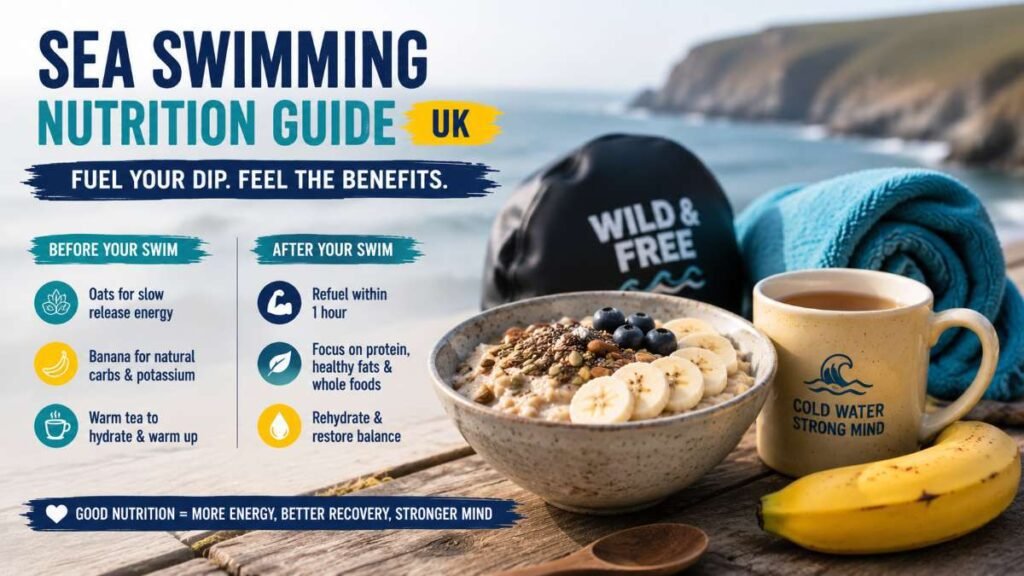
Maximizing the Benefits of Sea Swimming UK: Best Spots for Mental Health involves preparing your body from the inside out. Cold water swimming burns a significant amount of energy as your body works at maximum capacity to maintain its core temperature. Following a proper nutrition guide for beginners uk ensures you have the glycogen stores to stay safe, alert, and physically capable while navigating the tides. Swimming in a depleted state can lead to shivering much sooner, cutting your therapeutic session short.
You should avoid swimming on a completely empty stomach, but a heavy meal can be equally counterproductive as your body diverts blood flow to digestion rather than warmth. A light, complex carbohydrate snack (like porridge, oats, or a banana) 60 minutes before your dip provides the steady fuel your heart and muscles need to combat the cold. Post-swim, your body enters a crucial “recovery window” where it needs high-quality nutrients to generate heat and repair. This is an excellent time to focus on lean proteins to help rebuild tissues and keep your metabolic engine firing long after you’ve dried off, turning the swim into a metabolic boost for the entire day.
The Post-Swim "Glow": Why the Feeling Lasts
 The Post-Swim "Glow": Why the Feeling Lasts
What makes the Benefits of Sea Swimming UK: Best Spots for Mental Health truly unique is the legendary “after-glow.” Once you exit the water and your body begins to re-warm, a cocktail of endorphins typically floods your system, creating a natural antidepressant effect. This isn’t just a physical sensation; it’s a psychological state of accomplishment and “grit.” In the high-pressure work culture of 2026, this “glow” can provide a natural buffer against workplace stressors for hours or even days after the swim. It’s as if the sea leaves a protective layer around your mind.
This sustained mood boost is why many British “wild swimmers” call the sea their “GP in the waves.” By regularly exposing yourself to the controlled stress of the cold, you develop a higher “stress threshold” in your daily life. The small frustrations of traffic jams, late emails, or domestic chores suddenly seem trivial when compared to the raw, majestic power of the North Sea. This is the ultimate form of emotional resilience training—learning to stay calm, focused, and present even when the environment is challenging. You carry the quietness of the ocean back into the noise of the office, acting as a calm anchor for yourself and those around you.
Final Verdict: Reclaiming Your Wild Mind
 Final Verdict: Reclaiming Your Wild Mind
The Benefits of Sea Swimming UK offer a primal escape from today’s digital chaos. Beyond exercise, it’s a “Biological Reset” for your soul that ignores to-do lists and social status. From Cornwall to Yorkshire, the ocean is waiting to wash away your stress. Ready to reclaim your wild mind? The water is calling.
Frequently Asked Questions
1. Is it safe for beginners? Yes, but always check the SAS Sewage Data HQ before diving in. To enjoy the Benefits of Sea Swimming UK safely, swim with a partner, stay close to the shore, and acclimatize slowly to avoid cold shock.
2. Does cold water swimming help mental health? Absolutely. Science shows that cold immersion triggers a “Neural Reboot,” releasing dopamine that flushes out stress. This is one of the most powerful Benefits of Sea Swimming UK, offering a natural alternative to manage anxiety and brain fog.
3. Is sea air and water good for the brain? Yes. Sea air is rich in negative ions that balance serotonin, while saltwater stimulates the vagus nerve. Combining these with the Benefits of Sea Swimming UK helps improve neuroplasticity, leading to sharper focus and better sleep.
4. How long should I stay in the water? In 2026, experts suggest that even a 2-to-5 minute “Cold Reset” is enough to trigger a mood boost. For winter sessions, keep it brief to avoid hypothermia while still gaining the full neurological rewards.
✍️👤 About the Author
Dambar R. is a dedicated wellness researcher and the visionary founder of MyHealthyLifeUK. With over a decade of hands-on experience in metabolic science and practical nutrition, he specializes in creating sustainable health transformations for modern lifestyles.
Based on his extensive research, Dambar empowers individuals across the UK and USA to reach their peak fitness goals through science-backed health tips without sacrificing the joy of everyday eating. His mission is to bridge the gap between complex health data and actionable habits that foster long-term vitality and holistic wellness.
⚠️ Medical Disclaimer
The information provided on MyHealthyLifeUK is for educational and informational purposes only. It is not intended to be a substitute for professional medical advice, diagnosis, or treatment.
- Professional Guidance: Always seek the advice of your Physician (GP) or another qualified health provider regarding any medical condition.
- Specialized Advice: For personalized dietary needs, we recommend consulting a Registered Dietitian.
- Safety First: Consult a professional before starting any new fitness or nutrition program.
Never disregard professional medical advice or delay seeking it because of something you have read on this website.