
🌱 Getting Started

Understanding the journey to a leaner physique in the United States often feels like trying to solve a puzzle with missing pieces. However, regardless of which trending diet you follow, the fundamental science remains the same: you must achieve a state where your energy output exceeds your energy input. This calorie deficit guide for weight loss is designed to strip away the marketing fluff and provide you with a clear, mathematical, and sustainable roadmap. By mastering the balance between consumption and expenditure, you regain control over your body’s transformation, turning a complex process into a manageable daily routine.
If your body receives more calories than it needs, the extra is stored, often as fat.
A calorie deficit is when you consume fewer calories than your body burns daily, forcing your body to use stored fat for energy. This process leads to consistent weight loss when maintained over time with proper diet and activity.
Overview
The concept of a calorie deficit is governed by the First Law of Thermodynamics, which states that energy cannot be created or destroyed, only transformed. In the context of human biology, when you provide your body with fewer calories than it needs to maintain its current weight, it is forced to tap into its “backup battery”—stored body fat. In 2026, we have more tools than ever to track this balance, yet many Americans still struggle due to metabolic adaptation and hidden caloric intake. This calorie deficit guide for weight loss provides the essential framework to navigate these challenges, ensuring you lose fat while preserving the lean muscle mass that keeps your metabolism strong.
📊 The Mathematics of Fat Loss: Understanding CICO
At its simplest, weight loss is based on a concept called CICO—balancing the calories you consume with the calories you burn . Every movement you make, every breath you take, and even the process of digesting your food requires energy. When you follow a calorie deficit guide for weight loss, you are essentially creating a budget. If you spend more energy than you “earn” through food, your body must make up the difference by burning adipose tissue.
Still, keep in mind that the way your body expends calories can vary . Your metabolism is composed of your Basal Metabolic Rate (BMR), the Thermic Effect of Food (TEF), and your Non-Exercise Activity Thermogenesis (NEAT). Most Americans focus only on the calories burned during a 30-minute workout, but in reality, your NEAT—the calories burned through daily movement like walking, standing, and fidgeting—plays a much larger role in your total daily burn. Understanding this full spectrum is the first step toward a successful and permanent transformation.

🧮How to Calculate Your TDEE: Finding Your Personal Baseline
Before you can create a deficit, you must know your maintenance level, known as your Total Daily Energy Expenditure (TDEE). It refers to the calorie level needed to keep your weight stable without gaining or losing.
Metric Component Description Role in Weight Loss
BMR Energy burned at total rest. The “Core” energy requirement.
TEF Energy used to digest food. Boosted by high-protein diets.
NEAT Daily non-exercise movement. The biggest variable you can control.
EAT Purposeful exercise/gym time. Supports muscle and cardiovascular health.
To use this calorie deficit guide for weight loss effectively, you should use an online TDEE calculator to find your starting point based on your age, height, weight, and activity level. Once you have that number, you can accurately subtract calories to begin the fat-loss process. Without this baseline, you are essentially flying a plane without a dashboard—you might be moving, but you have no idea if you’re heading toward your destination or a crash.
🥦Why Eating More Fiber Can Help You Stay Satisfied and Lose Weight
One of the biggest fears in a deficit is constant hunger. That’s why volume eating becomes such a powerful strategy—it keeps hunger in check without overeating . By focusing on the calorie deficit guide for weight loss principles of nutrient density, you can actually eat a larger physical volume of food while staying under your calorie limit. Fiber is the key to this magic. It adds bulk to your meals and slows down the emptying of your stomach, which keeps you feeling full for much longer.
High-Volume Food Calories per Cup Fiber Content
Zucchini (Zoodles) 19 kcal 1.1g
Air-Popped Popcorn 31 kcal 1.2g
Raw Spinach 7 kcal 0.7g
Watermelon 46 kcal 0.6g
Eating more of these low-density options increases stomach volume, activating signals that tell your brain you’ve had enough. This prevents the “starvation” sensation that often causes people to quit their diets. Instead of eating a tiny portion of pasta, you can eat a massive bowl of zucchini noodles and grilled chicken, feeling completely satisfied while the fat continues to melt away.
⚖️Setting Your Deficit: Sustainable vs. Aggressive
A common mistake in the US is the “crash diet” mentality—trying to eat only 1,000 calories a day to see fast results. While this creates a massive deficit, it almost always leads to a metabolic rebound and muscle loss. This calorie deficit guide for weight loss recommends a moderate approach: a 500-calorie daily deficit. This typically results in a safe and sustainable weight loss of about 1 pound per week.
A moderate deficit allows you to maintain your energy levels for work and exercise. It also ensures that your body doesn’t enter a “starvation mode” where it starts hoarding fat and burning muscle tissue for energy. Remember, the goal isn’t just to be “lighter” on the scale; the goal is to be leaner and healthier. Slow and steady progress is the only way to ensure that once the weight is gone, it stays gone for good.

⚠️The "Hidden" Calories: Common Tracking Mistakes
Even the most disciplined trackers can fall victim to “caloric creep.” In the American food environment, calories are hidden everywhere. For example, a single tablespoon of olive oil used for cooking adds 120 calories. If you do that three times a day without tracking it, you’ve accidentally wiped out nearly 400 calories of your deficit.
- Liquid Calories: Creamers in your coffee, sodas, and “healthy” juices add up fast.
- Bites, Licks, and Tastes: Sampling food while cooking can easily add 100-200 untracked calories.
- Eyeballing Portions: A “tablespoon” of peanut butter is often actually two or three tablespoons when not measured.
To get the most out of this calorie deficit guide for weight loss, accuracy is non-negotiable, especially in the first few weeks. Using a digital kitchen scale to weigh your food—rather than using measuring cups—can be the difference between a plateau and consistent progress. What gets measured gets managed.
🔄 Metabolic Adaptation: Breaking Through Plateaus
As you lose weight, your body becomes more “efficient.” A smaller body requires less energy to move, meaning your TDEE will naturally decrease over time. If you stop seeing progress after a few months, you have likely hit a plateau due to metabolic adaptation. This calorie deficit guide for weight loss suggests two ways to fix this: either slightly decrease your calories further or increase your daily activity (NEAT).
Another pro-level strategy is the “Refeed Day.” By eating at your maintenance calories for one or two days a week, you can help reset certain hormones like leptin, which regulates hunger and metabolism. This doesn’t mean a “cheat day” where you eat everything in sight; it means a controlled increase in healthy carbohydrates to signal to your body that it isn’t starving. This keeps your metabolic engine running hot and prevents the long-term slowdown that kills many weight loss journeys.
🍗Protein’s Role in a Deficit: Protecting Muscle
When you are in a deficit, your body is looking for energy anywhere it can find it. If you don’t consume enough protein, your body will break down your own muscle tissue. This is a disaster because muscle is metabolically active—the more you have, the more calories you burn at rest.
- High TEF: Protein requires more energy to digest than fats or carbs.
- Satiety: Protein is the most filling macronutrient, keeping “hunger pangs” at bay.
- Preservation: It provides the amino acids needed to maintain your strength.
For a successful calorie deficit guide for weight loss, aim for roughly 0.8 to 1 gram of protein per pound of body weight. Whether it’s chicken breast, Greek yogurt, or plant-based tofu, keeping your protein high is the ultimate insurance policy for your metabolism.
🧠 Best Foods for a Calorie Deficit Diet (Eat More, Weigh Less)
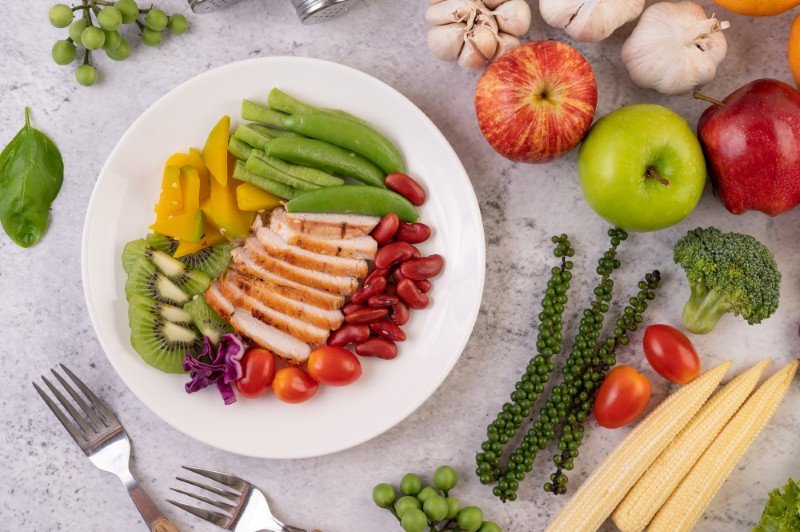
The success of any calorie deficit guide for weight loss depends on choosing foods that keep you full without adding extra calories. Instead of eating less, focus on smarter food selection that naturally controls hunger. Protein and fiber play the biggest role here, helping you stay satisfied and avoid unnecessary snacking. When your meals are balanced, maintaining a calorie deficit becomes much easier and sustainable without feeling restricted.
🔑 Key Food Choices:
- 🟢 High-Protein Foods: Chicken, eggs, tofu — control hunger & protect muscle
- 🟡 High-Fiber Foods: Oats, vegetables, fruits — keep you full longer
- 🔵 Healthy Fats (limited): Nuts, olive oil — improve satisfaction
- ⚪ Low-Calorie Volume Foods: Spinach, cucumber, broccoli — eat more, gain less calories
🔥 Simple 7-Day Calorie Deficit Meal Plan (Beginner Friendly)
Following a structured meal plan makes any calorie deficit guide for weight loss much easier to stick to. Instead of guessing what to eat, a simple plan removes confusion and helps you stay consistent. The goal is not perfection but balance—keeping meals high in protein, moderate in carbs, and low in unnecessary fats. By repeating simple, home-friendly foods, you can maintain your calorie target without stress or complicated recipes.
📅 Sample Weekly Structure:
- 🍳 Breakfast Options: Eggs + oats / Greek yogurt + fruits
- 🍗 Lunch Options: Rice + chicken / dal + roti + sabzi
- 🥗 Dinner Options: Paneer/tofu + vegetables / grilled protein + salad
🔁 Easy Rotation Plan:
- 🔄 Repeat 2–3 meals during the week (no need for variety daily)
- ⏰ Keep meal timing consistent (helps control hunger)
- 💧 Drink enough water to avoid unnecessary cravings
- ⚖️ Adjust portion size based on your calorie target
⚡ Best Apps & Tools to Track Your Calories Accurately
Tracking is the backbone of any successful calorie deficit guide for weight loss. Without tracking, you are just guessing your intake, which often leads to slow or no results. Using simple apps can help you stay consistent, accurate, and aware of your daily calorie consumption. These tools remove confusion and make it easier to stick to your target without overthinking every meal.
📱 Recommended Apps:
- 📱 MyFitnessPal – Large database, easy food logging
- 📱 Lose It! – Beginner-friendly, quick tracking
🛠️ How to Use Effectively:
- ✅ Log every meal honestly (including snacks & oils)
- ⚖️ Use a kitchen scale for accurate portions
- 🎯 Set your daily calorie target and follow it
- 📊 Review your progress weekly and adjust if needed
🎯Final Thought
Success isn’t about perfection; it’s about consistency. This calorie deficit guide for weight loss is your roadmap, but you are the driver. Track your progress, be honest with your portions, and stay patient—the results will follow the science.
Start your calorie deficit journey today by calculating your TDEE and tracking your first meal. Consistency is your biggest advantage.

❓FAQ
- Can I lose weight without exercise? Yes, as long as you are in a deficit through your diet. However, exercise helps preserve muscle and allows you to eat slightly more while still losing fat.
- Is a 1,000-calorie deficit safe? Generally, no. It is too aggressive for most people and leads to muscle loss and extreme fatigue. This calorie deficit guide for weight loss recommends a 500-calorie limit.
- Do I have to track forever? No. Tracking is a tool to teach you portion sizes. Once you have “calibrated” your eyes, you can often move to a more intuitive way of eating.
- Does the “quality” of calories matter? For weight loss, a calorie is a calorie. But for health, hunger management, and energy, 500 calories of whole foods are infinitely better than 500 calories of candy.
- Why am I not losing weight even in a deficit? Usually, it’s due to “tracking errors” (untracked oils/sauces) or water retention. Give it 2-3 weeks of perfect tracking before making changes.
✍️ About the Author
Dambar R. is a dedicated wellness researcher and the visionary founder of MyHealthyLifeUK. With over a decade of hands-on experience in metabolic science and practical nutrition, he specializes in creating sustainable health transformations for modern lifestyles.
Based on his extensive research, Dambar empowers individuals across the UK and USA to reach their peak fitness goals through science-backed health tips without sacrificing the joy of everyday eating. His mission is to bridge the gap between complex health data and actionable habits that foster long-term vitality and holistic wellness.
⚠️ Medical Disclaimer
The information provided on MyHealthyLifeUK is for educational and informational purposes only. It is not intended to be a substitute for professional medical advice, diagnosis, or treatment.
- Professional Guidance: Always seek the advice of your Physician (GP) or another qualified health provider regarding any medical condition.
- Specialized Advice: For personalized dietary needs, we recommend consulting a Registered Dietitian.
- Safety First: Consult a professional before starting any new fitness or nutrition program.
Never disregard professional medical advice or delay seeking it because of something you have read on this website.