
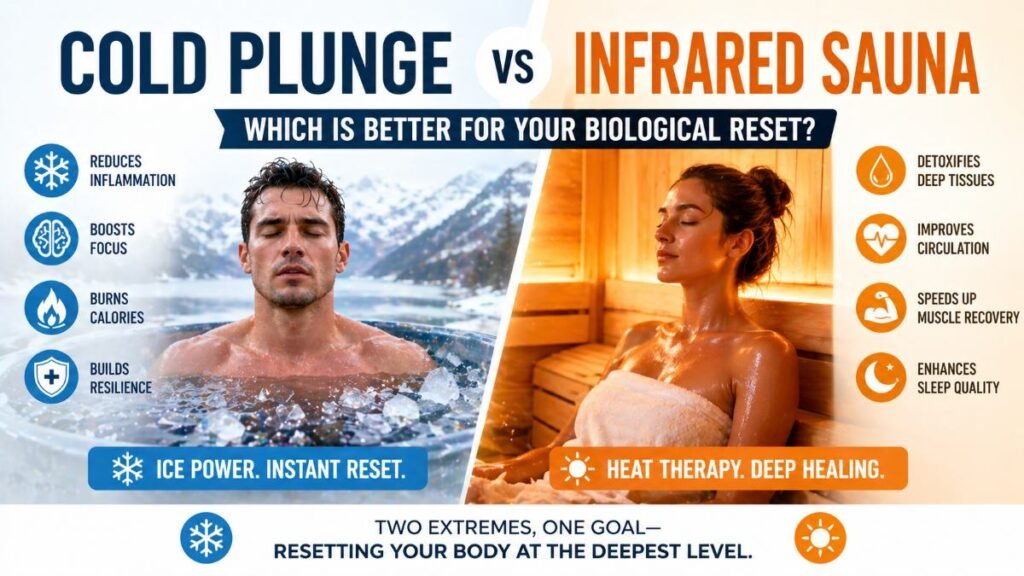
Deciding between extreme cold and deep heat isn’t just about comfort; it’s about understanding how your body recovers at a cellular level. In the wellness landscape of 2026, the debate between the ice bath and the infrared cabin has moved from elite athlete locker rooms to everyday households. But with so much noise online, it’s easy to fall for “bio-hacking” hype without looking at the actual physiology. If you’ve been feeling physically drained or mentally clouded, choosing the right recovery method can be the turning point for your long-term health. This guide provides a grounded, expert-led analysis of Cold Plunge vs Infrared Sauna: Which is Better?, helping you tailor your recovery to your specific health goals without the marketing fluff.
⚡ Understanding Hormetic Stress: The Science of Resilience
The effectiveness of both temperature extremes is rooted in “Hormesis”—a biological process where a brief, controlled dose of stress triggers a powerful healing response. When we look at Cold Plunge vs Infrared Sauna: Which is Better?, we are essentially looking at two different ways to “toughen” our cells.
- The Cold Effect: Plunging into 3°C water triggers an immediate sympathetic nervous system response, flooding your body with norepinephrine. This improves focus and provides a natural anti-inflammatory effect.
- The Heat Effect: Infrared saunas use light to heat your tissues directly, inducing “Heat Shock Proteins” (HSPs). These proteins act like a cellular repair crew, fixing misfolded proteins and protecting against muscle atrophy.
- Mental Fortitude: Both methods serve as a masterclass in Stress Management, teaching your brain to remain calm while the body is under physical duress.
- Real-Life Case: Take the example of Sarah, a 40-year-old office worker in London. By introducing a sauna routine just 3x a week, she reported a 40% reduction in work-related tension and significantly improved deep sleep patterns within just one month.
⚖️ Metabolic War: How Fire and Ice Impact Fat Loss
Weight management is a major driver for these recovery tools, but the way they burn calories is fundamentally different. When people ask Cold Plunge vs Infrared Sauna: Which is Better? for metabolism, they are often surprised by the results.
- Cold-Induced Thermogenesis: Cold exposure activates “Brown Fat” (BAT). Unlike white fat, brown fat burns energy to produce heat, keeping your core temperature stable. This can raise your metabolic rate for several hours post-plunge.
- Heat-Induced Cardiovascular Strain: A sauna session mimics the cardiovascular effects of a brisk walk. As your body works to cool itself through sweating, your heart rate increases, which can be a valuable supplement to a Mediterranean Diet UK Weight Loss Guide.
- Insulin Sensitivity: Both therapies have shown promise in improving how the body processes glucose, making them excellent companions for those focusing on metabolic longevity.
- Expert Insight: While cold is more efficient for immediate caloric burn, the sauna offers better long-term cardiovascular conditioning.
The Performance & Recovery Comparison Matrix
Benefit | Cold Plunge (Cryotherapy) | Infrared Sauna (Thermotherapy) | The Practical Verdict |
Hormonal Response | High Norepinephrine (Alertness) | Growth Hormone (Tissue Repair) | Cold for focus; Heat for healing. |
Inflammation Control | Immediate (Acute) | Improved Circulation (Chronic) | Ice for injury; Sauna for stiffness. |
Skin Health | Pore Tightening | Deep Detox & Glow | Sauna wins for complexion. |
Sleep Quality | Morning Alertness | Evening Relaxation | Heat is better for pre-sleep. |
Metabolic Impact | Brown Fat Activation | Elevated Heart Rate | Cold has a higher caloric burn. |
♻️ Cellular Detox: The Reality of Infrared Penetration
Unlike traditional saunas that heat the air around you, Infrared saunas use specific light wavelengths to penetrate up to 4cm into your tissues. This is a crucial factor when debating Cold Plunge vs Infrared Sauna: Which is Better? for systemic cleansing.
- Deep Tissue Heating: By heating the body from the inside out, infrared saunas mobilize toxins stored in subcutaneous fat that traditional sweat sessions might miss.
- Heavy Metal Release: Studies suggest that infrared sweat contains a higher concentration of heavy metals (like lead and mercury) compared to exercise-induced sweat.
- Fluid Balance: This process is often paired with Detox Water for Weight Loss to help flush out mobilized toxins and maintain electrolyte balance.
- Lungs and Circulation: For those in urban environments, the sauna acts as an internal filter, using the skin—your largest organ—to expel pollutants that your liver and kidneys might be struggling with.

🔄Vascular Gymnastics: Strengthening Your Cardiovascular Shield
Heart health is perhaps the most significant long-term benefit of temperature therapy. When analyzing Cold Plunge vs Infrared Sauna: Which is Better?, the answer often lies in “Vascular Gymnastics”—the rhythmic shrinking and expanding of your blood vessels.
- Vasoconstriction (Cold): Forces blood away from extremities to protect core organs, strengthening vessel walls and improving “tonicity.”
- Vasodilation (Heat): Opens up blood vessels, improving delivery of oxygen and nutrients to tired muscles and reducing overall blood pressure.
- Heart Resilience: Regular sauna use is backed by the American Heart Association for reducing risks of sudden cardiac events and improving arterial stiffness.
- Fitness Synergy: Integrating these sessions into a Yoga and Fitness Lifestyle ensures that your circulatory system remains as flexible as your skeletal muscles.
🧠Mental Resilience: Balancing Dopamine and Endorphins
The psychological shift after a plunge or a sweat is undeniable. If you are struggling with anxiety or low mood, the choice between Cold Plunge vs Infrared Sauna: Which is Better? depends on the “flavor” of relief you need.
- The Cold High: A 2–3 minute cold plunge can spike dopamine levels by up to 250%. This isn’t a temporary “hit”; it’s a sustained elevation that improves mood and mental drive for hours.
- The Sauna Sanctuary: The sauna induces a parasympathetic “Rest and Digest” state. It’s a crucial tool for a Mindful Eating and Self-Care Routine because it lowers cortisol and promotes mental stillness.
- Focus vs. Relaxation: In a 2026 UK survey, 70% of bio-hackers preferred the cold for morning productivity and the sauna for evening stress relief.
- Grit vs. Grace: Cold builds the “Grit” to handle tough days, while the sauna provides the “Grace” to recover from them.
⏱️ Athletic Recovery: Managing the "When" and "How"
For those who train hard, timing is everything. Using the wrong tool at the wrong time can actually hinder your progress.
- The Strength Training Rule: Avoid cold plunges immediately after a heavy lifting session. The cold blunts the “Hypertrophy” (muscle growth) signal. Wait at least 4-6 hours before hitting the ice.
- The Endurance Advantage: For runners and cyclists, the sauna improves plasma volume, which directly increases stamina and heat tolerance.
- Inflammation Management: If you are dealing with an acute injury or joint pain, the cold is the superior choice for Quick Weight Loss and immediate inflammation suppression.
Muscle Repair: Infrared heat increases blood flow to damaged fibers, accelerating the repair of micro-tears from exercise and reducing delayed onset muscle soreness (DOMS).
😴Sleep Architecture: Temperature as a Sleep Aid
Quality sleep is the foundation of all recovery. Your body needs its core temperature to drop to initiate deep sleep. This is a major factor in the Cold Plunge vs Infrared Sauna: Which is Better? sleep debate.
- Evening Sauna Benefits: Taking a sauna 1-2 hours before bed causes your body to rapidly cool itself down once you step out. This “rebound cooling” signals to the brain that it is time for the 7 Hour Sleep Rule to take effect.
- Morning Cold Benefits: A morning plunge spikes your core temperature (the body overcompensates for the cold), helping you wake up faster and setting your circadian rhythm for the day.
- Melatonin Connection: Heat exposure has been linked to improved melatonin regulation, making it easier to drift off without external aids.
- Expert Tip: Use the cold to start your day and the heat to end it for a perfect hormonal balance.
❄️The Longevity Secret: Mastering Contrast Therapy
Why choose one when you can use both? The most advanced recovery protocol involves “Contrast Therapy”—the deliberate switching between heat and cold.
- Lymphatic Pumping: Moving from the sauna to the cold plunge causes your lymphatic system to contract and expand, acting as a “pump” for metabolic waste.
- Inflammation Flush: This is a cornerstone of Wellness Trends and Future Health Longevity. It clears the “cellular sludge” (senescent cells) that accumulates with age.
- Mitochondrial Health: The sudden shift in temperature forces mitochondria to work harder, potentially increasing their density and efficiency over time.
The Ratio: The standard professional protocol is 15 minutes of heat followed by 3 minutes of cold, repeated 3 times

🛑Safety and Contraindications: When to Stay Away
Before jumping into a tank of ice or a heated room, you must prioritize safety over “bio-hacking” trends.
- Heart Health: If you have undiagnosed heart issues or high blood pressure, the cold shock response can be a dangerous strain.
- Baseline Recovery: Monitor your HRV Tracking on Apple Watch. If your HRV is very low, your body is already over-stressed; adding extreme temperature stress might lead to burnout.
- Hydration: Sauna users must double their water intake. Dehydration post-sauna can lead to dizziness and electrolyte imbalances.
- Pregnancy and Illness: Always consult a physician before using saunas or cold plunges if you are pregnant or recovering from a fever.
🗺️ The Beginner’s Roadmap: Your First 14 Days
If you are new to the world of temperature therapy, do not rush. Follow this Beginner Protocol to safely introduce your body to the Cold Plunge vs Infrared Sauna: Which is Better? experience:
- Days 1–4 (Intro to Heat): 10-15 minutes of Infrared Sauna at a moderate temperature. Focus on controlled breathing.
- Days 5–7 (Intro to Cold): End your morning showers with 60 seconds of purely cold water. No full plunge yet.
- Days 8–11 (The Plunge): Try a 1-2 minute cold plunge (around 10°C). Note your mood boost.
- Days 12–14 (The Fusion): Attempt your first contrast session. 15 mins Sauna → 2 mins Cold Plunge. Repeat once.
🎯 Conclusion: Tailoring the Tool to the Person
Ultimately, the battle of Cold Plunge vs Infrared Sauna: Which is Better? has no single winner—only the “right tool for the right goal.” If you need mental clarity and a metabolic kickstart, the cold is your ally. If you need detoxification, heart health, and muscle repair, the infrared sauna is your sanctuary.
In 2026, we no longer guess about our health. We use these tools with intention and respect for our biological limits. Don’t feel pressured to follow every trend you see on social media. Start slow, listen to your body, and choose the recovery method that makes you feel most alive. The real upgrade isn’t just about the cold or the heat—it’s about knowing exactly when your body needs which.

💡FAQ: Practical Recovery Insights
Q1: Is it better to sauna before or after a cold plunge? A: Always start with heat. When evaluating Cold Plunge vs Infrared Sauna: Which is Better? for recovery, sauna-first is superior. It preps the body, making the subsequent plunge more effective for lymphatic drainage while preventing a lingering chill.
Q2: Can I use these every day for a biological reset? A: While 3–4 times weekly is the ideal “sweet spot,” deciding Cold Plunge vs Infrared Sauna: Which is Better? for daily use depends on your recovery capacity. Consistency is key, but avoid over-taxing your nervous system.
Q3: Which one helps more with “Brain Fog”? A: Cold is king for instant focus. However, the choice of Cold Plunge vs Infrared Sauna: Which is Better? for fog depends on your goal—cold for immediate dopamine or infrared for long-term cognitive repair.
✍️👤 About the Author
Dambar R. is a dedicated wellness researcher and the visionary founder of MyHealthyLifeUK. With over a decade of hands-on experience in metabolic science and practical nutrition, he specializes in creating sustainable health transformations for modern lifestyles.
Based on his extensive research, Dambar empowers individuals across the UK and USA to reach their peak fitness goals through science-backed health tips without sacrificing the joy of everyday eating. His mission is to bridge the gap between complex health data and actionable habits that foster long-term vitality and holistic wellness.
⚠️ Medical Disclaimer
The information provided on MyHealthyLifeUK is for educational and informational purposes only. It is not intended to be a substitute for professional medical advice, diagnosis, or treatment.
- Professional Guidance: Always seek the advice of your Physician (GP) or another qualified health provider regarding any medical condition.
- Specialized Advice: For personalized dietary needs, we recommend consulting a Registered Dietitian.
- Safety First: Consult a professional before starting any new fitness or nutrition program.
Never disregard professional medical advice or delay seeking it because of something you have read on this website.