

Are you tired of back pain dictating your daily schedule? Whether it’s that sharp morning stiffness or a dull, nagging ache that kills your focus, you aren’t just dealing with “bad luck”—you’re dealing with a mechanical breakdown. Most people chase temporary fixes, but finding real back pain treatment requires a shift. You have to stop just masking the pain and start solving the root cause. In this guide, we break down science-backed strategies to help you stabilize your spine and finally get your life back to normal.
 The "Core Pillar" Concept: Why Your Back is Often the Victim
 The "Core Pillar" Concept: Why Your Back is Often the Victim
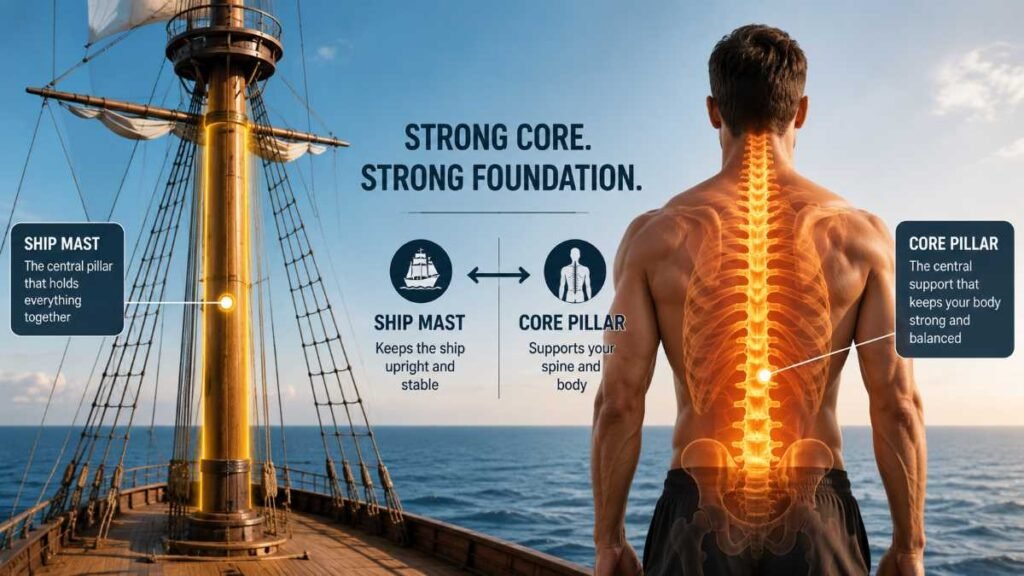
Think of your spine as a ship’s mast and your core as the rigging that keeps it upright. When those muscles weaken, the mast loses its alignment, which forces your joints to take all the strain—this is usually why your back starts hurting. Instead of just treating the painful spot, try to see the pain as a warning signal: it’s rarely the source, but rather a sign that your body’s support system needs better balance.
If your glutes are “asleep” from sitting all day, your lower back is forced to do overtime. This is why we look at the Kinetic Chain. When your hips, glutes, and core work together, they act like a natural corset. It’s not just about “working out”; it’s about restoring the natural tension that keeps your spine floating instead of collapsing under pressure.
The Hierarchy of Back Pain Relief: A Practical Roadmap
 The Hierarchy of Back Pain Relief: A Practical Roadmap
Results depend on how you approach the recovery phase. Don’t rush these steps.
Phase | Strategy | Expert Goal |
Acute | Load Modification | Calm the irritation, avoid triggers |
Recovery | Stability Work | Teach the core to fire on time |
Maintenance | Functional Movement | Build real-world resilience |
Export to Sheets
Success comes from respecting the process. Trying to force a heavy workout during the “Acute” phase is like trying to fix a leaky pipe with a sledgehammer—it only creates more damage.
Professional Protocols for Effective Back Pain Treatment
 Professional Protocols for Effective Back Pain Treatment
If you’re stuck in a loop of pain, these strategies shift the focus from “hiding” the pain to actually healing.
- The Power of “Optimal Loading” Instead of total bed rest, which often makes stiffness worse, we focus on optimal loading. This means finding movement that doesn’t trigger sharp pain. If you stay still for days, your joints can feel “dry.” Gentle, controlled movement acts like oil for a stiff hinge.
- Targeted Isometric Stability You need more than crunches. Isometric holds—like the Plank or Bird-Dog—teach your nervous system to “lock in” your spine. By holding these positions, you aren’t just building muscle; you’re training your brain to keep your spine steady against gravity.
- Addressing Systemic Inflammation Tissues struggle to repair if your body is constantly fighting internal “fire.” By managing blood sugar and focusing on an anti-inflammatory diet, you give your body the raw materials it actually needs to repair structural damage.
“To perform these isometric stability holds safely on your floor, I recommend using a high-density foam roller. It provides the perfect cushion and deep-tissue support your spine needs for faster recovery.”

Lessons Learned from My Recovery Journey
 Lessons Learned from My Recovery Journey
These stories highlight a crucial shift: moving from “passive waiting” to active, stability-focused rehabilitation.
“I spent years masking pain with medication. The breakthrough came when I swapped ‘total rest’ for consistent, low-impact stability drills. The chronic inflammation faded, and I finally reclaimed my daily life.” — Tom H., 48, IT Consultant
“I was skeptical that ‘tiny’ movements could work. But after a few weeks, the physical strain of long desk hours vanished. My back finally feels solid, supported, and resilient.” — Linda K., 34, Graphic Designer
Why these lessons define true recovery:
- Break the “Rest” Trap: Inactivity accelerates muscle atrophy, leaving your spine vulnerable. Movement is your best medicine.
- Consistency Wins: Real resilience isn’t forged in one intense session, but through small, daily stability habits.
- Shift Your Mindset: Stop viewing your back as “broken.” Start treating it as a structure you can actively rebuild through smart, controlled movement.
Clinical Insight: The real turning point occurs when you stop fearing movement. By replacing avoidance with controlled activity, you signal to your nervous system that it is safe to heal, stabilize, and grow stronger.
When to See a Specialist: The Clinical Red Flags
 When to See a Specialist: The Clinical Red Flags
Pain is a warning, but sometimes it is an urgent SOS. See a professional immediately if:
- Radiating Pain: Numbness, “electric” shocks, or tingling down your legs (Sciatica).
- Loss of bowel or bladder control is a serious medical emergency; seek emergency care immediately.
- Night Pain: Unrelenting, deep ache that prevents sleep despite changing positions.
- Unexplained Weight Loss: When coupled with back pain, this needs blood work to rule out systemic issues.
For a deeper dive, refer to the National Institute of Arthritis and Musculoskeletal and Skin Diseases. Don’t try to be a hero; if your body sends these signals, it’s asking for a professional structural assessment.

Long-Term Management: Habits that Stick
 Long-Term Management: Habits that Stick
True recovery isn’t a “cure” in a bottle; it’s an engineering project built with daily habits.
- Ergonomics: Your desk setup might be the hidden enemy. Simple healthy living tips can show you how small adjustments save your spine.
- Pro Tip: Keep your monitor at eye level to prevent “tech-neck” which cascades down to your lumbar spine.
- Metabolic Health: High glucose levels can increase tissue brittleness. Focus on metabolic flexibility to keep your tendons and discs hydrated.
Mind-Body Connection: Stress tightens your paraspinal muscles. Learn stress management techniques to lower your baseline cortisol.
“Stop living with muscle knots! Incorporate this professional-grade recovery roller into your daily routine to release tension and restore your spine’s natural flexibility.”
The Science of "Micro-Movement"
 The Science of "Micro-Movement"
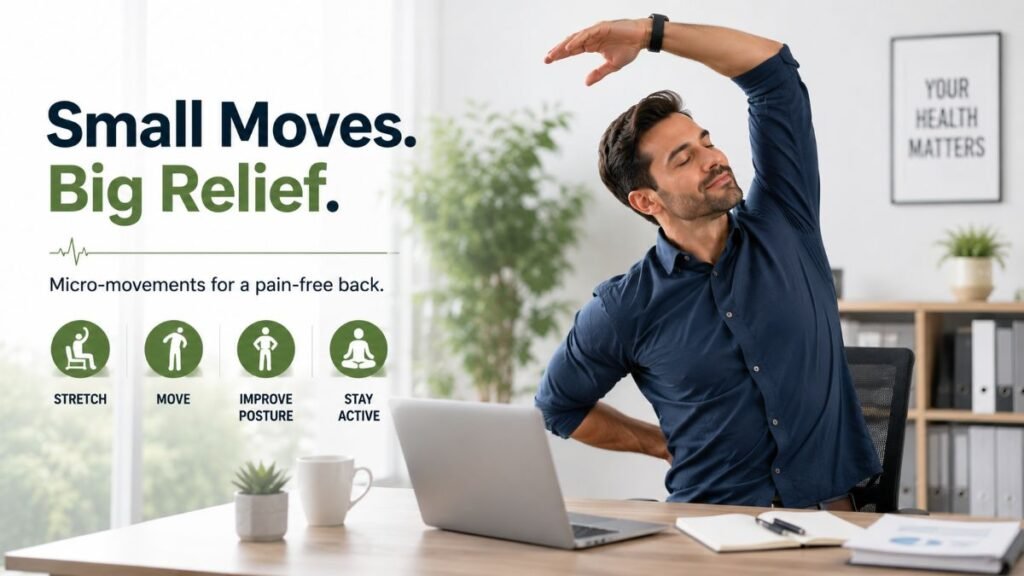
Most back pain starts because we are “static.” Incorporating “micro-movements”—standing up every 30 minutes to reach or do a pelvic tilt—keeps your spine from “gluing” itself together.
- Pelvic Tilts: A tiny rocking motion to lubricate the lower joints.
- Thoracic Rotations: Gentle twisting to ensure the mid-back isn’t “locked.”
- The “Sponge” Analogy: Your spine discs need to be compressed and released (through movement) to “soak up” nutrients.
- Fluidity: This is a physiological necessity for long-term disc health.
If you remain immobile, your fascia begins to tighten, creating a “shrink-wrap” effect around your spine that restricts every move you make.
The "Brain-Back" Feedback Loop
Pain is a perception. If you are terrified that your back is “broken,” your brain will keep those muscles clamped down in a protective spasm.
- The Guarding Reflex: Your brain initiates muscle spasms to “splint” the area, which can ironically cause more pain.
- Rewiring Safety: By practicing gentle, safe movements, you prove to your brain that your back is safe.
- The Result: Once your brain feels safe, it releases the “emergency brake,” and the pain often subsides.
Think of it like a security alarm that’s acting up because it’s too sensitive. Instead of replacing the whole system, you just need to adjust the sensors.
Energy Conservation for Spine Health
 Energy Conservation for Spine Health
“When your energy hits a low, your posture naturally starts to sag, and that’s usually when your back begins to bear the brunt of the strain. Managing your energy—not just your time—is a key part of back pain treatment.
- Postural Fatigue: By 4 PM, your muscles are tired; this is when most “mystery” back pains start.
- Recovery Prioritization: Treat your evening rest as a recovery phase, not just “time off.”
- Nervous System Regulation: If you are over-caffeinated and stressed, your muscles stay in a state of hyper-tonicity.
Prioritize your recovery hours like you prioritize your work hours, ensuring your nervous system has time to down-regulate and repair tissues.

Final Verdict
Lasting back pain treatment isn’t found in a magic pill; it’s built through consistent, smarter daily habits. By strengthening your kinetic chain, choosing movement over stagnation, and managing your energy, you can finally transform your spine’s resilience.
. 🔍 Frequently Asked Questions
Q: Which exercises best support the L4-L5 lumbar region?
A: Focus on deep stabilization rather than bulk. Exercises like the Bird-Dog and Glute Bridge act as a “muscular corset,” shielding your discs from pressure. This consistency is a vital component of any effective back pain treatment plan.
Q: What are the “Big 3” for back relief?
A: Experts prioritize these foundational movements:
Bird-Dog: Builds essential core coordination.
Glute Bridge: Awakens the posterior chain to offload the back.
Cat-Cow: Lubricates spinal joints for better flexibility.
Q: Can I heal my spine naturally?
A: Often, yes. Through “optimal loading,” postural correction, and anti-inflammatory habits, you can strengthen your kinetic chain. This holistic approach serves as the best natural back pain treatment to stabilize your spine without surgery.
Q: What are the 5 “Red Flags” for back pain?
A: Seek urgent medical help if you experience:
Bowel/bladder loss.
Leg weakness or numbness.
Persistent night pain.
Unexplained weight loss.
High fever.