

“Does your body feel a decade older the moment your feet hit the floor each morning? That lingering, heavy stiffness isn’t just ‘getting older’—it’s a silent signal that you might be ignoring critical arthritis symptoms. Many people dismiss these subtle red flags, accidentally trading their long-term mobility for years of avoidable discomfort. But what if you could stop the damage before it settles in for good? In this 2026 clinical guide, we’re cutting through the noise to help you distinguish between standard fatigue and genuine joint issues, providing a clear roadmap to reclaim the effortless movement you deserve.”
 Understanding Your Joints: The Basics
 Understanding Your Joints: The Basics
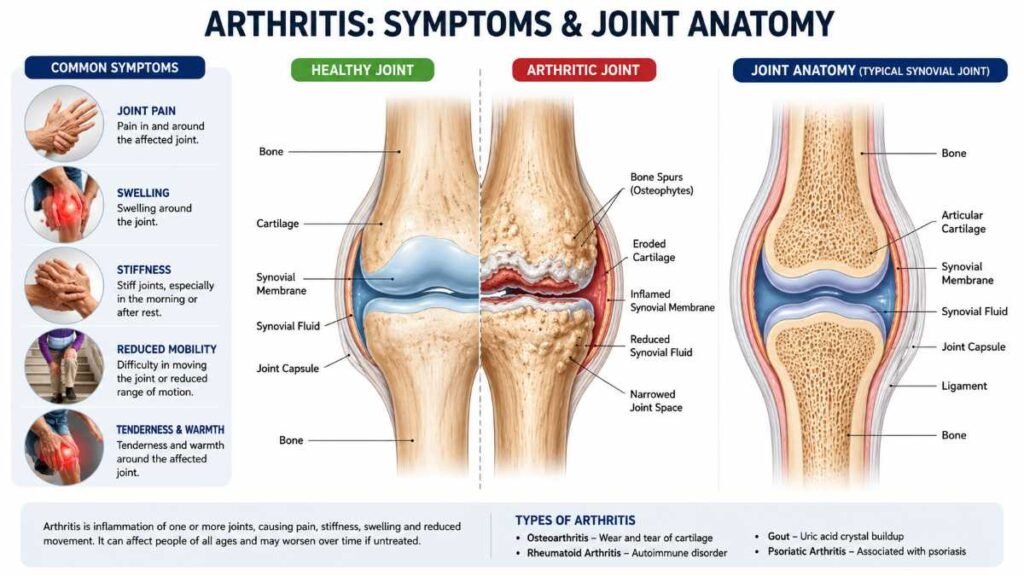
“Arthritis encompasses various conditions marked by chronic joint inflammation and pain, typically stemming from cartilage erosion or immune system dysfunction. While often associated with aging, it is frequently triggered by specific factors—most commonly Osteoarthritis, involving cartilage wear, or Rheumatoid Arthritis, where the immune system attacks joint linings.
Unlike simple aches, these conditions involve complex cellular responses. Recognizing the difference early can change the trajectory of your health. It is not just about the pain; it is about protecting the structural integrity of your skeletal system. When cartilage degrades, the joint loses its ability to absorb shock, turning every step into a potential source of inflammation and structural stress.
Symptoms You Should Never Ignore:
- Persistent Joint Pain: Discomfort that lingers long after you’ve finished your daily activities, often feeling deep and throbbing.
- Prolonged Morning Stiffness: Feeling “locked up” for more than 30–60 minutes after waking, which is a classic clinical marker of inflammatory activity.
- Visible Inflammation: Noticeable swelling, warmth, or redness around a joint, which often results from localized fluid retention.
- Restricted Range of Motion: Increasing difficulty in performing basic tasks like opening jars, typing, or climbing stairs without compensatory movements.
- Crepitus: A distinct clicking or grinding sensation that you can feel during movement, caused by reduced cartilage cushioning and increased joint friction.
Quick Guide: Normal Stiffness vs. Joint Pathology
 Quick Guide: Normal Stiffness vs. Joint Pathology
It is important to differentiate between standard muscle fatigue and true joint pathology. Normal stiffness typically clears up after a few minutes of moving, whereas arthritis-related symptoms are rooted in the systemic breakdown of joint tissue.
Feature | Normal Stiffness | Joint Pathology |
Duration | Improves within minutes | Lasts 30–60+ minutes |
Systemic Effects | None | Fatigue, malaise, or fever |
Physical Signs | None | Visible swelling or deformity |
Pattern | Random | Often symmetrical |
Expert Insight: As per guidelines from the Arthritis Foundation, if morning stiffness consistently exceeds one hour, it is a significant signal that warrants a professional evaluation to check for systemic inflammatory markers. Early intervention prevents the cycle of pain and inactivity.
Mechanism of Action: Why Does This Happen?
 Mechanism of Action: Why Does This Happen?
Think of your joints like a door hinge. When it’s well-oiled, it moves smoothly. In this mechanical model, arthritis represents the ‘wear’ within the joint, where inflammatory buildup prevents the smooth, frictionless movement your body requires. In Osteoarthritis, the “oil”—known as cartilage—wears down, causing friction. In inflammatory types, your immune system mistakenly attacks the hinge, causing heat and swelling.
Ignoring these early warning signs allows that “debris” to accumulate, which accelerates the thinning of your protective cartilage. For those looking to understand the mechanical side of things, our Knee Pain Relief Clinical Guide explains how structural joint failure develops over time, helping you distinguish between surface-level aches and deep-tissue stress. We must move beyond “masking” the pain and start addressing the structural friction occurring within the joint capsule.
“To naturally reduce joint friction and support cartilage health, consider trying Carbamide Forte Glucosamine Tablets for effective daily relief. #Ad“

The Biological Reality: Inflammation & Metabolic Health
 The Biological Reality: Inflammation & Metabolic Health
Joint health is deeply connected to your systemic metabolic state. Research, including studies on C-Reactive Protein (CRP) levels, indicates that systemic inflammation may contribute to increased joint discomfort. When your body is in a state of high inflammatory load, your joints may be the first to reflect that stress.
If your lifestyle is primarily sedentary, your joints lack the rhythmic loading needed for synovial fluid nutrient exchange, effectively “starving” the cartilage of repair materials. Start by integrating controlled, low-impact resistance training. Our 10-minute home workout to burn fat fast emphasizes the “muscle-as-medicine” approach, where strong muscles act as shock absorbers for your skeletal frame, offloading stress from delicate joints. Remember, metabolic health is the foundation upon which joint longevity is built.
Natural Lifestyle Strategies for Joint Support
 Natural Lifestyle Strategies for Joint Support
Management starts with your daily routine, focusing on optimizing your joint environment rather than just masking symptoms.
- Dynamic Range-of-Motion: Gentle, slow exercises help circulate synovial fluid, “lubricating” the joint capsule naturally. This is essential for nutrient transport.
- Thermal Modalities: Heat therapy (thermotherapy) can increase blood flow to stiff areas, while cold packs help reduce acute, post-activity inflammation.
- Neuromuscular Re-education: Activities like Tai Chi or Yoga improve proprioception, helping you move more efficiently and reducing the risk of accidental overloading.
Strengthening your posterior chain is equally vital. Check out our Home back workout without equipment to ensure your core stabilization is sufficient to protect your hips and knees by distributing physical load correctly. When the core is stable, the joints don’t have to compensate for poor posture, significantly reducing chronic wear.

Patient Experience: Understanding the "Pacing" Strategy
 Patient Experience: Understanding the "Pacing" Strategy
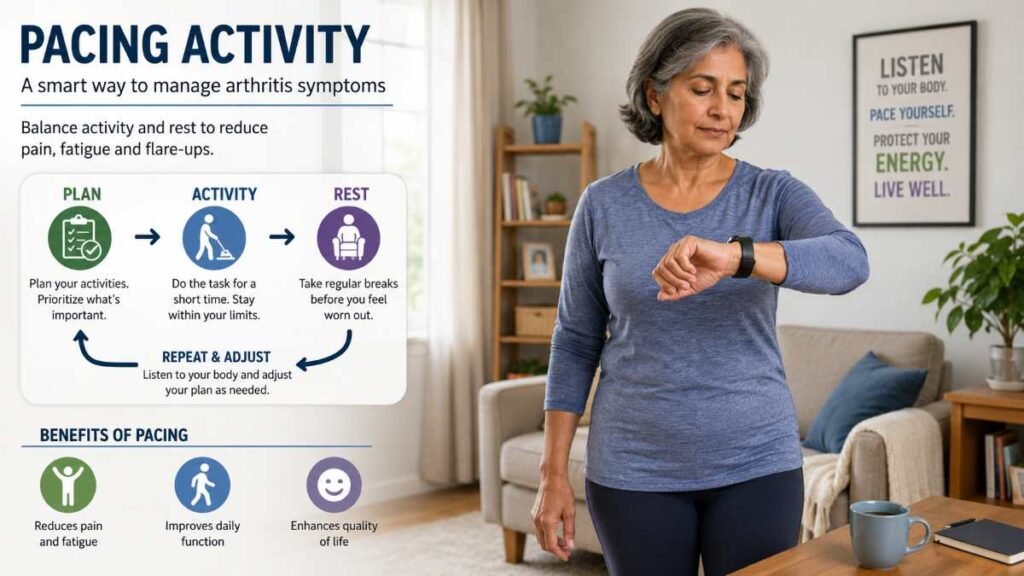
“Effective joint management relies on ‘pacing’—aligning your physical activity with your daily energy peaks. Rather than pushing through painful flare-ups, syncing movement with your body’s natural rhythms prevents post-exercise exhaustion.
Patient Perspective: Many individuals have reported that moving from a “no pain, no gain” mindset to one of intentional, gentle care has been transformative. The goal isn’t extreme exertion; it’s about maintaining consistent, fluid movement. This approach aligns with modern rehabilitation strategies that prioritize long-term consistency over short-term intensity, allowing you to stay active without the constant risk of over-training injuries. The path to relief is a marathon, not a sprint.
When to Consult a Professional
 When to Consult a Professional
Early detection is the key to joint preservation. You should schedule a professional consultation if:
- Over-the-counter aids no longer provide consistent relief.
- You notice redness, sustained heat, or visible swelling around the joint space.
- Your ability to perform basic tasks like gripping a pen or tying shoelaces is declining.
- You experience systemic symptoms like unexplained weight loss, rashes, or persistent, deep fatigue.
Professional assessment ensures that you are addressing the underlying cause rather than just treating symptoms, helping you stop damage before it becomes irreversible. A specialist can help distinguish between mechanical wear and autoimmune processes that require specific medical intervention.
Nutritional Synergy for Joint Preservation
 Nutritional Synergy for Joint Preservation
Diet plays a massive role in how your joints feel daily. When your body is dealing with systemic inflammation, your joints pay the price as your body prioritizes managing that inflammation over repairing cartilage. Research on Omega-3 fatty acids and joint health suggests that specific nutrients can help regulate these inflammatory responses.
Read our guide on Healthy high-protein foods for fat loss to understand how stabilizing insulin levels helps reduce chronic pain. Furthermore, the gut-joint axis is crucial; our Gut health guide for beginners explains how a balanced microbiome regulates the body’s inflammatory threshold. When your gut health is optimized, your body’s overall systemic inflammation often decreases, directly translating to less joint sensitivity
Long-Term Joint Protection Strategies
 Long-Term Joint Protection Strategies
You can’t avoid getting older, but you can definitely protect your joints from unnecessary damage. Committing to a long-term care routine is the smartest way to keep your body moving smoothly and pain-free far beyond 2026. This includes tracking recovery metrics like Heart Rate Variability (HRV) to gauge your autonomic stress load and ensuring your micronutrient intake is optimized for collagen synthesis.
Optimizing intake of Vitamin D, Calcium, and Magnesium is essential for skeletal health. High-quality protein is also non-negotiable, as it provides the amino acids necessary for repairing connective tissue. Think of this as “joint maintenance”—just like servicing a car, you need to provide your joints with the raw materials required to repair themselves during your restorative sleep phase. Consistent nutrition and recovery are your strongest defenses against cellular and structural aging.
Expert Routine for Daily Relief
 Expert Routine for Daily Relief
- Morning: 10 minutes of gentle, slow stretching to increase circulation before standing.
- Daytime: Maintain ergonomic posture; avoid repetitive, high-impact loading on singular joints by frequently changing your position.
- Evening: Utilize warm-water immersion, which can soothe stiff muscles and encourage relaxation before sleep.
“For daily joint comfort and spinal alignment, I recommend using the WIDE MART Back Stretcher to safely improve your posture. #Ad“
Final Thought
Your joints are the foundation of your long-term independence. Never ignore the subtle cues your body gives off. Tuning into these early warning signs is the smartest way to prevent minor discomfort from becoming a long-term problem. If you are looking for structured ways to manage joint pain and stiffness, keep these expert strategies at the forefront of your care. Be proactive, be patient, and stay moving—your body will thank you for it in the years to come.

Frequently Asked Questions
What is the best medicine for arthritis pain? Effective management of arthritis symptoms often includes NSAIDs or topical analgesics. However, always consult a specialist for a personalized plan, as treatments vary based on your specific condition.
What is the new treatment for arthritis in 2026? In 2026, experts are prioritizing regenerative therapies like PRP injections and advanced physical therapy to stop arthritis symptoms before permanent cartilage damage occurs.
How to avoid arthritis? Protect your joints through consistent low-impact exercise, weight management, and tracking early arthritis symptoms to catch inflammation before it becomes chronic.
What are the first signs of arthritis in the fingers? Early signs include subtle morning stiffness, deep throbbing pain after activity, and a faint grinding sensation (crepitus) during movement.
✍️👤 About the Author
Dambar R. is a dedicated wellness researcher and the visionary founder of MyHealthyLifeUK. With over a decade of hands-on experience in metabolic science and practical nutrition, he specializes in creating sustainable health transformations for modern lifestyles.
Based on his extensive research, Dambar empowers individuals across the UK and USA to reach their peak fitness goals through science-backed health tips without sacrificing the joy of everyday eating. His mission is to bridge the gap between complex health data and actionable habits that foster long-term vitality and holistic wellness.
⚠️ Medical Disclaimer
The information provided on MyHealthyLifeUK is for educational and informational purposes only. It is not intended to be a substitute for professional medical advice, diagnosis, or treatment.
- Professional Guidance: Always seek the advice of your Physician (GP) or another qualified health provider regarding any medical condition.
- Specialized Advice: For personalized dietary needs, we recommend consulting a Registered Dietitian.
- Safety First: Consult a professional before starting any new fitness or nutrition program.
Never disregard professional medical advice or delay seeking it because of something you have read on this website.