
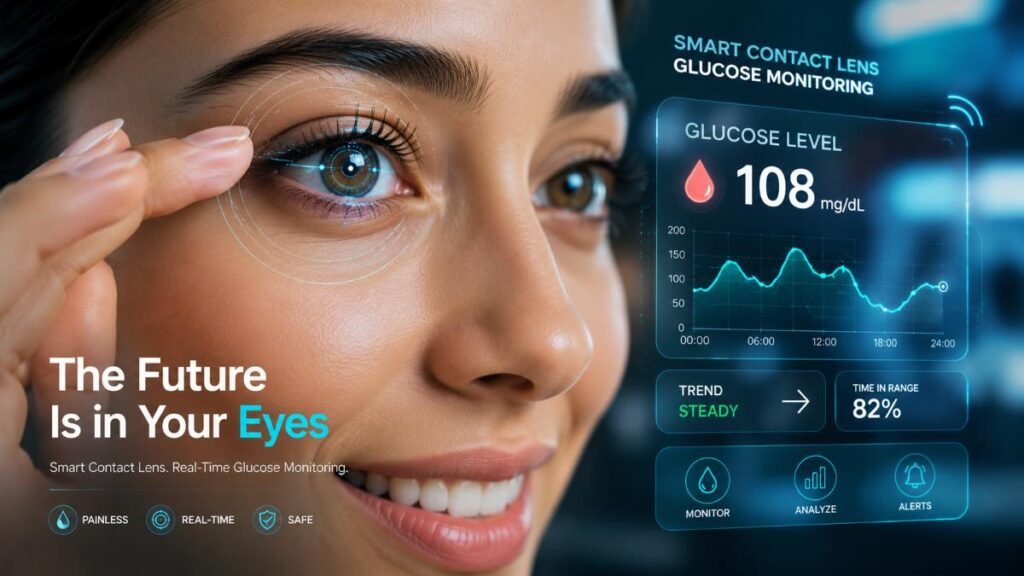
Imagine checking your blood sugar levels without a single drop of blood or a bulky sensor stuck to your arm. For decades, we’ve relied on finger pricks and invasive monitors, but the dawn of Smart Contact Lenses for Glucose is finally here to change the game. In 2026, this high-tech wearable is no longer science fiction—it is the next frontier of non-invasive diagnostics. If you are ready to reclaim your lifestyle and track your metabolic health with unprecedented precision, keep reading to see how this innovation is redefining the standard of care.
 The Tech Behind the Lens: How It Works
 The Tech Behind the Lens: How It Works
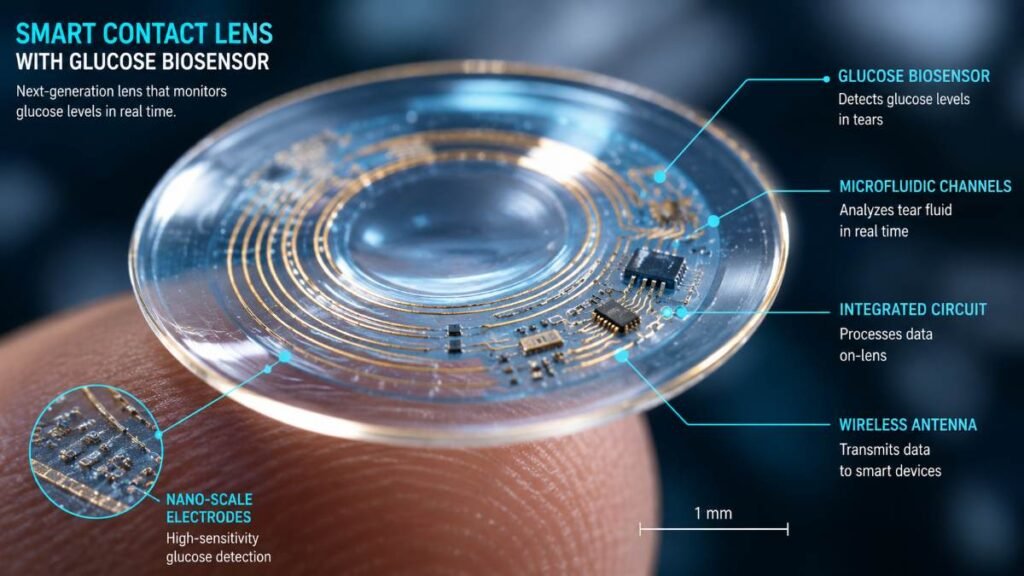
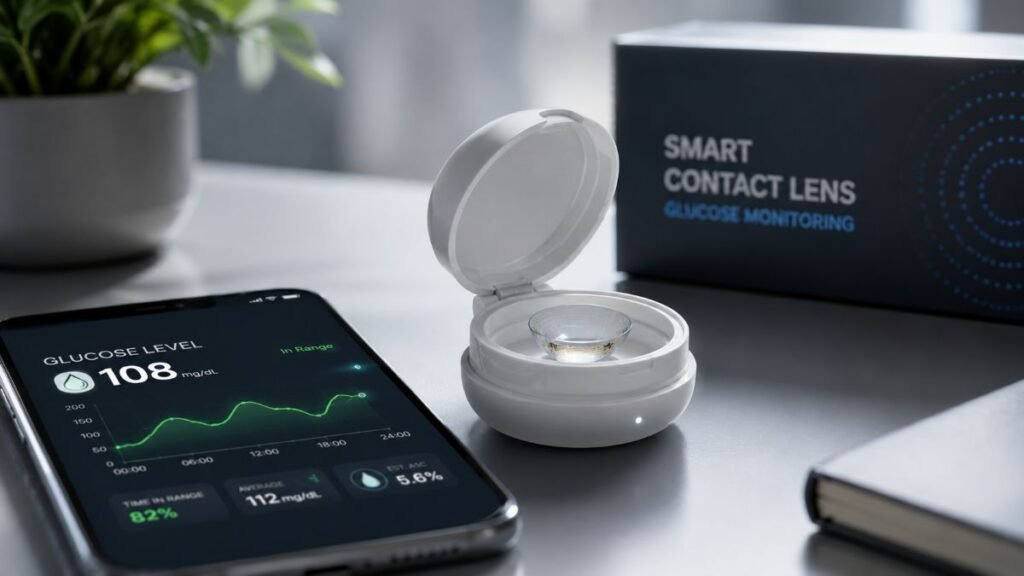
At its core, a glucose-sensing lens is a feat of micro-engineering. These aren’t your typical soft contacts; they are embedded with a tiny, transparent biosensor and an integrated antenna.
- Tear Fluid Analysis: The lens continuously monitors the glucose concentration in your lacrimal fluid (tears).
- Real-time Transmission: Data is beamed wirelessly to your smartphone app, allowing you to see your levels in real-time.
- Thermal Stability: Advanced polymers ensure the lens remains comfortable while protecting the sensor from the ocular surface environment.
Unlike the 5 best continuous glucose monitors (CGM), which rely on interstitial fluid, tears offer a more immediate look at your systemic balance. The sophisticated circuitry operates on near-field communication, drawing minimal power while providing a continuous stream of data. This allows for a seamless user experience where the hardware disappears, leaving only the critical health metrics you need to manage your day effectively without the friction of traditional adhesive hardware.
Comparison: Smart Lenses vs. Current Standards
 Comparison: Smart Lenses vs. Current Standards
To understand the shift, we must look at how existing methods stack up against this emerging wearable tech.
Feature | Finger Prick | Standard CGM (Patch) | Smart Contact Lenses |
Invasiveness | High (Painful) | Low (Skin Adhesive) | Non-invasive |
Data Frequency | Manual/On-demand | Continuous | Continuous |
Comfort | Low | Moderate | High (Like standard lenses) |
Aesthetics | Visible Blood | Visible Patch | Invisible |
Moving to ocular sensors eliminates the daily physical reminders of diabetes, such as sore fingertips or the skin irritation often caused by traditional adhesive patches. The psychological relief of being “sensor-free” in appearance while staying “sensor-active” in data collection is a massive upgrade for quality of life. Users who have felt tethered to their external devices can finally integrate metabolic tracking into their social and professional lives with total confidence, knowing their health is managed invisibly and efficiently throughout the day.
The Clinical Value of Glucose-Sensing Wearables
 The Clinical Value of Glucose-Sensing Wearables
From an E-E-A-T perspective, the medical community views this technology as a massive leap for YMYL (Your Money Your Life) health management. By removing the barrier of skin penetration, the risk of site infection or dermatitis—common with traditional patches—is effectively zero. The clinical advantage extends to pediatric care and individuals with sensitive skin who often struggle with patch adhesion.
- Enhanced Compliance: Patients are more likely to wear a contact lens than an adhesive patch.
- Infection Prevention: Eliminates the risk of localized skin irritation.
- Pediatric Friendliness: Easier for children to wear without feeling “medicalized.”
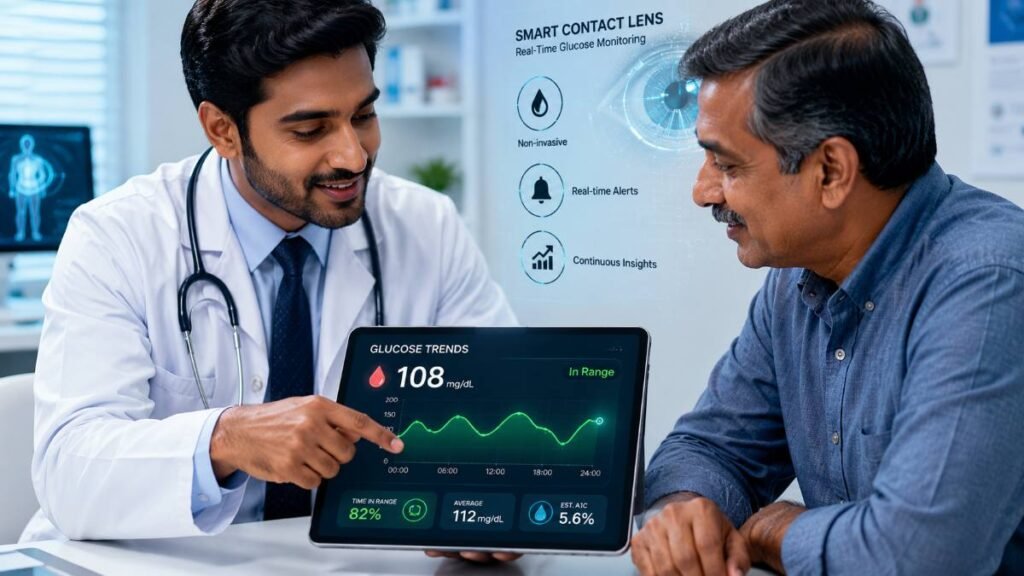
Furthermore, this allows for better integration with metabolic flexibility blueprint protocols. Doctors can now monitor a patient’s “Glucose Time in Range” with high-fidelity data that wasn’t possible through reactive testing. This leads to more precise insulin dosing adjustments and long-term improved Hba1c outcomes, ultimately reducing the frequency of hospitalizations caused by glycemic volatility. The ease of use also encourages better patient-physician communication, as the data provided is richer and more consistent.
“Active lifestyles can be tough on sensors. Don’t let sweat or swimming ruin your tracking—these Water-Resistant CGM Patches keep your device perfectly secure, no matter how intense your workout gets.”
Precision Biohacking: Monitoring Metabolic Health
 Precision Biohacking: Monitoring Metabolic Health
If you are already tracking your health, you know that glucose is the master switch. Using these lenses, you can observe how different stressors—like a lack of sleep or high-intensity training—impact your sugar levels. Glymphatic clearance, the brain’s nightly detox process, is highly dependent on stable blood sugar; poor metabolic stability directly affects how well your brain clears waste, as noted in our neuro-nutrients guide 2026.
- Real-time Stress Impact: Track how cortisol spikes influence your glucose output during high-stakes work.
- Recovery Insights: See the direct link between late-night meals and your morning metabolic state.
- Performance Optimization: Align your training blocks with peak glucose availability for maximum efficiency.
HRV Integration also becomes more meaningful; by syncing lens data with your watch, you can correlate your HRV tracking and longevity markers to see if a sugar spike is contributing to a suppressed recovery state. This granular view allows for “precision biohacking,” where you aren’t just following general guidelines but tailoring your nutrition and rest cycles to your unique physiological responses recorded throughout the 24-hour cycle.
Challenges: Precision and Calibration
 Challenges: Precision and Calibration
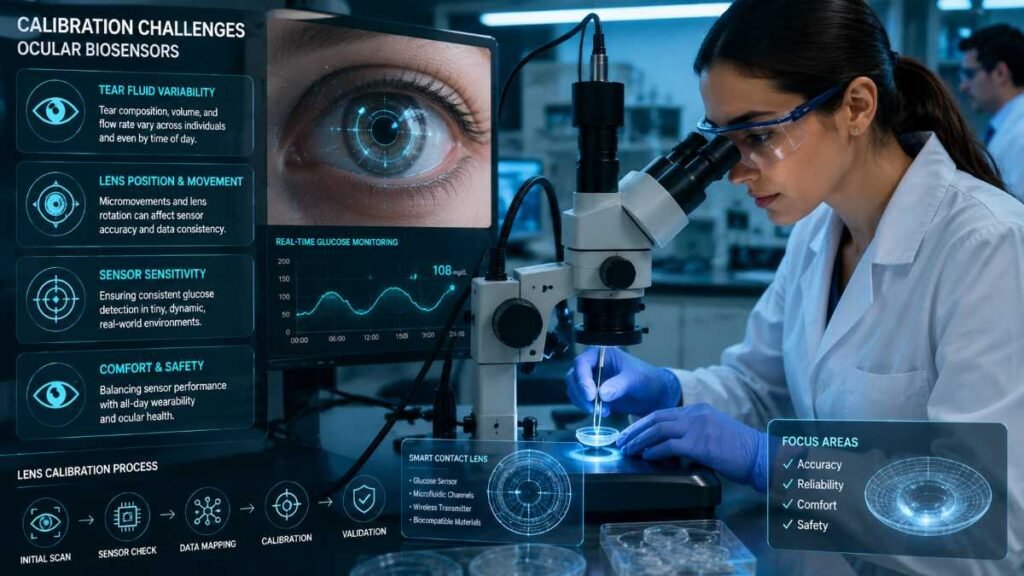
Despite the hype, the medical world remains cautious. Measuring glucose in tears is scientifically harder than measuring it in blood. The concentration is significantly lower, requiring ultra-sensitive sensors that must be shielded from environmental contamination. Calibration remains a hurdle; even in 2026, you may still need an occasional blood check to “zero” the sensor and ensure the ocular data matches your systemic glucose levels accurately.
- Sensor Sensitivity: Overcoming the lower glucose concentrations found in tears.
- Environmental Shielding: Protecting the biosensor from external irritants or pollutants.
- Calibration Accuracy: Ensuring longitudinal consistency with blood-glucose gold standards.
Additionally, ocular health is paramount. These lenses must maintain exceptionally high oxygen permeability to prevent corneal hypoxia or inflammation. Always check advanced blood testing for longevity guide protocols to ensure you have a complete picture of your health, as ocular data should serve as a dynamic supplement, not a replacement for comprehensive metabolic blood panels.
“Even with advanced lenses, occasional blood-sugar checks are standard. To ensure your sensor stays locked in place for the full 14 days, we recommend these Freestyle Libre 2 Sensor Covers. They are durable, secure, and built for peace of mind.”
The 2026 Market Landscape
 The 2026 Market Landscape
Major players in the MedTech space are currently shifting R&D budgets to prioritize ocular diagnostics as the primary interface for non-invasive health monitoring. While the first wave of devices is limited to professional medical use for strictly controlled clinical settings, we anticipate consumer-grade availability by the end of 2027. This shift isn’t just about diabetes; it’s about providing a “Metabolic Dashboard” for the everyday athlete who wants to optimize their fuel intake in real-time.
- Industry Shift: Massive influx of capital into biosensor-embedded polymers.
- Consumer Availability: Projected rollout for high-performance athletes by late 2027.
- Integrated Health: Expanding the scope beyond diabetes to general wellness and weight management.
For more insights on how external factors impact your physiology, read our guide on how to lower cortisol levels fast. This market expansion signifies that we are moving toward a future where health monitoring is passive, continuous, and entirely integrated into our daily equipment, effectively ending the era of manual monitoring.
Data Privacy: Your Eyes, Your Data
 Data Privacy: Your Eyes, Your Data
Bringing a data-collecting device into your eyes raises significant ethical questions regarding who owns your biological footprint. Encryption is non-negotiable; you must ensure the manufacturer uses end-to-end encryption to prevent unauthorized access to your ocular health data. Furthermore, ownership is key—you must have the right to export your glucose history to your primary health aggregator (Apple Health or Google Fit).
- End-to-End Security: Preventing unauthorized third-party access to sensitive biological data.
- Full Data Sovereignty: Ensuring the user retains ownership of their historical metabolic trends.
- Cross-Platform Integration: Exporting data seamlessly to standard health aggregators.
Treat your glucose data with the same rigorous security you apply to your financial records. Never compromise on privacy for the sake of convenience. Your ocular data provides a deep window into your systemic health, and ensuring that this information remains under your absolute control is the final frontier in responsible personal data management in the 2026 digital ecosystem.

Future-Proofing Your Health Strategy
 Future-Proofing Your Health Strategy
Smart contact lenses are only one piece of the puzzle. If you are serious about long-term health, consider this tech a supplement to your private health membership plans. When you know exactly how your body responds to every gram of carbohydrate in real-time, you transition from “guessing” your health to “engineering” it.
- Metabolic Proactivity: Catching instability before it spirals into chronic metabolic dysfunction.
- Engineering, Not Guessing: Using live feedback to adjust lifestyle and nutrition in real-time.
- Longitudinal Tracking: Building a historical database of your unique biological responses.
External research suggests that the future of preventive medicine lies in this type of wearable integration, allowing for longitudinal health tracking that catches metabolic drift long before it becomes a chronic condition. Harvard Health provides extensive data on the importance of such longitudinal health monitoring, highlighting that the earlier we identify glucose instability, the more effectively we can prevent long-term cognitive and cardiovascular decay through targeted, evidence-based lifestyle interventions.
Final Verdict: Is It Worth the Hype?
 Final Verdict: Is It Worth the Hype?
Smart lenses represent a shift from reactive monitoring to proactive wellness. While they aren’t here for the mass market tomorrow, they are the logical conclusion of the wearable revolution. If you are managing chronic conditions or optimizing for peak human performance, stay tuned to this space.
📊 FAQ: Expert Answers
Q: What is the new contact lens technology in 2026? A: We are seeing biosensors embedded in soft hydrogels that analyze tears in real-time. These Smart Contact Lenses for Glucose are finally making non-invasive metabolic tracking a reality.
Q: What are the future smart contact lenses? A: Future-gen lenses will blend AR, drug delivery, and health monitoring. These Smart Contact Lenses for Glucose are evolving into the ultimate, “invisible” wellness command center.
Q: What is the Google contact lens for diabetes? A: It was the visionary project that pioneered tear-glucose sensing, successfully mapping the path for today’s high-precision ocular diagnostic devices.
Q: What is the 10-10-10 rule for diabetics? A: A simple logic for metabolic control: analyze how every food choice impacts your health in 10 minutes, 10 months, and 10 years.
✍️👤 About the Author
Dambar R. is a dedicated wellness researcher and the visionary founder of MyHealthyLifeUK. With over a decade of hands-on experience in metabolic science and practical nutrition, he specializes in creating sustainable health transformations for modern lifestyles.
Based on his extensive research, Dambar empowers individuals across the UK and USA to reach their peak fitness goals through science-backed health tips without sacrificing the joy of everyday eating. His mission is to bridge the gap between complex health data and actionable habits that foster long-term vitality and holistic wellness.
⚠️ Medical Disclaimer
The information provided on MyHealthyLifeUK is for educational and informational purposes only. It is not intended to be a substitute for professional medical advice, diagnosis, or treatment.
- Professional Guidance: Always seek the advice of your Physician (GP) or another qualified health provider regarding any medical condition.
- Specialized Advice: For personalized dietary needs, we recommend consulting a Registered Dietitian.
- Safety First: Consult a professional before starting any new fitness or nutrition program.
Never disregard professional medical advice or delay seeking it because of something you have read on this website.