
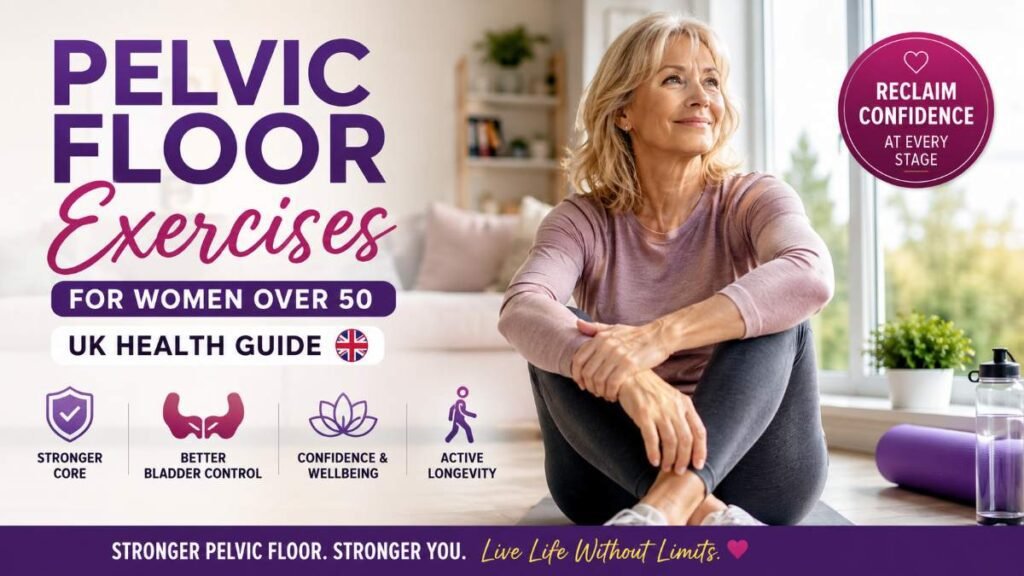
Did you know nearly 1 in 3 UK women over 50 secretly struggle with pelvic floor dysfunction? It starts with a tiny leak or a sudden “urge” that ruins your sleep, yet remains a taboo topic in 2026.
This Pelvic Floor Exercises for Women Over 50 guide is here to shatter the stigma. Whether it’s menopause or core instability, strengthening these hidden muscles is the ultimate longevity “Biohack.” Stop just “squeezing”—reclaim your physical confidence and bladder health with our medical-backed, life-changing approach today!
🧬The Anatomy of Aging: Why the Pelvic Floor Weakens After 50 🧬
The pelvic floor is a sophisticated “hammock” of muscles that supports your bladder, uterus, and bowel. As UK women cross the 50-year milestone, the natural decline in estrogen—the hormone responsible for muscle elasticity—can cause this hammock to sag. This Pelvic Floor Exercises for Women Over 50: UK Health Guide recognizes that post-menopausal atrophy isn’t just a lifestyle inconvenience; it’s a physiological shift that requires targeted intervention.
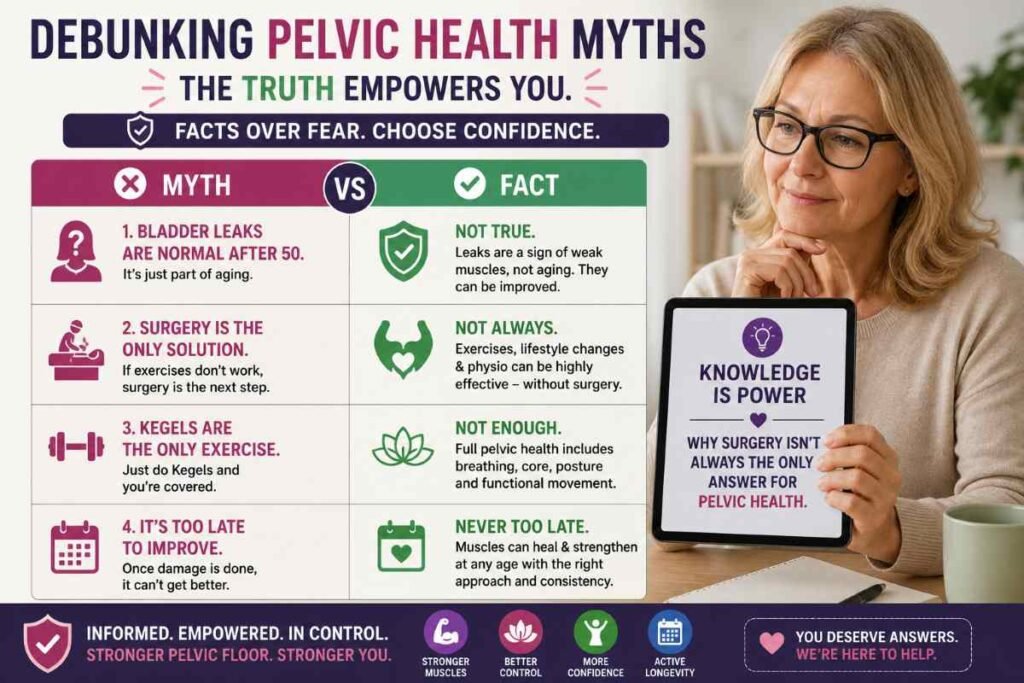
When these muscles lose their “snap,” the result is often Stress Incontinence or, in more advanced cases, Pelvic Organ Prolapse (POP). According to NCBI research, muscle mass decreases by roughly 1-2% annually after 50, but the pelvic floor often bears the brunt due to previous pregnancies or chronic urban stress. Understanding that this is a biomechanical issue, and not a “sign of getting old,” is the first step toward effective recovery and simple healthy living tips.
📊 Diagnostic Table: Recognizing Your Pelvic Strength
Symptom | Severity Level | Recommended Action |
Leakage when coughing/sneezing | Mild (Stress Incontinence) | Targeted Kegel Endurance Training |
Frequent sudden “Urge” to go | Moderate (Urge Incontinence) | Bladder Retraining & Quick Flicks |
Feeling of heaviness or “dragging” | Serious (Potential Prolapse) | Clinical Assessment + Grade 3 Exercises |
Lower back pain with core weakness | General | Integrated Pelvic-Core Workouts |
🇬🇧The "Squeezy" Protocol: Precision Movements for UK Women
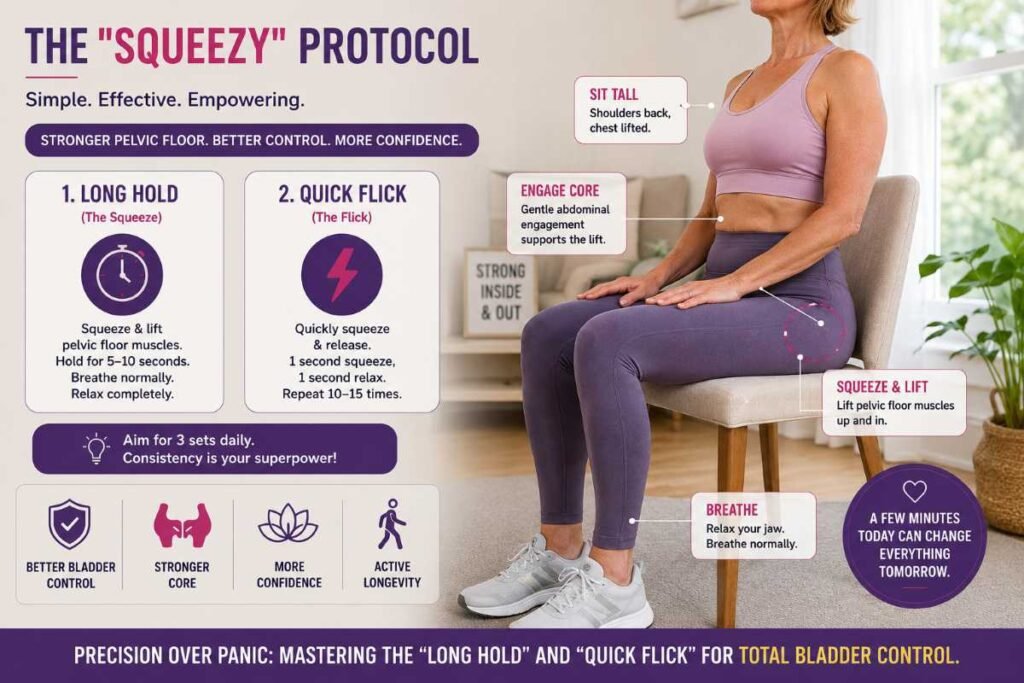
The most common mistake women make is “panic squeezing.” To get results, you need a protocol that targets both “Fast Twitch” (for coughs) and “Slow Twitch” (for endurance) fibers. This Pelvic Floor Exercises for Women Over 50: UK Health Guide recommends a structured approach often advocated by the NHS (National Health Service).
- The Long Hold (Endurance): Squeeze the muscles as if you are trying to stop passing wind and urine at the same time. Hold for 10 seconds, then relax for 10. Repeat 10 times.
- The Quick Flick (Power): Squeeze as hard as you can for 1 second and release immediately. This trains the “reflex” needed when you sneeze.
For those who find floor exercises difficult, integrating these into chair exercises for love handles after 60 is a perfect way to build a routine without putting pressure on the joints.
🧠 Mind-Body Connection: The Vagus Nerve and Pelvic Health
There is a profound neurological link between your stress levels and your pelvic floor tension. Often, women over 50 hold “unconscious stress” in their pelvis, leading to a “Hypertonic” (overly tight) floor, which is just as problematic as a weak one. This Pelvic Floor Exercises for Women Over 50: UK Health Guide suggests that relaxation is as vital as contraction.
Engaging your diaphragm through deep belly breathing directly communicates with the pelvic bowl. By practicing vagus nerve exercises, you can help lower the systemic “fight or flight” response that causes pelvic tension. When the nervous system is calm, the pelvic floor can function rhythmically—contracting and relaxing as intended—rather than being stuck in a state of chronic bracing.
🍏Dietary Support: Nutrients that Strengthen Muscle Elasticity
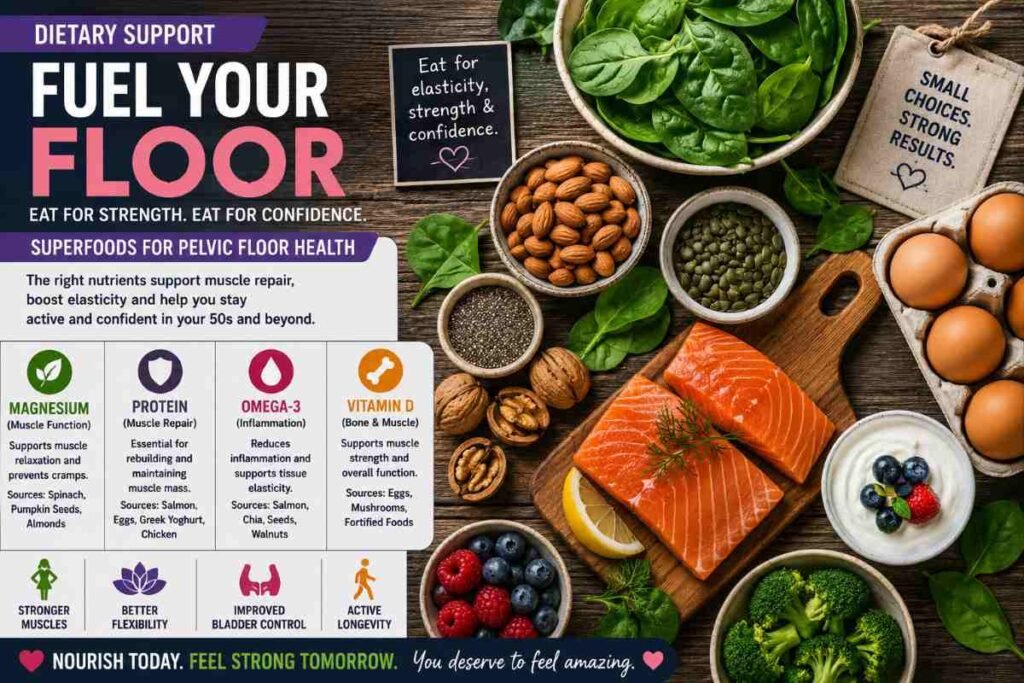
Exercise alone cannot fix a tissue problem if the “building blocks” are missing. To maximize the effectiveness of this Pelvic Floor Exercises for Women Over 50: UK Health Guide, your nutrition must support collagen synthesis and muscle repair. After 50, your protein requirements actually increase to combat Sarcopenia (muscle loss).
Focus on magnesium-rich foods to prevent muscle spasms and high-quality proteins to maintain the “hammock’s” integrity. Following a balanced diet and healthy eating guide in the UK ensures that you are getting the micronutrients necessary for tissue repair. Additionally, managing your gut health is crucial; chronic constipation is the “number one enemy” of the pelvic floor, as the constant straining can permanently stretch and weaken the support ligaments.
🧪 Biohacking the Pelvic Floor: Tech and Tools in 2026
The UK wellness market in 2026 has seen a surge in “Fem-Tech” designed to help women master their exercises. This Pelvic Floor Exercises for Women Over 50: UK Health Guide wouldn’t be complete without mentioning biofeedback devices like the Elvie or Perifit. These devices connect to your smartphone and act as a “personal trainer” for your hidden muscles.
Using biofeedback ensures you are using the correct muscles rather than just clenching your glutes or holding your breath. For women over 50, these tools provide the visual proof that the exercises are working, which is vital for long-term consistency. Even WHO (World Health Organization) recognizes that technological aids for healthy aging are key to maintaining independence in later life.
🗓️ A Weekly Routine: Your 7-Day Pelvic Restoration Plan
Building consistency is harder than the exercise itself. Use this structured sheet from our Pelvic Floor Exercises for Women Over 50: UK Health Guide to track your progress:
- Monday/Wednesday/Friday: Focus on The Long Hold (3 sets of 10).
- Tuesday/Thursday: Focus on The Quick Flick (3 sets of 15).
- Saturday: Mindful relaxation and deep diaphragmatic breathing.
- Sunday: Active recovery (A gentle 30-minute walk).
Remember, consistency is more important than intensity. Over-exercising can lead to muscle fatigue, so always ensure you have a “rest day” for the muscles to recover. If you are already doing walking for weight loss, try to engage your pelvic floor for 10% of your walk to build functional strength.
🌸 The Menopause Connection: Estrogen and Tissue Elasticity
Understanding the hormonal landscape is crucial for any Pelvic Floor Exercises for Women Over 50: UK Health Guide. After 50, the sharp decline in circulating estrogen significantly impacts the urogenital tissues. Estrogen is the “glue” that keeps your pelvic tissues hydrated and elastic. When levels drop, the vaginal and urethral linings become thinner and more brittle—a condition known as Genitourinary Syndrome of Menopause (GSM).
This section of our guide emphasizes that exercises alone may feel like an uphill battle if the tissue quality isn’t addressed. Many UK specialists now recommend a “Dual-Action” approach: combining targeted pelvic floor contractions with prescribed topical estrogen creams (if suitable) to restore tissue thickness. By improving the local environment, your muscle fibers can respond more effectively to the Squeezy Protocol. For women over 50, acknowledging this hormonal shift is not about “medicalizing” aging; it’s about giving your muscles the hormonal support they need to maintain their structural “snap” and prevent long-term atrophy.
🏃♀️ Impact and Intensity: Navigating High-Impact Exercise Safely
Many women in the UK stop running or attending HIIT classes after 50 due to “fear of leaking.” However, this Pelvic Floor Exercises for Women Over 50: UK Health Guide advocates for “Safe Progression” rather than total avoidance. The key to returning to high-impact activity is the “The Knack”—a well-timed, pre-emptive pelvic floor contraction performed right before a jump, cough, or lift. This technique stabilizes the pelvic organs against sudden intra-abdominal pressure.
In 2026, the trend has shifted toward “Pelvic-Integrated Loading.” Instead of just doing isolated Kegels, we integrate them into functional movements like squats or lunges. This trains the pelvic floor to work in harmony with the glutes and core. If you are engaging in walking for weight loss, try incorporating “Power Squeezes” every 5 minutes of your walk. This functional training ensures that your foundation is strong enough to handle real-world movements, allowing you to stay active in your 50s and 60s without the constant anxiety of a “wardrobe malfunction” or the need for bulky pads.
🧘♀️The Posture-Pelvis Link: How Your Alignment Affects Strength
One of the most overlooked aspects of this Pelvic Floor Exercises for Women Over 50: UK Health Guide is the role of spinal alignment. In the UK, many office-based professionals over 50 suffer from “Tucked Pelvis” syndrome due to prolonged sitting. When you slump or tuck your tailbone, your pelvic floor muscles are put in a shortened, disadvantaged position where they cannot contract effectively. Conversely, an excessive lower back arch (anterior tilt) stretches the muscles too thin.
To optimize your pelvic strength, you must master the “Neutral Pelvis.” Imagine your pelvis is a bowl of water; you don’t want it tipping forward or backward. Maintaining a neutral spine while performing your “Long Holds” allows the diaphragm and pelvic floor to move like a piston in perfect synchronization. Proper posture acts as a constant, passive exercise for your internal support system. By simply adjusting your sitting habits and focusing on chair exercises for love handles after 60, you create a postural environment that supports, rather than hinders, your pelvic restoration journey.
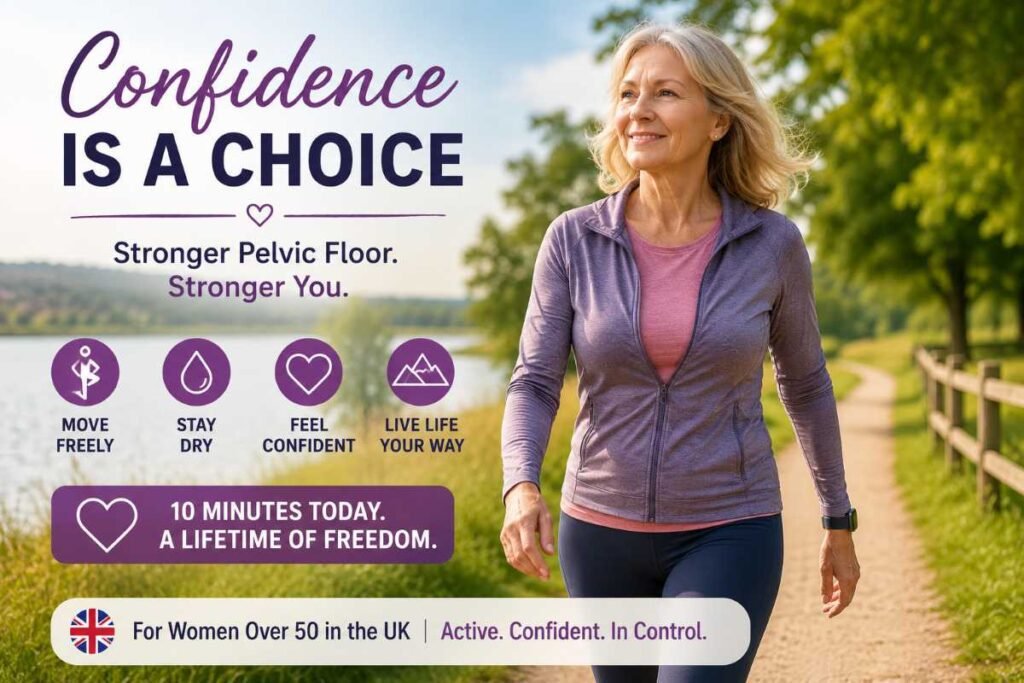
🏁 Conclusion: Confidence is a Choice
Mastering your internal strength isn’t just about avoiding a “medical issue”; it’s about maintaining the quality of your life. This Pelvic Floor Exercises for Women Over 50: UK Health Guide is your roadmap to a more confident, active, and dry future. You don’t have to accept leakage or discomfort as an “inevitable” part of aging in the UK. With 10 minutes of daily focus, you can support your body’s foundation and continue enjoying your favorite activities—from yoga to hiking—without a second thought.
Your next step? Start your first set of “Long Holds” right now as you finish reading this. Your future self will thank you for the 2 minutes of effort you put in today.
❓ Frequently Asked Questions
Q1: How long before I see results? According to the NHS guidelines, most women following these Pelvic Floor Exercises for Women Over 50 notice a significant improvement in bladder control within 3 to 5 months of daily practice.
Q2: Can I do these while sitting at my desk? Yes! This Pelvic Floor Exercises for Women Over 50: UK Health Guide recommends “Invisible Training.” No one will know you are exercising while you are on a Zoom call or traveling on the Tube.
Q3: Are these exercises helpful for post-workout leaks? Absolutely. If you are following a home workout for fat loss, performing your Pelvic Floor Exercises for Women Over 50 “Squeezes” before lifting or jumping can prevent high-impact leakage.
✍️👤 About the Author
Dambar R. is a dedicated wellness researcher and the visionary founder of MyHealthyLifeUK. With over a decade of hands-on experience in metabolic science and practical nutrition, he specializes in creating sustainable health transformations for modern lifestyles.
Based on his extensive research, Dambar empowers individuals across the UK and USA to reach their peak fitness goals through science-backed health tips without sacrificing the joy of everyday eating. His mission is to bridge the gap between complex health data and actionable habits that foster long-term vitality and holistic wellness.
⚠️ Medical Disclaimer
The information provided on MyHealthyLifeUK is for educational and informational purposes only. It is not intended to be a substitute for professional medical advice, diagnosis, or treatment.
- Professional Guidance: Always seek the advice of your Physician (GP) or another qualified health provider regarding any medical condition.
- Specialized Advice: For personalized dietary needs, we recommend consulting a Registered Dietitian.
- Safety First: Consult a professional before starting any new fitness or nutrition program.
Never disregard professional medical advice or delay seeking it because of something you have read on this website.