
It starts with a small, unexpected leak when you sneeze. Then, you find yourself laughing a little less in public, fearing the consequences of a genuine burst of joy. Eventually, you quietly start avoiding long walks or social gatherings altogether. Most people don’t lack energy—they ignore the signals telling them how to use it. For UK women over 50, that signal often comes from a “tiny leak” or a sudden drop in social confidence. While we obsess over visible muscles, your true biological foundation resides where it cannot be seen. In 2026, silence is no longer an option. This isn’t just another list of “kegels”; it’s a radical, tech-driven shift. This pelvic floor biohacking for women over 50 (UK Guide) is the missing longevity piece to staying active, dry, and unstoppable.
🧬 Why Your 40s and 50s Demand a Shift in Pelvic Strength
Traditional healthcare advice often stalls at basic pelvic contractions. However, after 50, the biological reality of a woman undergoes a profound transformation. As Estrogen levels decline during menopause, the collagen density—the “biological glue” that keeps your tissues bouncy—begins to disappear. According to clinical physiotherapy research, this hormonal shift leads to urogenital atrophy, meaning your internal support system literally loses its structural “snap.”
This is a structural shift that requires more than a “squeeze-and-release” approach. If you rely on 20-year-old advice, you are trying to solve a 2026 problem with 1990s tools. Implementing a proper pelvic floor biohacking for women over 50 (UK Guide) treats the body as a high-performance system. We must move beyond isolated contractions and look toward pressure management and cellular repair. In our active social lives, a weak foundation can lead to “social withdrawal.” Advanced pelvic training allows us to reclaim that space using evidence-based techniques.
⚠️ Symptoms of a Weak Pelvic Floor After 50
Before we dive into the fix, we must identify the “silent whispers” of a weakening foundation. Many women ignore these signs, thinking they are just an “inevitable” part of aging. UK pelvic health specialists increasingly point out that optimizing your inner core health after 50 is about listening to these early warning signals:
- Stress Incontinence: A small leak when you cough, sneeze, or lift a heavy bag of groceries.
- Urgency (Overactive Bladder): That sudden, overwhelming need to find a toilet right now, even if your bladder isn’t full.
- Pelvic Organ Prolapse (POP) Signs: A feeling of “dragging,” heaviness, or pressure in the lower pelvic area, often worse at the end of the day.
- Lower Back and Hip Instability: Surprisingly, a weak foundation often forces the back and hips to overwork, leading to chronic aches that don’t respond to traditional massage.
- Sexual Dysfunction: A loss of sensation or discomfort during intimacy, often linked to tissue thinning and muscle weakness.
Think of it like a dashboard light in your car; it’s a signal that the engine needs specific high-performance fuel and tuning, not just a patch-up job.
⚙️The Science of "Core Pressure" and Foundation Stability
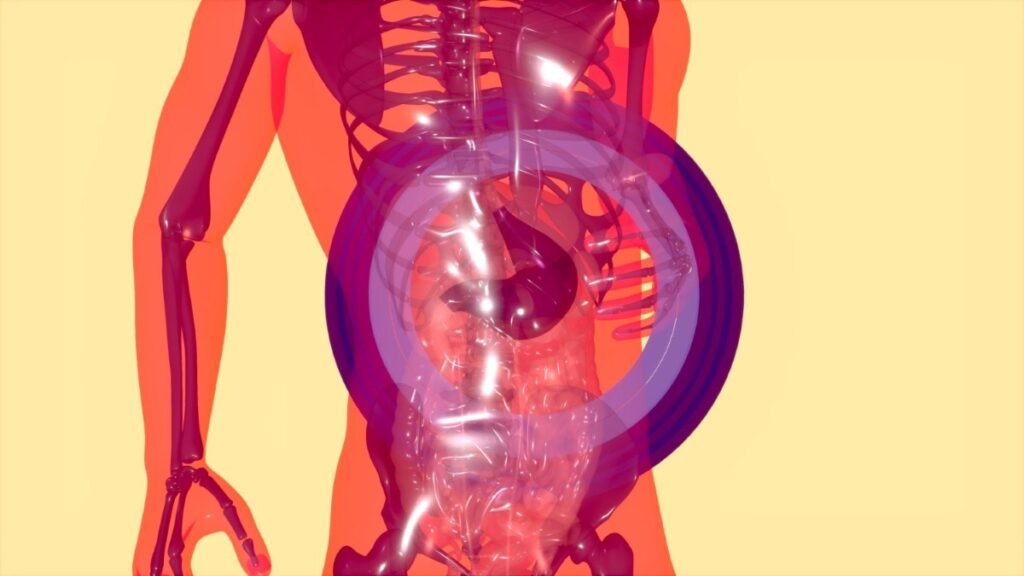
To master your foundation, you must view your torso as a pressure-regulated chamber. Imagine a plastic bottle of water; if you squeeze the middle, the pressure has to go somewhere—either up into the throat or down against the base. This is called intra-abdominal pressure management (the pressure that builds inside the abdomen when you cough, laugh, or lift weights).
The Core Pressure System
Element | Role in Biohacking | Simple Explanation |
Diaphragm | The Pressure Regulator | The muscle under your ribs that moves when you breathe. |
Deep Transverse | The Biological Corset | Internal muscles that wrap around your waist like a belt. |
Pelvic Floor | The Foundation | The “hammock” at the bottom that catches the pressure. |
Multifidus | The Posterior Supporter | Small muscles in your spine that keep you upright. |
A professional routine for pelvic floor biohacking for women over 50 (UK Guide) coordinates your breath with your movement. If you hold your breath while lifting, the pressure “balloons” the pelvic floor downwards, causing micro-trauma over time. Data-driven methods train you to exhale on effort, creating an internal lift that protects your organs and maintains structural integrity.
🚫Why Kegels Are Not Enough for Pelvic Floor Recovery
For years, we were told to “do your Kegels” like it was a magic pill. But here is the secret: a “tight” muscle is not necessarily a “strong” muscle. Many women actually have an overactive or hypertonic floor—meaning the muscles are constantly clenched like a tight fist due to stress or compensation.
Doing more Kegels on a muscle that won’t relax is like trying to lift weights with a cramped arm; it only increases the tension and worsens the symptoms of urgency and pain.
Sensory-Motor Mapping
In our focus on sensory-motor mapping, we re-teach your brain how to “find” and “feel” these hidden muscles. After years of sedentary work or postural neglect, the brain often “mutes” the neurological signals to the pelvic region—a phenomenon known as “sensory-motor amnesia.” This modern approach uses tactile feedback—like sitting on a textured ball or using biofeedback—to “remind” your nervous system that these muscles need to move through their full range of motion.
📱Biohacking Tools: The 2026 Tech Stack for Pelvic Health
We are living in an era where technology provides real-time feedback on muscles we cannot see. For a sophisticated approach to pelvic floor biohacking for women over 50 (UK Guide), consider these emerging trends that remove the guesswork:
- Biofeedback Trainers: Elvie (a UK-based pioneer) and Perifit connect to your smartphone and turn exercises into a game. If you’re unsure whether you’re activating correctly, these tools provide visual proof.
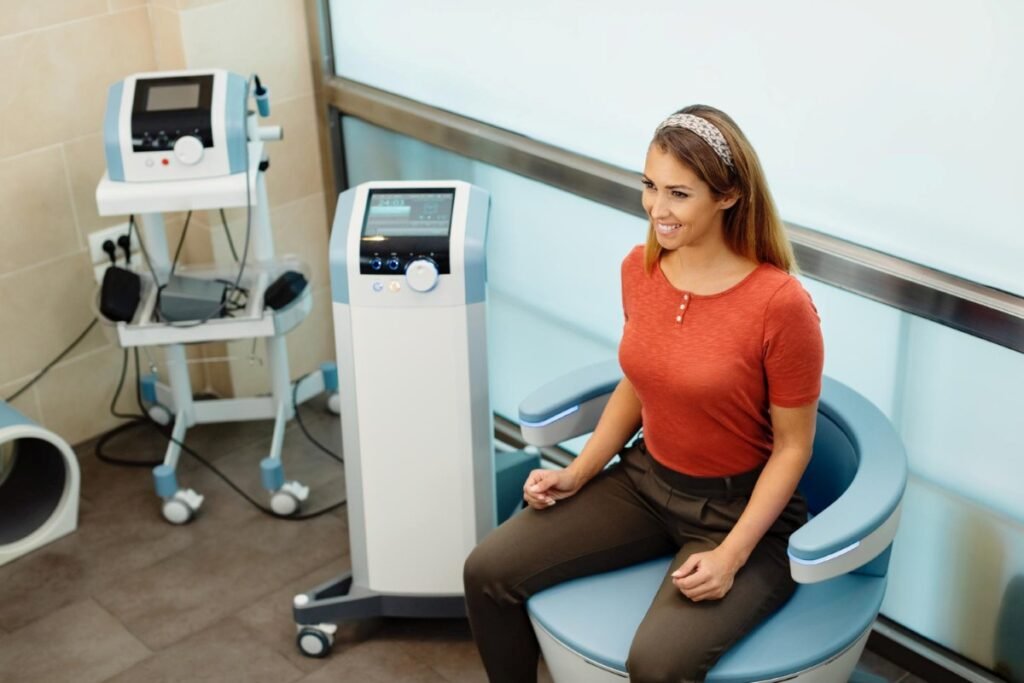
- Magnetic Resonance Therapy (HIFEM): Advanced electromagnetic chairs, such as the Emsella, are now available in London and Manchester clinics. These use high-intensity focused electromagnetic energy to stimulate 11,000 supramaximal contractions in 28 minutes.
- Smart Textiles and Wearables: Emerging 2026 tech includes leggings with embedded sensors that track muscle fatigue and moisture levels.
- Vibration Platforms: Low-frequency localized vibration is being used by UK practitioners to “wake up” dormant nerves in the pelvic region.
Best Pelvic Floor Devices & Products (UK/USA Recommended)
Device | Type | Key Benefit |
Elvie Trainer | Biofeedback | Best for real-time tracking and gamified workouts. |
Perifit | Biofeedback | High-intensity training with multiple sensors for accuracy. |
Emsella Chair | Clinical | Best for deep muscle stimulation without exercise. |
Squatty Potty | Accessory | Essential for proper alignment and pressure-free bowel movements. |
🌿 Hormonal Synergy: Estrogen and Internal Tissue Resilience
You cannot talk about the foundation after 50 without addressing the “Estrogen Gap.” Pelvic tissues, including the bladder and urethra, are densely packed with estrogen receptors. When these levels drop during the menopausal transition, the tissue becomes thin, dry, and loses its “snap.”
A truly advanced pelvic floor biohacking for women over 50 (UK Guide) strategy requires a multi-pronged approach. First, consult a UK menopause specialist or GP about localized estrogen treatments. Second, integrate longevity nutrients like Spermidine or high-quality Marine Collagen peptides. This synergy ensures the internal environment is “primed” so that your physical exercises actually yield results.
🌬️The "Breath-Motion" Connection in Pelvic Longevity
A common “Foundation Killer” is the habit of holding your breath during physical exertion—whether you’re lifting a grandchild or a heavy kettlebell. In our UK Pelvic Health Guide, we emphasize the “Blow as you Go” method.
This prevents sudden spikes in internal pressure from damaging the pelvic floor. By syncing your breath, you create an internal lift. While UK practitioners have used traditional methods like “Mula Bandha” for centuries, in 2026, we validate this with real-time ultrasound imaging. This data shows exactly how the foundation elevates and stabilizes during a controlled, pursed-lip exhalation.
🥗 Nutrition for Elasticity and Tissue Repair after 50
What you eat dictates the quality of your “biological fabric.” To support a resilient pelvic floor recovery routine, your diet must prioritize the building blocks of fascia, ligaments, and muscle fibers:
- Vitamin C & Proline: These are the essential “engineers” of collagen synthesis. Think British berries, citrus, and slow-cooked bone broths.
- Magnesium Glycinate: Crucial for preventing pelvic muscle spasms and aiding relaxation in “clenched” or hypertonic floors.
- Omega-3 Fatty Acids: High doses of EPA/DHA help dampen the chronic “Inflammaging” that degrades pelvic tissue over time.
- Strategic Hydration: London’s hard water may need filtering and re-mineralizing with trace minerals for better cellular absorption.

❌ 5 Common Mistakes in Your Strengthening Routine
Even with the best intentions, certain “old school” habits can sabotage your progress:
- Chronic Over-Tensing: Keeping your “abs tight” all day creates a pressure cooker effect. Relaxation is 50% of the muscle’s functional cycle.
- The “Stop-Flow” Practice: Never practice your contractions while actually urinating. This confuses the brain’s signals and causes UTIs.
- The Valsalva Maneuver: Straining or “bearing down” while lifting is the enemy of foundation longevity.
- Inconsistency: These are endurance muscles. Daily 2-minute “micro-doses” are far more effective than weekly long sessions.
Neglecting the Back and Hips: Your lower back, glutes, and pelvic floor are sisters. If your hips are stiff, your floor cannot function.
🌦️ Seasonal Adjustments for the UK Climate
The British climate has a direct, often overlooked impact on foundation health. During damp, cold UK winters, the body’s natural reaction is to “huddle” and tense up, leading to chronic clenching of the pelvic muscles.
- Winter Focus: Prioritize “Therapeutic Warmth.” Epsom salt baths provide magnesium through the skin, helping to relax a cold, tight foundation.
- Summer Focus: Electrolyte balance is the priority. Dehydration-induced muscle cramping can lead to sudden “urgency” leaks.
🦠The Gut-Floor Axis and Deep Physical Longevity
In modern longevity science, the gut and the floor are inseparable. Chronic constipation is the “silent killer” of pelvic health. Straining on the toilet is like hitting your foundation with a biological sledgehammer every morning.
Integrating gut health into your pelvic floor biohacking for women over 50 (UK Guide) is a non-negotiable prerequisite. Utilizing a squatting stool (like the Squatty Potty) to align the colon and increasing intake of British pre-biotic fibers (like Scottish oats) can save your pelvic floor from unnecessary downward pressure.
⏱️ Daily 5-Minute Protocol to Strengthen Your Foundation Fast
Consistency is the ultimate currency of health. Follow this 2026 protocol daily to see results in 8-12 weeks:
- Morning Elevation (2 Mins): While your tea brews, stand tall with soft knees. As you exhale, imagine lifting a “biological elevator” from the base of your spine.
- The Effort Exhale (1 Min): Every time you stand up from your chair today, exhale through pursed lips and feel the internal lift.
- The 90/90 Relaxation (2 Mins): Before bed, lie on the floor with your legs up at a 90-degree angle. This uses gravity to move fluid away from the pelvis and allows the muscles to reset.
❓Frequently Asked Questions – Pelvic Health After 50
- What is the fastest way to strengthen the pelvic floor after 50? The most efficient method is combining Resonance Frequency Breathing with coordinated contractions.
- Are Kegels enough to fix bladder leaks during menopause? Often, no. Issues are frequently caused by Hypertonicity (muscles being too tight) or tissue thinning. Relaxation training is often more crucial.
- Can NMN supplements actually improve pelvic tissue health? Emerging 2026 research suggests NMN boosts NAD+ levels, which are essential for DNA repair and maintaining collagen density.
- How does gut health affect my foundation? Chronic constipation creates massive downward pressure. A Gut Health protocol removes this daily stressor.
- How long until I see results? While neurological awareness improves in days, structural tissue change typically takes 8 to 12 weeks of consistent sessions.
🏁Summary: Reclaiming Your Power
Engaging in this journey is more than just a physical routine; it is a “Thank You” note to the body that has carried you for five decades. Whether your foundation navigated the stresses of childbirth or a high-pressure career, it deserves a dedicated recovery strategy.
Now, in 2026, we have the tools to reverse what was once considered an “inevitable” decline. This pelvic floor biohacking for women over 50 (UK Guide) allows you to “Level Up” your longevity. It is about thriving with the strength to laugh, jump, and live without a second thought.

✍️ About the Author
Dambar R. is a dedicated wellness researcher and the visionary founder of MyHealthyLifeUK. With over a decade of hands-on experience in metabolic science and practical nutrition, he specializes in creating sustainable health transformations for modern lifestyles.
Based on his extensive research, Dambar empowers individuals across the UK and USA to reach their peak fitness goals through science-backed health tips without sacrificing the joy of everyday eating. His mission is to bridge the gap between complex health data and actionable habits that foster long-term vitality and holistic wellness.
⚠️ Medical Disclaimer
The information provided on MyHealthyLifeUK is for educational and informational purposes only. It is not intended to be a substitute for professional medical advice, diagnosis, or treatment.
- Professional Guidance: Always seek the advice of your Physician (GP) or another qualified health provider regarding any medical condition.
- Specialized Advice: For personalized dietary needs, we recommend consulting a Registered Dietitian.
- Safety First: Consult a professional before starting any new fitness or nutrition program.
Never disregard professional medical advice or delay seeking it because of something you have read on this website.