
Your Mindfulness Blueprint

In the fast-paced, often rain-soaked reality of life in Great Britain, finding a moment of genuine calm can feel like a luxury. From the frantic morning commute on the London Underground to the high-pressure environments of our city offices, stress has become a national epidemic. However, a Complete Mindfulness Guide for Beginners UK offers a scientifically-backed escape route. Mindfulness isn’t about sitting on a mountain top; it’s about grounding yourself in the present moment, right here in the UK, whether you’re in a busy terrace house or a quiet corner of the Lake District. This practice allows us to step away from the “autopilot” mode that many of us fall into during our daily grind.
🧘What is Mindfulness?
Mindfulness is the natural ability to be fully present, aware of where we are and what we’re doing, without being overly reactive or overwhelmed by our surroundings. In a UK context, it involves observing thoughts and sensations with non-judgemental curiosity to reduce stress and improve mental clarity.
🧠The Science of Mindfulness: Rewiring the British Brain
The beauty of mindfulness lies in its biological impact, moving far beyond “woo-woo” philosophy into hard clinical science. Leading institutions like the Oxford Mindfulness Foundation have proven that consistent practice physically alters the brain’s structure through neuroplasticity. By following a Complete Mindfulness Guide for Beginners UK, you are effectively training your amygdala—the brain’s “alarm system”—to be less reactive to daily stressors like traffic jams or work emails.
Furthermore, research shows a significant decrease in cortisol levels among practitioners, which is vital for long-term health in our high-adrenaline society. The National Health Service (NHS) has officially recognised these benefits, often recommending Mindfulness-Based Cognitive Therapy (MBCT) as a primary treatment for recurrent depression. By engaging in these exercises, you increase the grey matter density in the prefrontal cortex, the area responsible for focus, decision-making, and emotional regulation, providing a mental “buffer” against the chaos of modern life.

🔍 Mindfulness vs. Meditation: Clearing the Confusion
Many Brits use these terms interchangeably, but understanding the distinction is crucial for any Complete Mindfulness Guide for Beginners UK. Think of mindfulness as a “quality of being” or a state of awareness that you can carry with you throughout the day, whereas meditation is the formal “gym session” for your mind. While you might dedicate 20 minutes to seated meditation in the morning, mindfulness is what you practice when you are stuck in a queue at the Post Office or washing up after dinner.
Feature Mindfulness Meditation
Definition Awareness of the present moment. A dedicated practice/exercise.
Setting Anywhere (Supermarket, Bus, Shower). Usually a quiet, seated space.
Duration Constant, micro-moments. Usually 10–30 minutes.
Goal To live consciously. To train the mind’s focus.
Meditation provides the deep-dive training, but mindfulness is the practical application. For a beginner in the UK, starting with mindfulness is often easier because it doesn’t require extra time in an already packed schedule. It simply requires a change in how you pay attention to the things you are already doing, making it a highly accessible tool for everyone from students to retirees.
🏡Setting the Scene: Practising Mindfulness in the UK
You don’t need a Zen garden or a dedicated yoga studio to start your journey. In the UK, we often deal with cramped flats, noisy neighbours, and the constant hum of urban life, but that shouldn’t stop you. This Complete Mindfulness Guide for Beginners UK encourages you to work with your environment, not against it. Real-life mindfulness isn’t about finding absolute silence; it’s about finding peace within the noise.
- Find Your Nook: It could be a specific chair in your lounge, a spot on a park bench during your lunch break, or even your seat on the National Rail.
- Comfort is King: Our British weather is notoriously chilly; don’t be afraid to grab a cosy woollen blanket or wear your favourite thick socks. Physical comfort helps the mind settle much faster.
- Environmental Acceptance: If you hear a siren or a neighbour’s dog, don’t get frustrated. Simply acknowledge the sound as “vibration” and return to your focus.
- Digital Boundaries: In our hyper-connected culture, 10 minutes of ‘Do Not Disturb’ mode is a radical act of self-care that allows your nervous system to reset.
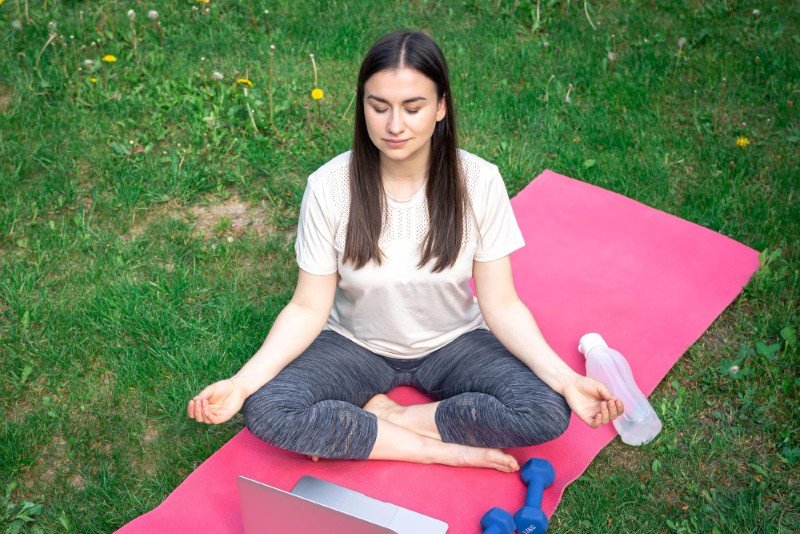
📅 The 7-Day Step-by-Step Roadmap for Beginners
This week-long plan is the heart of the Complete Mindfulness Guide for Beginners UK. It is designed to be manageable, ensuring you build momentum without feeling overwhelmed.
- Take 5–10 minutes to quietly observe your breath as it flows in and out. Focus on the steady, natural flow of your breath as it moves in and out. When your thoughts start to drift—as they naturally will—calmly guide your focus back to your breath without any judgment.
- Lie down comfortably and slowly bring your attention through your body, starting from your toes and moving up toward your head. As you go, notice any tightness or discomfort—like stiffness in your shoulders after a long day—and gently focus your breath on those areas to help them relax.
- Day 3: Mindful Eating. Use your morning tea or “biscuit break.” Notice the texture, the warmth of the mug, and the complex flavours without checking your phone or watching TV.
- Day 4: Mindful Walking. Whether you are walking through a local park or just down the High Street, feel the solid ground beneath your feet and the air moving against your skin.
- Day 5: Observing Thoughts. Imagine your worries as clouds passing over the British countryside. Don’t chase the clouds or try to hide them; just observe them moving across the sky of your mind.
- Day 6: Gratitude Practice. Note three small, specific things you appreciate today—perhaps the smell of fresh rain or a kind word from a colleague.
- Day 7: Full Integration. Try to spend the whole day “checking in” with yourself every hour, asking, “Where is my mind right now?”
🇬🇧Integrating Mindfulness into UK Daily Life
The real test of a Complete Mindfulness Guide for Beginners UK is how it works when life gets messy and unpredictable. It is easy to be mindful in a quiet room, but the true benefit is staying grounded when the Northern Rail is delayed for the third time this week or your local supermarket is out of your favourite “meal deal” items.
Integrating these habits into your British lifestyle doesn’t take extra time; it just takes intention. For example, during your commute, instead of scrolling through toxic social media feeds, try “Sound Note-ing.” Identify five distinct sounds around you—the hum of the engine, a distant conversation, the rustle of a newspaper. Similarly, use the British weather to your advantage. Next time it rains, instead of grumbling, listen to the rhythmic pitter-patter against the window. These micro-moments act as “circuit breakers” for stress, preventing small annoyances from snowballing into a bad day.

⚡Overcoming Common Hurdles for UK Beginners
It is perfectly normal to find this difficult at first, and many people give up because they feel they aren’t “doing it right.” In the UK, we are often conditioned with the “keep calm and carry on” mantra, which sometimes leads to suppressing emotions rather than observing them. This Complete Mindfulness Guide for Beginners UK is about breaking that cycle of suppression.
- “My mind won’t stop”: This is the most common complaint. The goal of mindfulness isn’t to stop thoughts; it’s to change your relationship with them. If you have 1,000 thoughts in 5 minutes, that’s fine—just notice them.
- “I don’t have time”: If you have time to check your phone while the kettle boils, you have time for mindfulness. It’s about quality, not quantity.
- Feeling “Silly”: Many Brits feel a bit self-conscious starting out. Remind yourself that mindfulness is now used by the UK Special Forces, the England Football team, and top CEOs to maintain peak performance and mental clarity.
- Lack of Results: Like going to the gym, you won’t see “abs” after one workout. Give yourself time, and have faith that the process will work.
📚 Resources and NHS Support for Your Journey
The UK is actually a global leader in secular mindfulness resources, meaning there is plenty of support available as you move beyond this Complete Mindfulness Guide for Beginners UK. You’re not required to go through this journey by yourself.
- NHS Every Mind Matters: A brilliant free platform providing tailored “Mind Plan” quizzes and practical advice for daily mental health.
- Oxford Mindfulness Foundation: If you want to dive deeper, they offer world-class MBCT courses that are highly respected internationally.
- Mind UK: The leading mental health charity in England and Wales, with local branches that often host mindfulness groups and workshops.
- The “High Street” Apps: Headspace (founded by Andy Puddicombe , a former monk from Bristol) and Calm offer excellent guided sessions specifically designed for beginners.
- Local Libraries: Many UK councils now stock a wide range of mindfulness books and audiobooks that you can borrow for free.

❓ FAQs: Your Mindfulness Questions Answered
- Do I need to be religious to practice mindfulness?
No. While it has roots in Buddhist philosophy, the mindfulness taught in this guide is entirely secular and science-based.
- How long until I feel “better”?
Most beginners feel a sense of calm after their very first session, but permanent brain changes usually take about 8 weeks of consistent practice.
- Can I practice mindfulness while working?
Absolutely. It actually improves productivity by helping you focus on one task at a time rather than “multi-tasking” poorly.
- Is it okay if I fall asleep during a body scan?
Absolutely—it often means your body was ready for rest. That said, when possible, try to remain gently aware so you can fully experience the practice.
- What is the best time of day for a UK beginner?
Early morning is usually best before the “chaos” of British daily life begins, but right before bed is also excellent for improving sleep quality.
🌿Conclusion: Your Mindfulness Transformation
Mindfulness is not a destination or a “task” to be ticked off a list; it is a way of travelling through life with more ease, compassion, and less stress. By following this Complete Mindfulness Guide for Beginners UK, you have taken the first vital step toward reclaiming your mental space from the noise of the modern world. Whether it’s the sound of the wind, the heat of your morning coffee, or the simple rhythm of your breath, the present moment is always waiting for you. It is the only place where life truly happens—so don’t miss it.

✍️ About the Author
Dambar R. is a dedicated wellness researcher and the visionary founder of MyHealthyLifeUK. With over a decade of hands-on experience in metabolic science and practical nutrition, he specializes in creating sustainable health transformations for modern lifestyles.
Based on his extensive research, Dambar empowers individuals across the UK and USA to reach their peak fitness goals through science-backed health tips without sacrificing the joy of everyday eating. His mission is to bridge the gap between complex health data and actionable habits that foster long-term vitality and holistic wellness.
⚠️ Medical Disclaimer
The information provided on MyHealthyLifeUK is for educational and informational purposes only. It is not intended to be a substitute for professional medical advice, diagnosis, or treatment.
- Professional Guidance: Always seek the advice of your Physician (GP) or another qualified health provider regarding any medical condition.
- Specialized Advice: For personalized dietary needs, we recommend consulting a Registered Dietitian.
- Safety First: Consult a professional before starting any new fitness or nutrition program.
Never disregard professional medical advice or delay seeking it because of something you have read on this website.