
The Gut Revolution: Why 30 is the New Health Standard

For decades, the “5-a-day” mantra was the gold standard of British health. However, as we move through 2026, nutritional science has undergone a significant shift. Modern UK health trends are no longer just about the quantity of fruit and veg, but the diversity of what we consume.
Enter the 30-plant-a-week challenge, a movement backed by leading epidemiologists and nutritionists. This isn’t just another fleeting diet trend; it is a fundamental biological reboot. By hitting this magic number, you are syncing your internal ecosystem with modern longevity standards.
Most people eat the same 15 foods every week—and wonder why their health isn’t improving. Your gut requires a vast range of plant fibers to maintain your immunity and mental clarity. This guide explores how diversifying your plate can transform your well-being from the inside out.
🧪The Science: Why Tim Spector and the American Gut Project Matter
To understand the 30-plant-a-week challenge, we must look at the data. We are referring to findings from the American Gut Project, the world’s largest citizen science microbiome study. Their research was profound: individuals who ate more than 30 different plant foods per week had significantly more diverse gut bacteria than those who ate 10 or fewer.
Professor Tim Spector, a leading genetic epidemiologist at King’s College London, has shown that counting “plant points” is a more comprehensive metric for health than simply counting calories. Diverse bacteria produce short-chain fatty acids (SCFAs) like butyrate, which help strengthen the gut lining.
By increasing your gut microbiome diversity, you are essentially supporting your immune system to be more resilient. Your gut is not just digesting food—it’s controlling your energy, mood, and immunity.
⚠️The Hidden Diet Mistake Impacting British Health
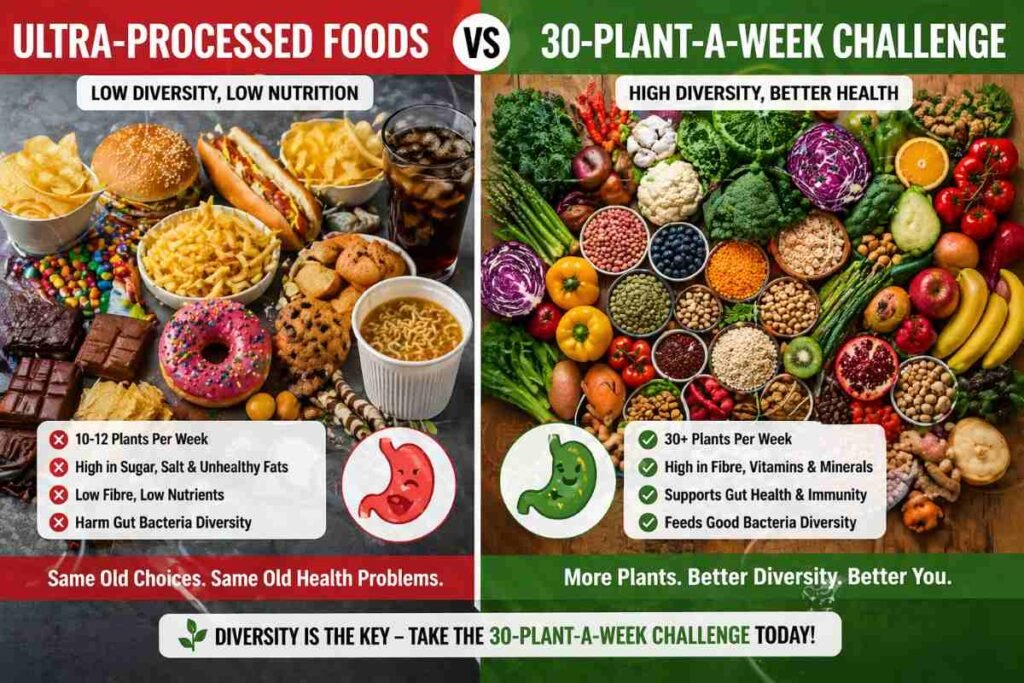
In the UK, the standard diet is often heavily reliant on ultra-processed foods (UPFs). Data suggests that an average British adult gets a large portion of their daily calories from UPFs, where plant diversity is nearly non-existent. Our ancestors likely consumed a much wider variety of plants; today, many UK adults average only 10-12.
This “Diversity Gap” is a primary factor behind the rise in “Brain Fog” and “Chronic Fatigue” reported across the UK. When you feed your gut a monotonous diet—the same loaf of bread, the same variety of potato, and the same type of apple every day—your beneficial bacteria may lack the specific fibers they need to thrive. The 30-plant-a-week challenge encourages you to step outside your routine and introduce varied fibers that act as specialized fuel for your microbiome
📋The Rules: What Actually Counts as a "Plant Point"?
One of the biggest misconceptions about the 30-plant-a-week challenge is that you need to eat 30 different vegetables. In reality, the point system is designed to be inclusive and easy to achieve. Every unique species counts, meaning a single trip to a local UK farmer’s market can help you hit your goal.
- Vegetables & Fruits (1 Point each): Spinach, Blueberries, Kale, Cauliflower, etc.
- Grains & Tubers (1 Point each): Quinoa, Sweet Potato, Buckwheat, Brown Rice.
- Legumes & Pulses (1 Point each): Chickpeas, Lentils, Kidney Beans, Edamame.
- Nuts & Seeds (1 Point each): Walnuts, Chia seeds, Hemp seeds, Flaxseeds.
- Herbs & Spices (1/4 Point each): Turmeric, Cinnamon, Cumin, Star Anise, Basil.
Pro Tip: Variety within a category is a secret weapon for gut microbiome diversity. If you use a “mixed seed” bag instead of just pumpkin seeds, you could jump from 1 point to 4 points in a single sprinkle.
🌍The Global Influence: Incorporating Diverse Pulses in the UK
There is a massive opportunity for diversity that many in the UK miss. To increase your gut microbiome diversity on a budget, look toward a wider variety of pulses and legumes often found in specialist grocery aisles. Unlike a standard “beige” diet, these items are a goldmine of prebiotic diversity.
- The Power of Pulses: Toor dal, Moong dal, Masoor dal, and Chana are all distinct species. Each one adds a new point to your weekly total.
- The Satiety Factor: Studies suggest that fiber-rich diets can significantly reduce cravings and help with weight management.
The Spice Effect: Using a variety of spices daily can add up to 1.5 points per week. By focusing on the 30-plant-a-week challenge through varied pulses, you naturally support hormones that signal fullness, making health goals easier to maintain.

🧠Brain-Gut Connection: Supporting Mental Well-being
We often think of our brain as the primary driver of our health, but the gut is frequently called the “second brain.” There is a direct physical and chemical connection known as the Gut-Brain Axis. By following the 30-plant-a-week challenge, you are directly influencing your internal chemistry.
Research indicates that a significant portion of the body’s serotonin is produced in the gut. A lack of gut microbiome diversity has been linked to higher instances of anxiety among UK adults. By diversifying your plant intake, you support the environment where these mood-regulating chemicals are produced. If you’ve been feeling mentally drained, your dietary variety might be a key factor. Feed the gut, and the mind often follows.
🛒The "Plant Point" Hack: Shopping at Aldi, Lidl, and Tesco
The UK is navigating a cost-of-living crisis, and many assume that a diverse diet is only for those shopping at high-end grocers. However, mastering the 30-plant-a-week challenge on a budget is entirely possible. You don’t need expensive hampers; you need the frozen aisle and bulk sections of your local supermarket.
- Frozen Mixed Veg: A bag of “Mediterranean Veg” or “Mixed Peppers” gives you 4-6 points for a fraction of the price of fresh.
- Canned Beans: Mixed bean salads (stored in water) are an excellent source of gut microbiome diversity points.
- Mixed Seeds: A single bag of “4-seed mix” from budget retailers often counts as 4 separate points.
- Spice Bulk Buy: Purchasing spices like Cumin and Turmeric in larger bags from the world food aisles can save you significant money compared to small glass jars.
📅Action Plan: Mastering the 30-Plant-a-Week Challenge in 4 Weeks
Don’t rush the process; your digestive system needs time to adjust to increased fiber. Gradual progress is the key to sustainable gut microbiome diversity.
- Week 1 (The Baseline): Don’t change your diet yet. Simply track what you currently eat. Most UK adults are surprised to find they average only 10-12 plants.
- Week 2 (The Easy Wins): Focus on seeds and herbs. Adding a sprinkle of mixed seeds to your morning porridge and using three different dried herbs in your evening meal adds points quickly.
- Week 3 (The Supermarket Swap): Switch your standard white pasta for a lentil-based or wholewheat version. This introduces new plant fibers while keeping your meals familiar.
- Week 4 (The 30 Club): This is where you experiment. Pick one vegetable from the supermarket that you have never cooked before—perhaps a celeriac or a fennel bulb.
✨A Relatable Success: From Sluggish to Sharp
Consider Sarah, a London-based professional who suffered from 3 PM energy crashes. When she started the 30-plant-a-week challenge, she didn’t aim for immediate perfection. She simply added mixed seeds to her lunch and swapped white rice for a mix of red lentils and quinoa.
Initially, she experienced some minor bloating, often referred to as a “fiber flush.” However, by the second week, she reported clearer skin and more stable energy levels. Her experience is a practical example of how gut microbiome diversity can act as a natural support for the modern worker.
🧬Advanced Nutrition: Why Polyphenols Matter
Beyond fiber, the 30-plant-a-week challenge emphasizes Polyphenols. These are the compounds responsible for the bright colors in foods like purple cabbage, dark berries, and green tea. They act as fuel for specific beneficial bacteria linked to metabolic health.
By hitting 30 plants, you ensure a wide spectrum of these molecules. This is why a “Rainbow Plate” is a common recommendation for longevity in 2026. Eating a variety of colors isn’t just for aesthetics; it’s a fundamental requirement for your internal biology.
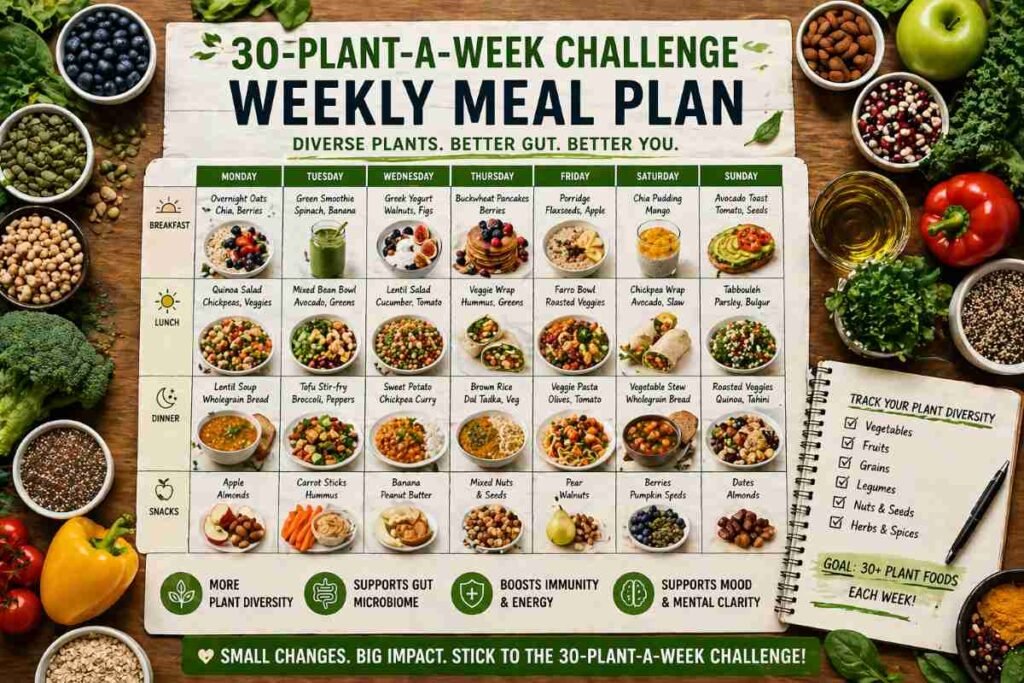
Comprehensive 7-Day Meal Plan: UK Edition
Day | Breakfast | Lunch | Dinner | Points |
Mon | Overnight Oats + Chia + Berries | Mixed Bean Salad + Spinach | Stir-fry: Broccoli + Peppers + Cashews | 5.5 |
Tue | Rye Toast + Avocado + Seeds | Quinoa Bowl + Kale + Roasted Carrots | Red Lentil Soup + Turmeric | 4.25 |
Wed | Greek Yogurt + Walnuts + Figs | Chickpea Salad + Cucumber + Mint | Brown Rice + Tofu + Pak Choi | 5.0 |
Thu | Buckwheat Pancakes + Almonds | Lentil Stew + Wholemeal Roll | Sweet Potato Curry + Spinach | 4.0 |
Fri | Smoothie: Banana + Hemp + Spirulina | Black Bean Wrap + Avocado | Mushroom Risotto + Leeks + Thyme | 4.5 |
Sat | Porridge + Pumpkin Seeds + Pecans | Roast Cauliflower + Hummus | Pearl Barley Stew + Mixed Herbs | 3.75 |
Sun | Poached Eggs + Asparagus + Rye | Tabbouleh: Parsley + Bulgur + Tomato | Roasted Beetroot + Feta + Pistachios | 4.0 |
🚧Common Barriers: Managing the Transition
A common concern for those starting the 30-plant-a-week challenge is mild digestive discomfort. To maintain gut microbiome diversity comfortably, follow these steps:
- Hydrate: Fiber requires water to move through your system efficiently. Increase your water intake as you increase your plant points.
- Cook Your Veg: Raw vegetables can be harder to break down. Steaming or roasting them initially can help your gut adjust.
- Chew Thoroughly: Digestion starts in the mouth. Helping break down those plant cell walls manually can reduce the workload on your gut.
📊The Future: Wearable Tech & Personal Data
As we look toward 2027, the 30-plant-a-week challenge is likely to integrate with wearable technology. We are entering an era where food is viewed as data, and diversity is a primary metric for health tracking. Tracking your gut microbiome diversity today is an excellent way to prepare for the personalized nutrition revolution.
🎯Conclusion: Prioritizing Your Long-Term Health
It is clear that prioritizing gut microbiome diversity through the 30-plant-a-week challenge is a major shift in our understanding of nutrition. You aren’t just “going on a diet”; you are investing in a long-term strategy for your well-being.
Tonight, count how many plants are on your plate. If it’s under 10, your gut may not be getting the variety it needs. Start small, aim for 30, and observe how your body responds to the change.

✍️ About the Author
Dambar R. is a dedicated wellness researcher and the visionary founder of MyHealthyLifeUK. With over a decade of hands-on experience in metabolic science and practical nutrition, he specializes in creating sustainable health transformations for modern lifestyles.
Based on his extensive research, Dambar empowers individuals across the UK and USA to reach their peak fitness goals through science-backed health tips without sacrificing the joy of everyday eating. His mission is to bridge the gap between complex health data and actionable habits that foster long-term vitality and holistic wellness.
⚠️ Medical Disclaimer
The information provided on MyHealthyLifeUK is for educational and informational purposes only. It is not intended to be a substitute for professional medical advice, diagnosis, or treatment.
- Professional Guidance: Always seek the advice of your Physician (GP) or another qualified health provider regarding any medical condition.
- Specialized Advice: For personalized dietary needs, we recommend consulting a Registered Dietitian.
- Safety First: Consult a professional before starting any new fitness or nutrition program.
Never disregard professional medical advice or delay seeking it because of something you have read on this website.