
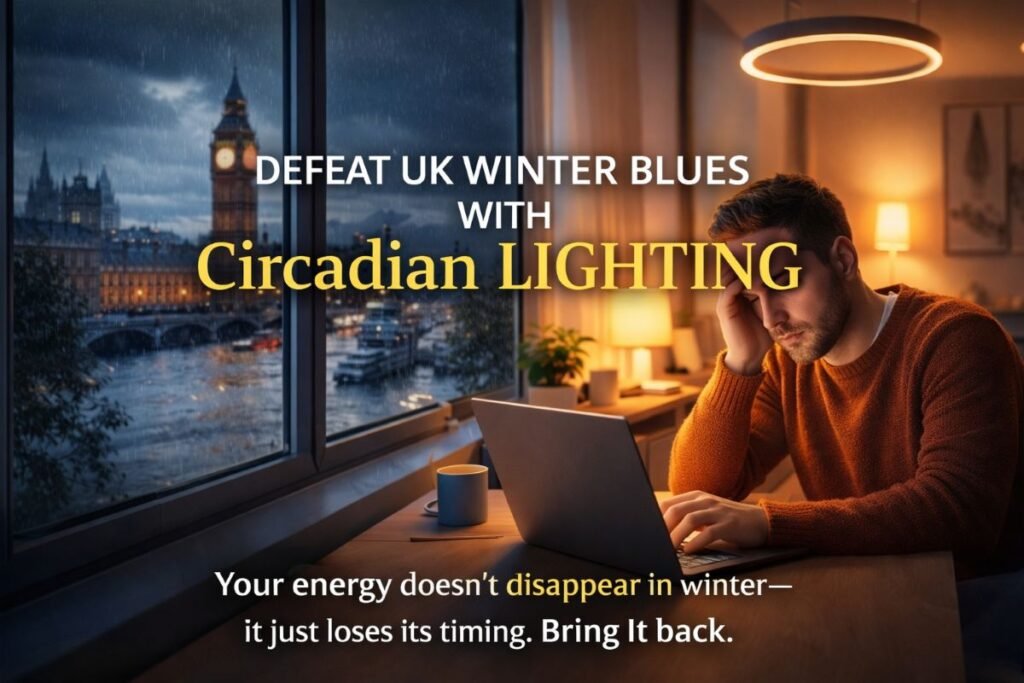
As the clock strikes 4 PM on a rain-slicked London street, a familiar gloom descends. For James, a 34-year-old remote developer in Manchester, this was the moment his brain used to “shut down.” It isn’t just the British weather; it’s a biological glitch. For millions of UK professionals, the winter months bring a profound “energy tax” known as the Winter Blues. But in 2026, the elite are no longer surrendering to the darkness.
They are fighting back with Circadian Lighting. From the tech hubs of Shoreditch to the home offices of the Cotswolds, a new era of biohacking has arrived. This guide isn’t about mere light bulbs; it’s about synchronizing your internal clock with the future of human performance. Your energy doesn’t disappear in winter—it simply gets mistimed. If you’ve ever felt like your brain is in “power-save mode” from November to March, you are about to discover the biological emergency exit.
1. The Great British Darkness: Why Winter Blues Require Circadian Lighting
The UK’s geographical position means that during winter, we are deprived of the specific blue-light wavelengths required to suppress melatonin during the day. This creates a state of “Social Jetlag,” where your body thinks it’s midnight at 4 PM. Understanding Circadian Lighting is the first step in bridging this gap. It isn’t just about brightness; it’s about the spectral composition of the light in your environment.
When your eyes detect the wrong light at the wrong time, your neurotransmitters like Serotonin (the “happy hormone”) crash. In 2026, we’ve moved beyond simple SAD lamps. We are now looking at integrated biological lighting systems that mimic the sun’s natural arc. By using these smart setups to simulate a 10 AM sky inside a London apartment, you can effectively “trick” your brain into maintaining peak alertness, regardless of the grey clouds outside.
2. The Science of the "Master Clock": How Circadian Lighting Controls Your Mood
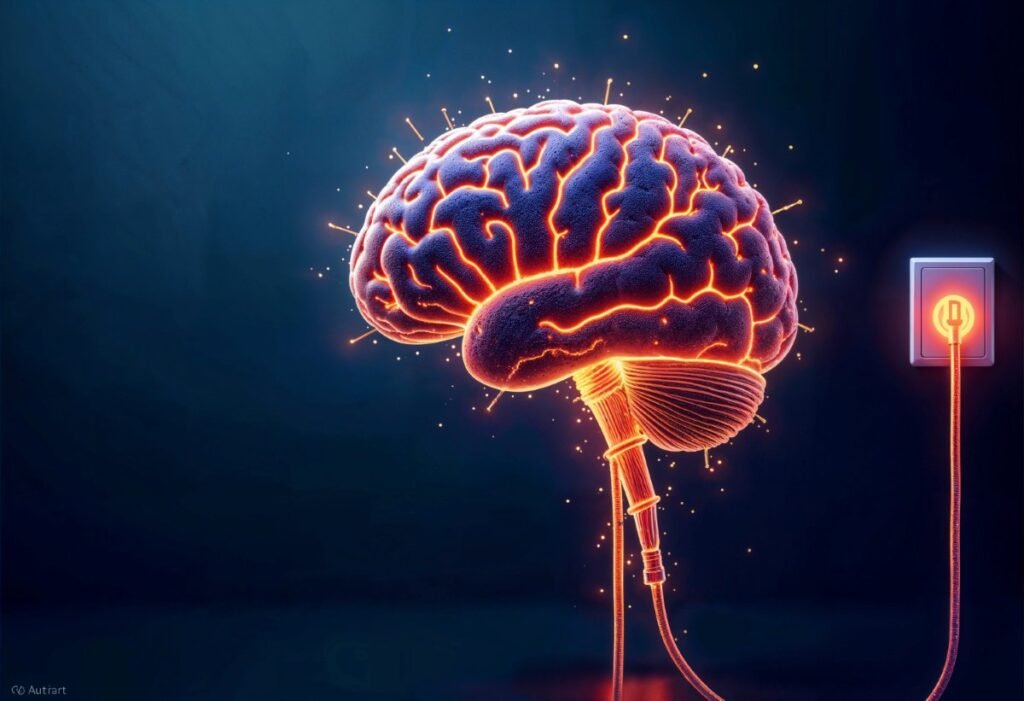
Deep within your brain lies the Suprachiasmatic Nucleus (SCN)—your brain’s internal master clock. This clock is highly sensitive to light. Traditional British indoor lighting is often “static,” meaning it stays the same yellow hue all day. This confuses the SCN, leading to what many call the Winter Blues. Circadian Lighting aims to fix this by providing “dynamic” illumination that changes temperature throughout the day. Studies from leading sleep research institutes suggest that the timing of light exposure is just as important as the intensity.
By using a smart lighting system to deliver high-intensity blue light in the morning, you stop the production of Melatonin, the sleep hormone. This prevents that “groggy” feeling that many UK workers experience during their morning commute. It’s not just a lifestyle choice; it’s a biological necessity for anyone looking to maintain mental resilience in a high-pressure environment.
📊 The 2026 UK Circadian Light Spectrum Chart | Time of Day | Light Temp (Kelvin) | Biological Purpose |
| :— | :— | :— | :— |
| 07:00 – 09:00 | 6500K (Bright Blue) | Cortisol Spike & Alertness | Sunrise Alarm / High-Intensity LED |
| 10:00 – 15:00 | 5000K (Daylight) | Sustained Focus & Productivity | Full-Spectrum Office Lighting |
| 16:00 – 19:00 | 3000K (Warm White) | Serotonin Transition | Dimmable Ambient Lamps |
| 20:00+ | 1800K (Deep Amber) | Melatonin Secretion | Low-Level Floor Lamps (No Overhead) |
3. Beyond SAD Lamps: The 2026 Biohacking Shift to Circadian Lighting
For years, the go-to solution for UK residents was the “SAD Box.” While effective, these were clunky and required you to sit still for 30 minutes. In 2026, the trend has shifted toward integrated Circadian Lighting solutions. These include smart bulbs that automatically shift from blue-heavy light in the morning to amber-rich light in the evening without any manual input.
This shift is crucial for combating the Winter Blues naturally. By creating an indoor sunlight system that breathes with you, you reduce the “Cognitive Load” (mental effort) of managing your health. In the UK, where “Work from Home” is now a standard, your home office lighting is your most powerful productivity tool. Strategic light-based routines ensure that even on the foggiest Manchester morning, your body feels like it’s on a Mediterranean beach.
4. Beating Seasonal Affective Disorder: The Role of Circadian Lighting in Mental Health
Seasonal Affective Disorder (SAD) is a serious condition that affects a significant portion of the British population. While organizations like the NHS provide vital mental health support, many people find that environmental control through Circadian Lighting provides an extra layer of defense. It’s about creating a “Safety Net” for your mood. The Winter Blues often manifest as a lack of motivation and social withdrawal. By using biological lighting to maintain a consistent light-dark cycle, you support your brain’s natural ability to regulate emotion. This is particularly important in 2026, as we face more digital stressors than ever before. A brain that is well-timed is a brain that is resilient to anxiety and burnout.
📈 The 24-Hour Energy Reclaim Schedule (UK Edition) * 08:00 AM [The Activation]: Use a 10,000 Lux Circadian Lighting lamp for 20 minutes while having tea. This signals your brain that the day has officially begun.
- 11:00 AM [The Peak]: Keep your workspace flooded with “Cool White” light to maintain high dopamine levels and focus.
- 03:00 PM [The Buffer]: As the natural UK light fades, boost your smart lighting system to prevent the dreaded afternoon slump.
- 07:00 PM [The Sunset]: Switch all overhead lights to “Warm” tones. This mimics a campfire and starts the “Digital Sunset” process.
- 10:00 PM [The Blackout]: Use only low-level amber lights to protect your Melatonin, preparing you for deep, restorative sleep.
5. Digital Fatigue and Lighting: Protecting Your Brain with Circadian Lighting
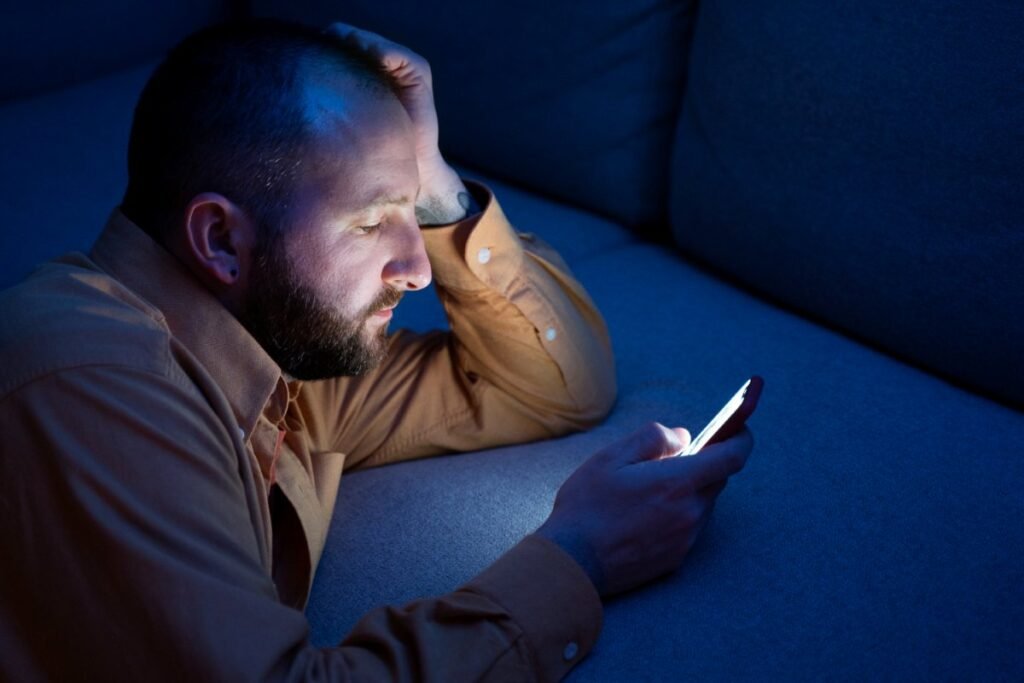
The “Infinite Scroll Trap” is made worse by poor lighting. Most of us stare at blue-light-emitting screens while sitting in dim rooms. This contrast creates immense strain. By implementing Circadian Lighting, you balance the ambient light of your room with the light of your devices. This reduces eye strain and the social anxiety often associated with late-night browsing. In 2026, we’ve realized that our eyes are extensions of our brains.
If you are following a dopamine detox, your light-based routine is your greatest ally. It helps you stay grounded in the “Now” by making your physical surroundings more stimulating than your digital screen. It’s a way to reclaim your attention from the algorithms that thrive on your exhaustion.
6. Longevity and Sleep: Why Your Energy Blueprint Needs Circadian Lighting
Sleep is the cornerstone of longevity, yet it is the first thing we lose during the British winter. Circadian Lighting isn’t just about staying awake; it’s about sleeping deeper. By shielding your eyes from blue light in the evening, you allow your body to perform essential cellular repair. This is a key biohack for anyone looking to maintain a healthy lifestyle in 2026.
When your sleep is optimized through a smart lighting system, every other health goal becomes easier. Your cravings for “comfort foods” during winter decrease, making it easier to stick to a calorie deficit guide for weight loss. You have more energy for analog hobbies and social connections.
7. The App Audit for Your Home: Integrating Circadian Lighting with Smart Tech
By 2026, modern homes have become increasingly intelligent. Just as you perform an “App Audit” on your phone, you should audit the tech in your living space. Circadian Lighting systems can now be synced with your wearable devices. If your Oura ring or Apple Watch detects you didn’t sleep well, your system can automatically provide a “brighter” morning to compensate.
This level of integration is the future of wellness in the UK. By using biological lighting that talks to your health data, you create a personalized ecosystem. This reduces the “mental load” of trying to remember when to turn off the lights, letting you focus on living your best life.
8. Analog Hobbies and Light: Using Circadian Lighting to Reconnect
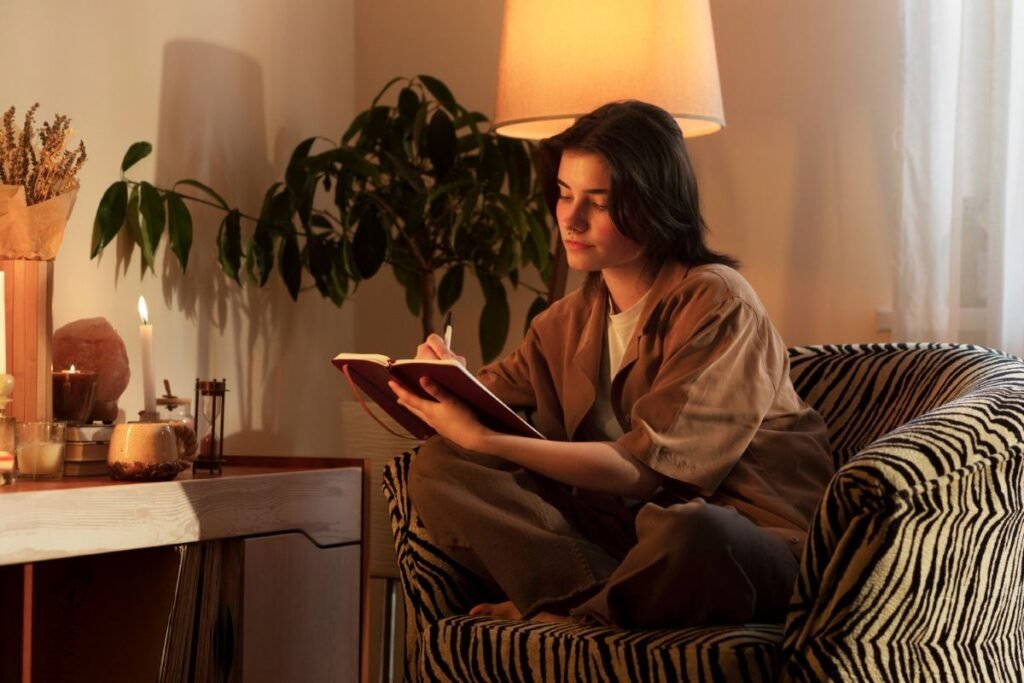
Whether it’s reading a physical book or gardening in a greenhouse, analog hobbies require the right light. Circadian Lighting ensures that your “offline” time is high-quality. In the UK, where we spend 90% of our time indoors during winter, the quality of that indoor time defines our happiness. By choosing a smart lighting system that renders colors naturally (High CRI), you make your physical environment more attractive.
This encourages you to put down the phone and pick up a hobby. It’s about making the real world more vibrant than the digital one. Beating the Winter Blues is often as simple as making your physical reality too beautiful to ignore.
9. The 2026 UK Wellness Mandate: Why Circadian Lighting is a Personal Right
As we move further into the digital age, the Online Safety Act protects us from external harm, but we must protect ourselves from internal biological disruption. Circadian Lighting is our personal mandate for health. In a country where the sun is often a stranger, we must become the masters of our own “Indoor Sun.”
This isn’t just a luxury; it’s a fundamental tool for mental health. By investing in biological lighting, you are investing in your future self. As the UK faces the challenges of 2026, a population that is well-rested, energized, and mentally clear is our greatest asset.
Illuminating the Path to a Brighter 2026
The Winter Blues aren’t your fault—they’re a timing problem. And in 2026, you can fix it.
Change your light, change your rhythm, change your energy. Start tonight—one small switch can reset your entire day.
⚡ Don’t survive the darkness—engineer your own sunrise.

Expert Insight: If you feel the 3 PM slump, don’t reach for another coffee. Instead, try 15 minutes of “Blue-Enriched” biological lighting at 5000K. This provides a natural wake-up call to your brain that is far more sustainable than a caffeine spike.
Frequently Asked Questions
- Can Circadian Lighting actually cure Seasonal Affective Disorder? While Circadian Lighting is a powerful tool for managing symptoms, it is not a “cure” for clinical depression. It works by supporting your body’s natural rhythms, which can significantly reduce the impact of the Winter Blues.
- Is Circadian Lighting expensive to install in a UK home? In 2026, it has become very affordable. You don’t need a full rewiring; simple smart bulbs with biological lighting capabilities can be screwed into your existing lamps and controlled via an app.
- How does this help with Social Media Anxiety? By using warm Circadian Lighting in the evening, you encourage Melatonin production and reduce the “high-alert” state caused by blue light, making it easier to step away from the “Infinite Scroll.”
- Can I use these lights if I have a small London flat? Actually, small flats are where Circadian Lighting is most effective! When natural light is blocked by tall buildings, these systems provide the essential signals your brain needs to distinguish day from night.
- What is the best way to start? The best way is to start with a “Sunrise Alarm Clock.” It uses Circadian Lighting to slowly wake you up with increasing light intensity, mimicking a natural sunrise—a total game-changer for dark UK mornings.
✍️ About the Author
Dambar R. is a dedicated wellness researcher and the visionary founder of MyHealthyLifeUK. With over a decade of hands-on experience in metabolic science and practical nutrition, he specializes in creating sustainable health transformations for modern lifestyles.
Based on his extensive research, Dambar empowers individuals across the UK and USA to reach their peak fitness goals through science-backed health tips without sacrificing the joy of everyday eating. His mission is to bridge the gap between complex health data and actionable habits that foster long-term vitality and holistic wellness.
⚠️ Medical Disclaimer
The information provided on MyHealthyLifeUK is for educational and informational purposes only. It is not intended to be a substitute for professional medical advice, diagnosis, or treatment.
- Professional Guidance: Always seek the advice of your Physician (GP) or another qualified health provider regarding any medical condition.
- Specialized Advice: For personalized dietary needs, we recommend consulting a Registered Dietitian.
- Safety First: Consult a professional before starting any new fitness or nutrition program.
Never disregard professional medical advice or delay seeking it because of something you have read on this website.